
Last updated November 18, 2026
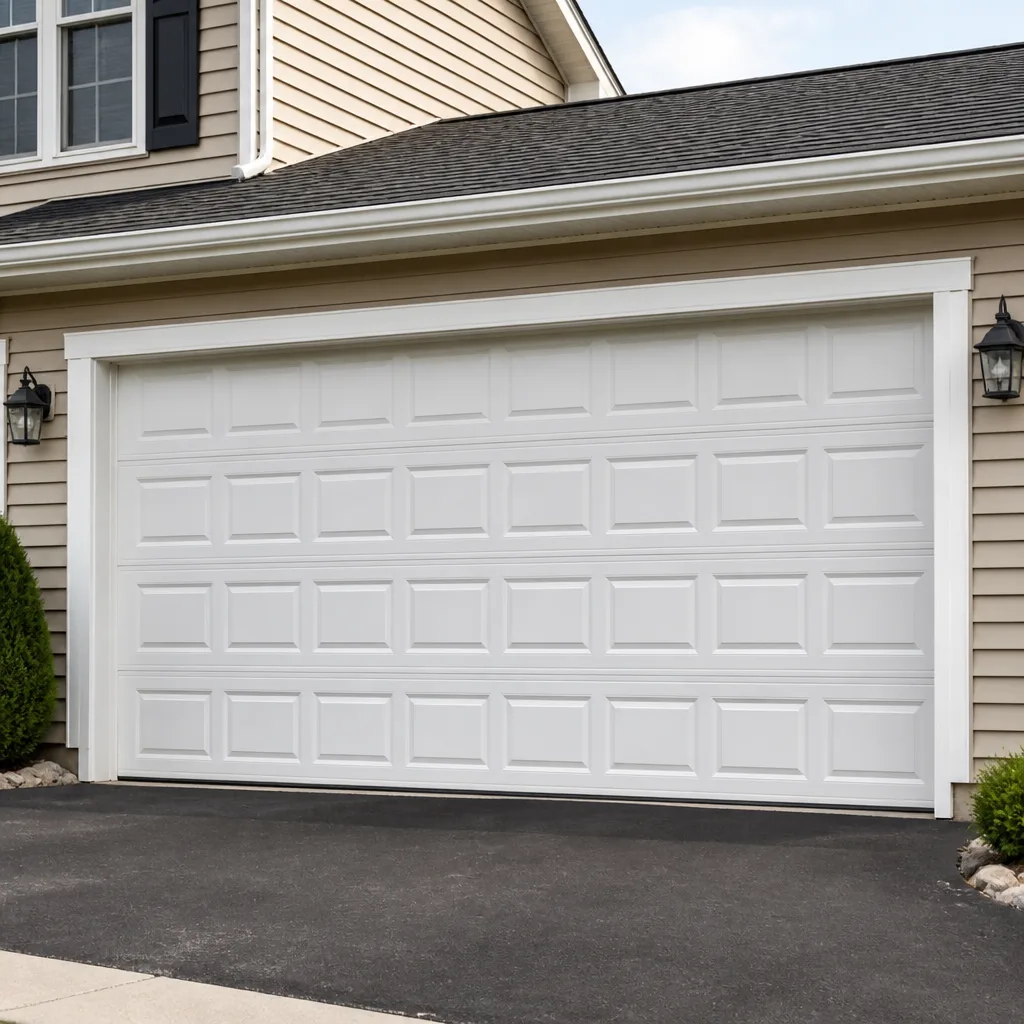 Raised-panel steel
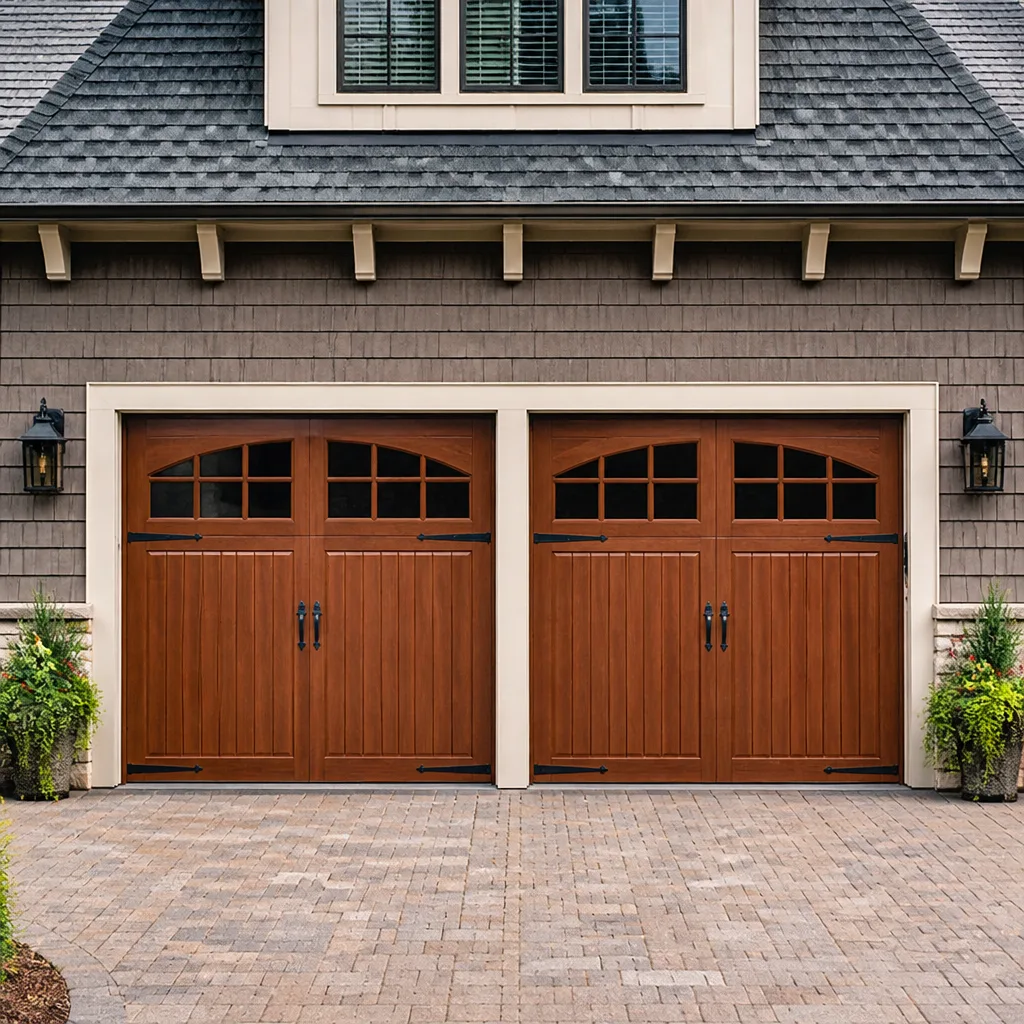 Carriage house
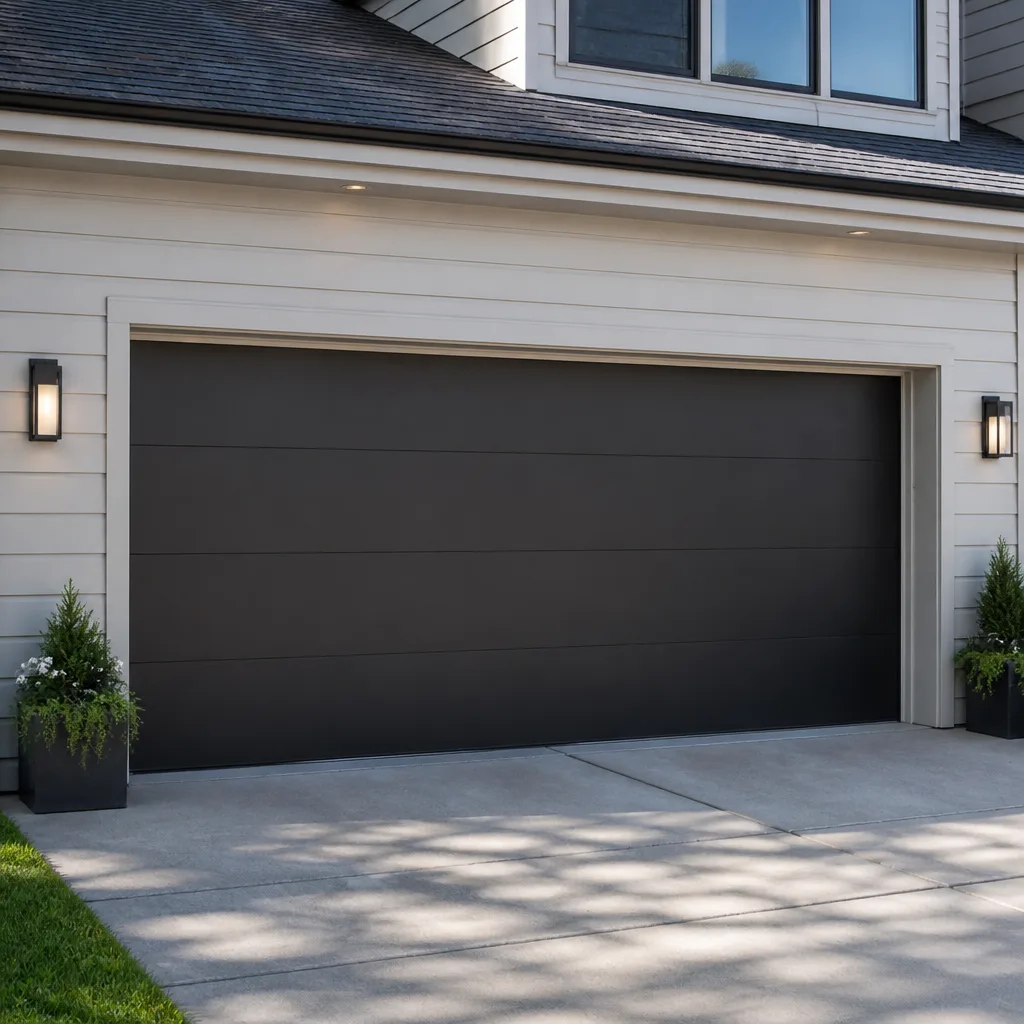 Modern flush
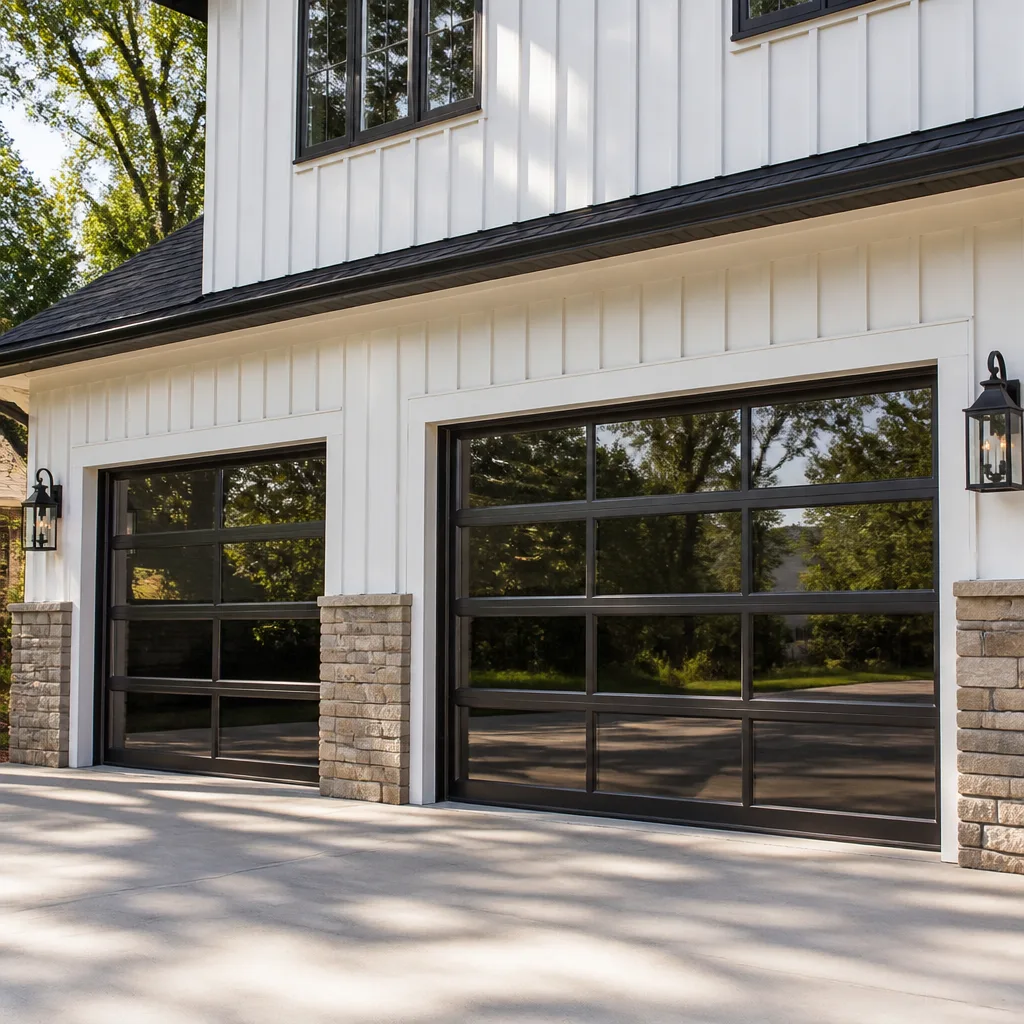 Full-view glass
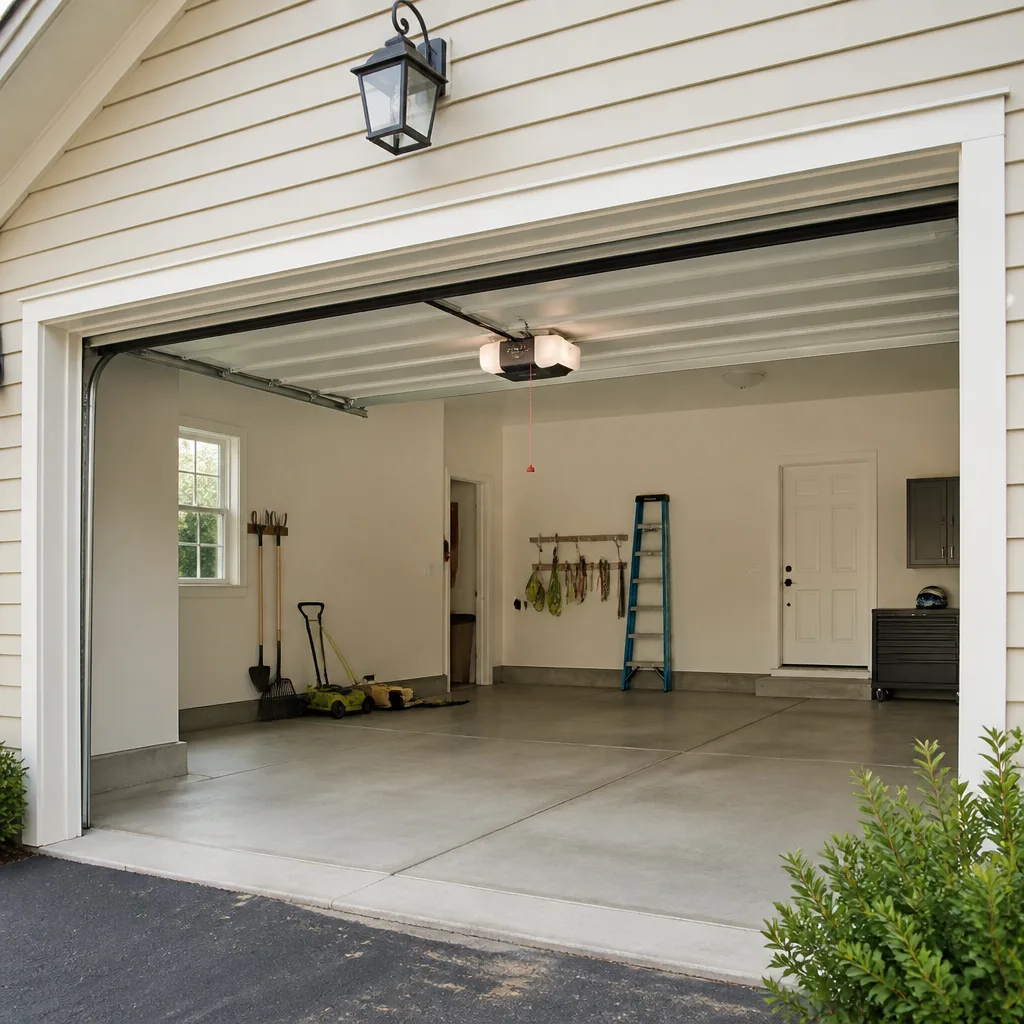 LiftMaster openers
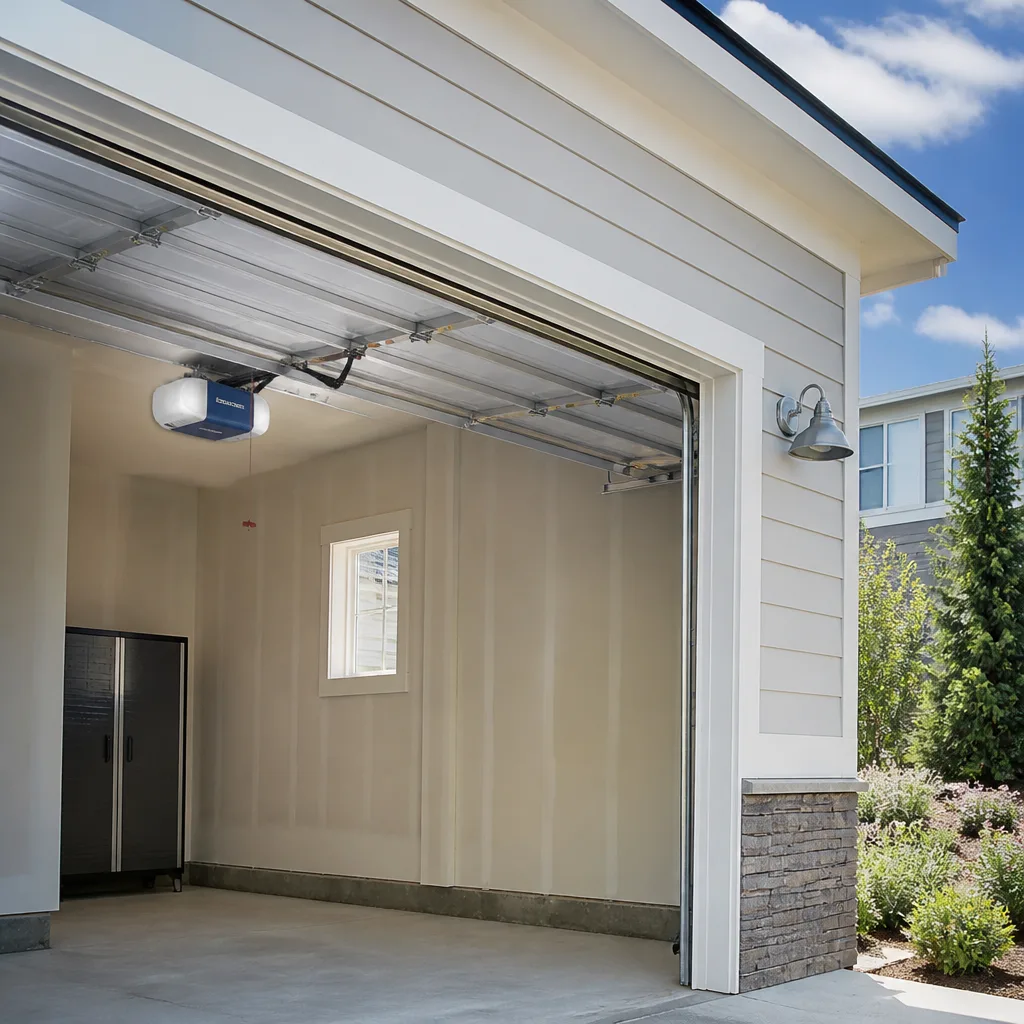 Chamberlain openers
Full 25-point door and opener safety check with every visit - springs, cables, rollers, tracks, and your LiftMaster or Chamberlain opener included
You get a price before we start. It does not change when the pro arrives.
Get your free estimateThe Complete Garage Door Opener Repair & Installation Guide for North Las Vegas Homeowners
A chain-drive opener bolted to a ceiling that hits 130°F in August isn’t just loud. It’s on a faster clock toward failure than the same unit sitting in a garage in Portland, and the manufacturer’s maintenance schedule won’t tell you that. Heat cooks lubricant, dust eats motor brushes, and the mid-2000s housing stock across North Las Vegas left a lot of garages with header room that limits what you can even hang up there. We’ve been pulling wrenches in this valley long enough to know which units survive here and which ones quit in year three. This guide covers drive types for desert heat, the North Las Vegas permit reality, dust maintenance, and exactly what an install visit looks like from the moment we pull up.
Quick Answer
For most North Las Vegas garages, a belt-drive opener with a battery backup is the right call: it runs quieter, handles the heat swings better than chain drive, and meets the California-style backup logic that safety-minded buyers now expect. Expect $450 to $850 installed for a standard 7-foot door, more if your 2000s-era garage has tight header room or you need a jackshaft unit. Repair usually runs $120 to $350. We quote the number before we come out and hold it when we arrive.
Styles & brands we work with
- Raised-panel steel
- Carriage house
- Modern flush
- Full-view glass
- LiftMaster openers
- Chamberlain openers
Table of Contents
- Drive Types for a Desert Garage: What Actually Holds Up
- The North Las Vegas Permit Question
- Dust, Brushes, and Circuit Boards: The Valley’s Slow Killer
- The Mid-2000s Boom Problem: Undersized Header Room
- What a Full Install Visit Looks Like, Start to Finish
- Repair or Replace? A Straight Decision Guide
- The Safety Parts You Don’t Touch Yourself
- What Openers Cost in North Las Vegas
Drive Types for a Desert Garage: What Actually Holds Up
Drive type is the first decision and the one most homeowners get wrong, because the box store sells whatever’s on the shelf and the online reviews were written by people in Ohio. Here’s how the three main types behave in a North Las Vegas garage that regularly crosses 120°F.
Belt drive. A steel-reinforced rubber belt runs the trolley instead of a chain. It’s quieter, it doesn’t slap and rattle against the rail, and it tolerates heat cycling better because there’s no metal-on-metal wear point shedding grit into the works. In our experience, a belt drive in a sun-baked garage outlasts a comparable chain drive by a meaningful margin, often two to four extra years before the motor or logic board gives out. The trade-off is upfront cost: a belt unit typically runs $80 to $150 more than the same-feature chain model.
Chain drive. Cheap, strong, and loud. Chain drive works fine in a shaded garage that stays under 100°F. In a west-facing North Las Vegas garage that bakes all afternoon, the chain stretches faster, the lubricant cooks off, and you get the classic rattle-and-grind. If you already have a chain drive and it’s holding, we don’t talk you out of it. But on a replacement, the five-year math usually favors belt.
Jackshaft (wall-mount) drive. Mounts on the side wall next to the torsion bar instead of hanging from the ceiling. Perfect for garages with low clearance or a storage rack overhead. It also keeps the motor out of the hottest ceiling zone, which is a real advantage here. Jackshaft units are pricier, $600 and up installed, and they need a torsion system in good shape to work with.
The five-year cost picture matters more than the sticker. A $350 chain unit that fails in year four and gets replaced costs you more than a $500 belt unit that’s still running. We walk through that math on every quote so you’re choosing with your eyes open.
The North Las Vegas Permit Question
Here’s a question that trips up a lot of homeowners: does replacing a garage door opener in North Las Vegas need a permit? The honest answer depends on what’s being changed. A like-for-like swap of an existing opener, same unit, same wiring, same track connection, generally doesn’t pull a permit under city residential code. But adding a new circuit, changing the electrical feed, or installing an opener on a door that didn’t previously have one can cross the line into permitted work.
Why should you care? Because unpermitted electrical work has a way of surfacing at the worst possible moment: the home inspection during a sale. A buyer’s inspector flags a garage sub-panel or a tapped circuit, the title company asks for documentation, and suddenly you’re scrambling before closing. We’ve seen deals held up over exactly this. It’s not worth saving a few hundred dollars on the front end.
Our approach is simple. Before we touch a panel, we tell you whether the job as described needs a permit. If it does, we tell you what the city will want to see and what the inspection covers. If it doesn’t, we say so plainly and put the scope in writing so there’s a record of what was and wasn’t done. Ask the company quoting you to put that in writing too. Anyone who waves off the permit question entirely is telling you something about how they operate.
You can verify our license and published address before the truck ever arrives. That’s a standard we hold to, and it’s one reason folks in North Las Vegas call us back. If you want the full picture on repairs versus new installs, start with our Garage Door Repair in North Las Vegas page.
Dust, Brushes, and Circuit Boards: The Valley’s Slow Killer
Openers don’t usually die from one big event. They die from a thousand small ones, and in this valley the small one is dust. North Las Vegas sits on the edge of open desert, and the wind carries fine particulate into every garage that isn’t sealed tight. That dust does two things to an opener over time.
First, it gets into the motor housing and acts like sandpaper on the brushes. Brushes are the carbon blocks that carry current to the motor’s spinning armature, and they wear down with use. Dust accelerates that wear. When they’re gone, the motor won’t turn, and the whole unit is scrap even though it’s only five or six years old.
Second, dust coats the logic board and the optical safety sensors. A dirty circuit board runs hot and can fail in a heat wave. Dirty sensors are the number-one cause of the “door goes down and bounces back up” complaint we get, and it’s usually a five-minute fix with a rag and a screwdriver.
What cadence actually makes sense here:
- Every three months: Wipe the safety sensors (the two eyes at the bottom of the tracks) with a dry cloth. Clear dust from the photo-eye lenses. Test the reverse feature by waving an object in the beam.
- Every six months: Blow dust out of the motor housing vents with canned air or a shop vac. Lubricate the chain or belt per the manual. Check the balance of the door by hand.
- Every twelve months: Have the opener and its mounting hardware looked at by someone who knows what a failing capacitor or a stretched drive gear sounds like. Call us if you’d rather not climb a ladder in August.
That cadence is probably tighter than what the manual says. The manual was written for average conditions. North Las Vegas isn’t average, and we say so on every maintenance visit.
The Mid-2000s Boom Problem: Undersized Header Room
A lot of the housing stock built in North Las Vegas between roughly 2003 and 2008 went up fast, and it shows in the garage. Specifically, many of those homes have less header room above the garage opening than a modern opener expects. Header room is the clearance between the top of the door and the ceiling where the opener’s rail and motor mount. When it’s tight, you can’t just bolt up any unit.
What usually happens is one of three things:
- You buy a low-profile unit. These exist and they solve the problem, but they’re not the ones stacked at the front of the box store, so homeowners don’t know to ask.
- You go jackshaft. A wall-mount opener sidesteps the ceiling entirely. It’s the cleanest fix for a tight-header garage, provided the torsion system is sound.
- Someone cuts the header. Don’t let this happen to your house. We’ve seen it, and it’s a structural problem, not a weekend project.
If your home went up during that boom, measure the header room before you buy anything. Better yet, let us look at it. It takes a few minutes with a tape and saves you from hauling a unit home that won’t fit. The full scope of what we cover on a new install lives on our Garage Door Installation in North Las Vegas page.
What a Full Install Visit Looks Like, Start to Finish
We don’t want you wondering where we are or what we’re doing in your garage. Here’s the sequence, in order, so the day holds no surprises.
- Phone call and quote. You call, a live person answers, and we quote the job based on what you tell us and what we can see from photos. That number holds when we arrive. No “well, once I saw it, it’s going to be more.”
- Scheduled arrival. We confirm the day and window ahead of time and show up when we say. No four-hour waiting windows if we can help it.
- In-home walkthrough. We look at the door, the springs, the tracks, the header, the electrical feed, and the wall button. We point out anything that will affect the install, including a torsion system that needs attention before a new opener goes up.
- Confirm the price and scope. Before a tool comes out of the truck, we confirm what we’re doing and what it costs. You agree. Nothing changes unless you say so.
- Removal and prep. Old unit comes down, rail comes off, we clean up the mounting points and check the ceiling attachment.
- Install and mount. New unit goes up square and level, the rail’s set for your door’s height, and the safety sensors are aligned and tested.
- Wire and program. Wall button, safety sensors, and remotes all get wired, programmed, and tested with the door in motion. We walk you through the keypad and the battery backup if the unit has one.
- Full cycle test with you watching. We run the door up and down, test the reverse, and check the force settings. You see it work before we leave.
- Guarantee in writing. Every job carries our 90-Day Done Right Promise. If something isn’t right, one call brings us back. No runaround, no queue.
That’s the whole visit, usually two to three hours for a standard install, longer if we’re doing a torsion job or a jackshaft conversion. When it’s done, you’ve got a working door and a written guarantee. That’s the deal.
Repair or Replace? A Straight Decision Guide
Openers last roughly ten to fifteen years under good conditions and a lot shorter in a desert garage that never gets maintained. So how do you know when to fix and when to replace? Here’s how we call it on a service visit.
Repair usually wins when: the unit is under eight years old, the problem is a single worn part, the safety sensors are just dirty or misaligned, or the travel limits need resetting. Most sensor and programming calls are under $150. A gear and sprocket kit on a unit that’s otherwise healthy is worth doing.
Replace usually wins when: the logic board is shot on an older unit (the board costs enough that a new opener makes more sense), the motor brushes are gone, the unit is over ten years old and parts are getting hard to find, or the whole thing is a chain drive that’s been grinding for two summers. Also when the door’s been upgraded to a heavier model and the old opener can’t handle it.
We tell you what we find, quote both paths when it’s close, and let you pick. That’s the whole conversation. If you want the runaway path to a number, our Garage Door Opener Repair & Installation in North Las Vegas page has the breakdown, and calling gets you a live person who’ll quote it.
The Safety Parts You Don’t Touch Yourself
Openers themselves are mostly safe to work on if you kill the power first. But the parts around them are not. We’re talking about torsion springs and cables, and it matters. A residential garage door is 200 pounds riding on two springs under serious tension. A torsion spring can break with enough stored energy to cause a fatal injury if it’s handled wrong, and the cables are just as unforgiving. There’s no version of a torsion spring job where the homeowner should be turning the winding bars.
The other half of the safety picture is the reverse feature and the photo-eye sensors. These aren’t nice-to-haves. They’re what stops the door from coming down on a child or a pet. Test them monthly: wave something in the beam and watch the door reverse. Push the wall button and let it start down, then put a foot lightly in its path. It should go back up. If it doesn’t, stop using the opener and call us.
We handle the high-tension side of the job because that’s what we’re trained for. Our technicians carry up to 22 years of experience, and they know better than to hand a homeowner a winding bar. Call (866) 347-9495 and we’ll get it sorted safely.
What Openers Cost in North Las Vegas
Prices here reflect the local market: heat-rated units cost a little more, jackshaft conversions cost more, and basic repairs stay in the same range they’ve always been. Here’s the honest breakdown.
- Chain-drive opener, standard install: $350 to $550
- Belt-drive opener, standard install: $450 to $850
- Jackshaft / wall-mount opener, installed: $600 to $1,100
- Battery backup add-on: $100 to $200
- Keypad and remote programming: $50 to $120
- Sensor realignment or replacement: $90 to $180
- Travel limit and force adjustment: $95 to $150
- Gear and sprocket kit: $180 to $320
- Logic board replacement: $200 to $400
- Full motor / drive assembly replacement: $300 to $500
Every number here is quoted and agreed before any work starts. Same number on the phone and the driveway. We also keep a standing $40 Off Any Repair Over $200, do a Free Second Opinion on any written estimate, and offer a permanent 10% discount for seniors and veterans because that’s just how it ought to be. New installs get a free measure and a written price instead of a same-day promise, because measure-and-order takes what it takes. The complete cost picture lives on our Otto’s Garage Door North Las Vegas home page.
Common Mistakes to Avoid
- Buying the cheapest unit on the shelf. That $199 chain drive will be back in the cart in four years. In a hot garage, the upgrade pays for itself.
- Skipping the header measurement. Especially on North Las Vegas homes built between 2003 and 2008. The unit you bought might not fit.
- Waving off the permit question. If a new circuit is involved, get it permitted. It’ll save you at closing.
- Never cleaning the sensors. Nine out of ten “door won’t close” calls are a dusty photo-eye. Wipe them quarterly.
- Ignoring the chain or belt lube schedule. In this climate, dry metal wears fast. Lubricant is cheap, motors aren’t.
- Adjusting the force setting to cure a stiff door. A door that won’t move freely needs the springs looked at, not the opener forced into submission. Boosting force is how doors come down on things.
- Calling a national service with a phone number that routes to a call center. You’ll get a quote on the phone and a different number at the door. Ask who’s actually coming before you book.
See the difference
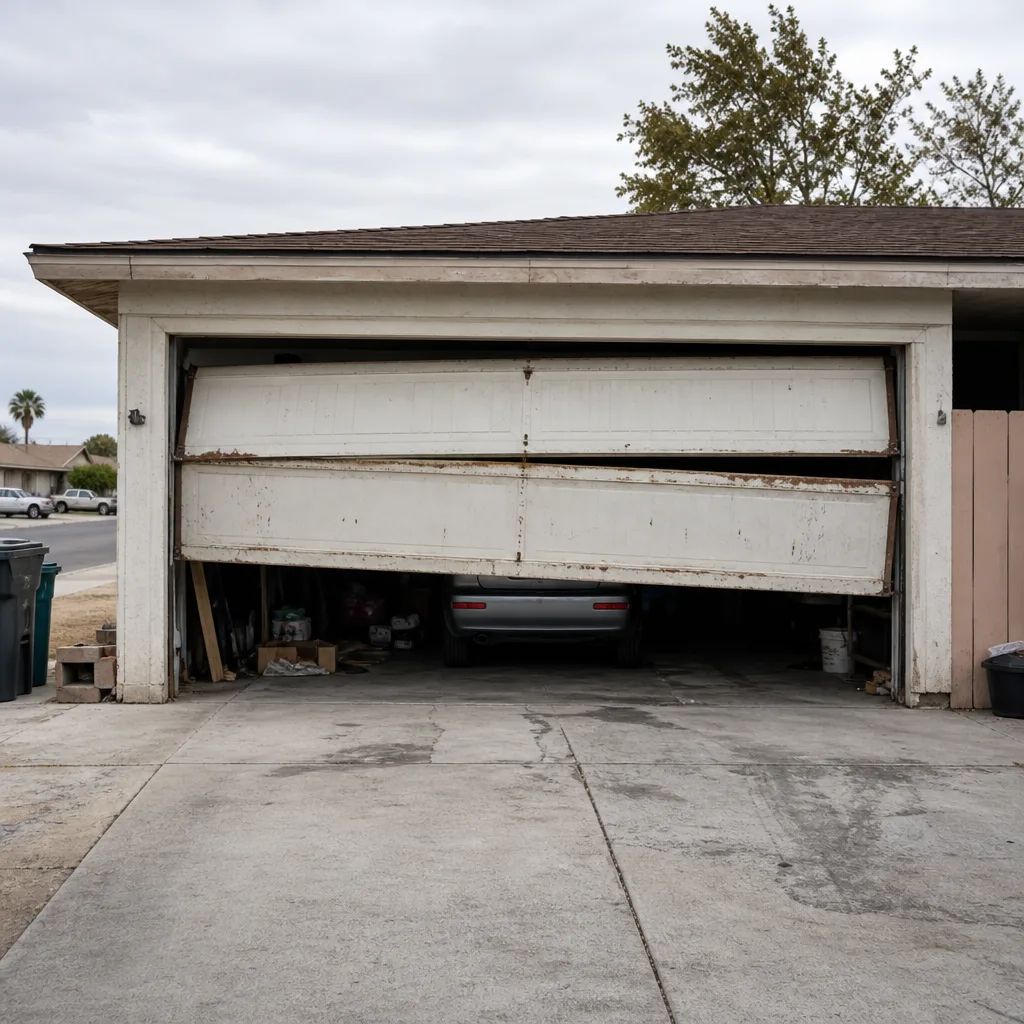 Before
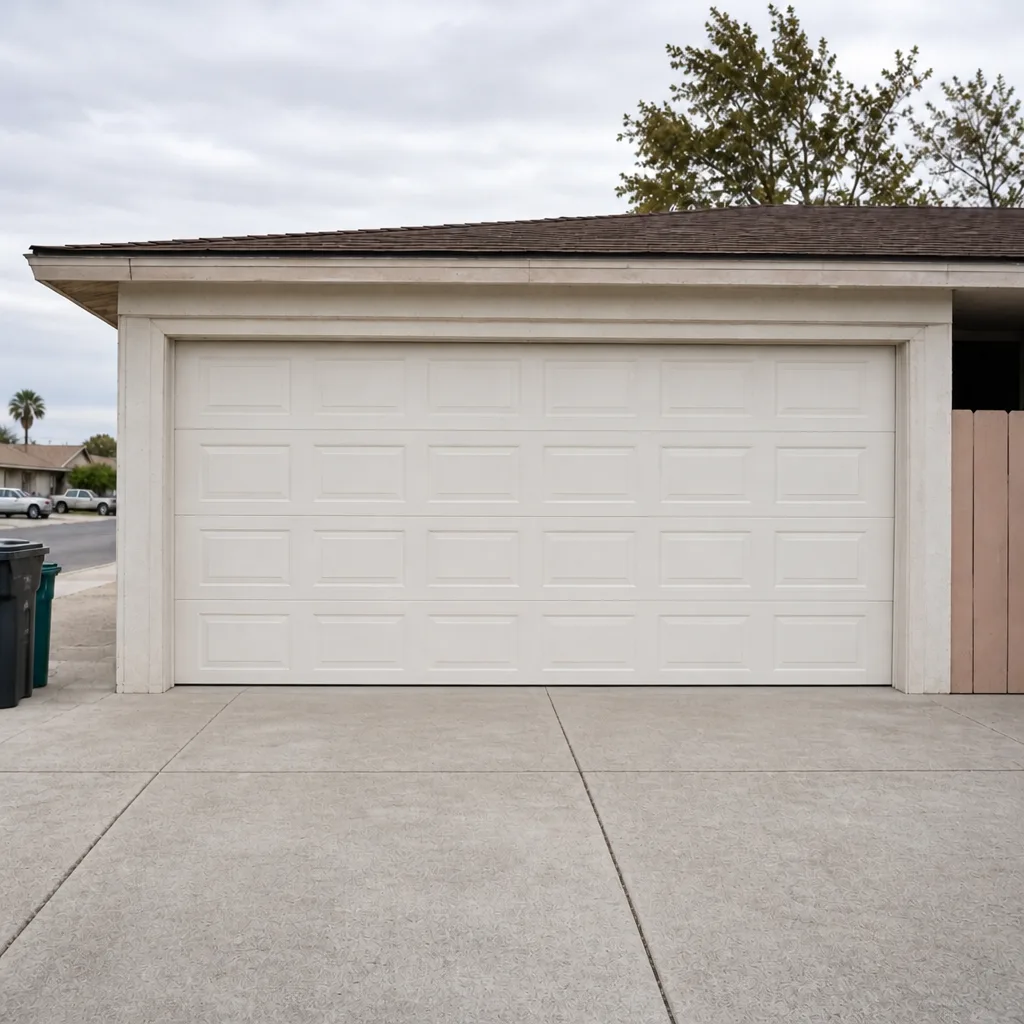 After
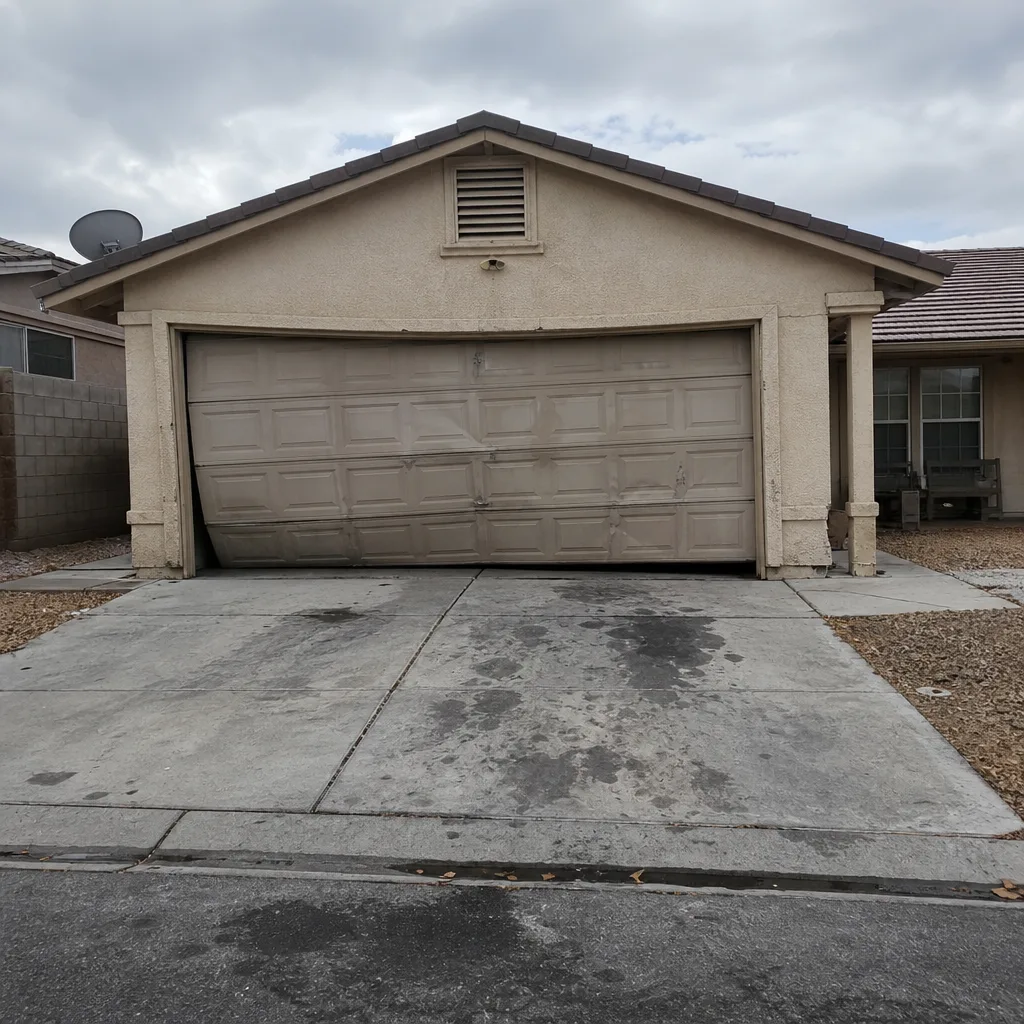 Before
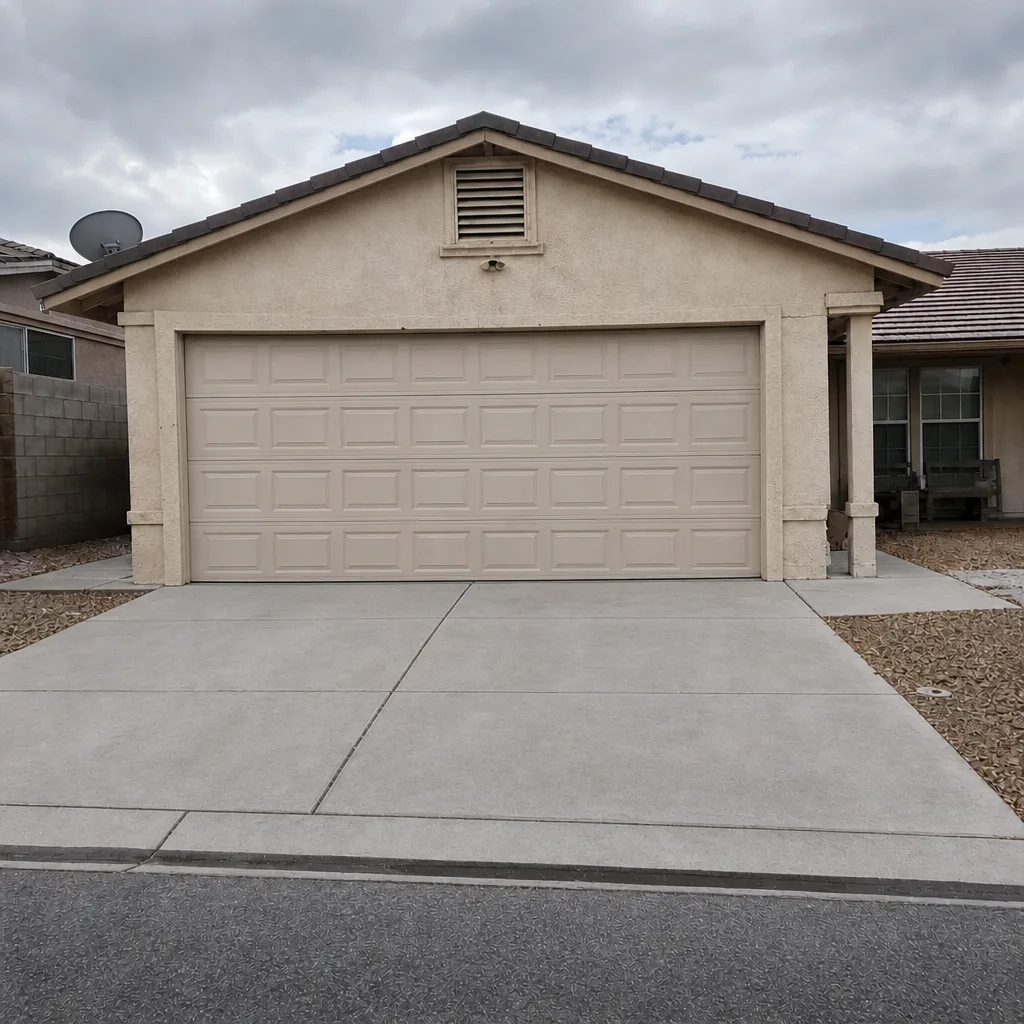 After
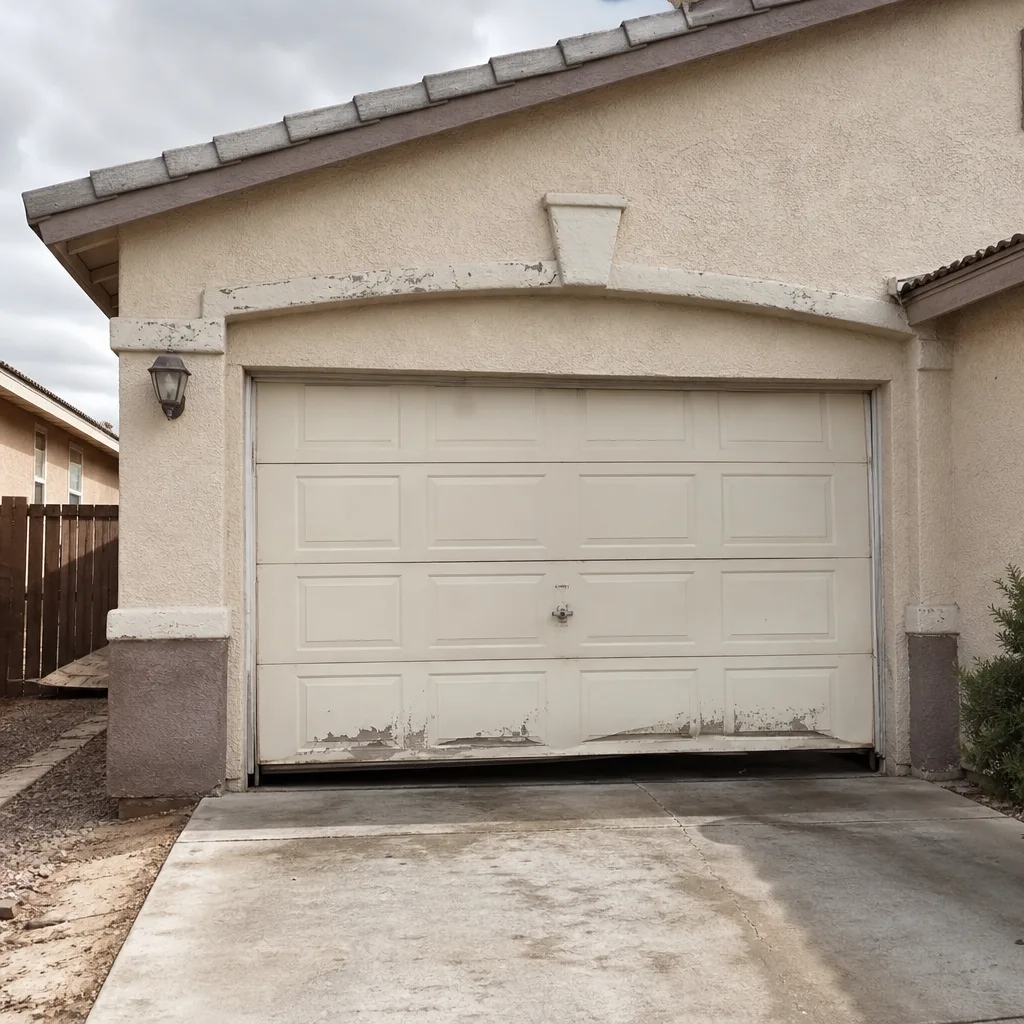 Before
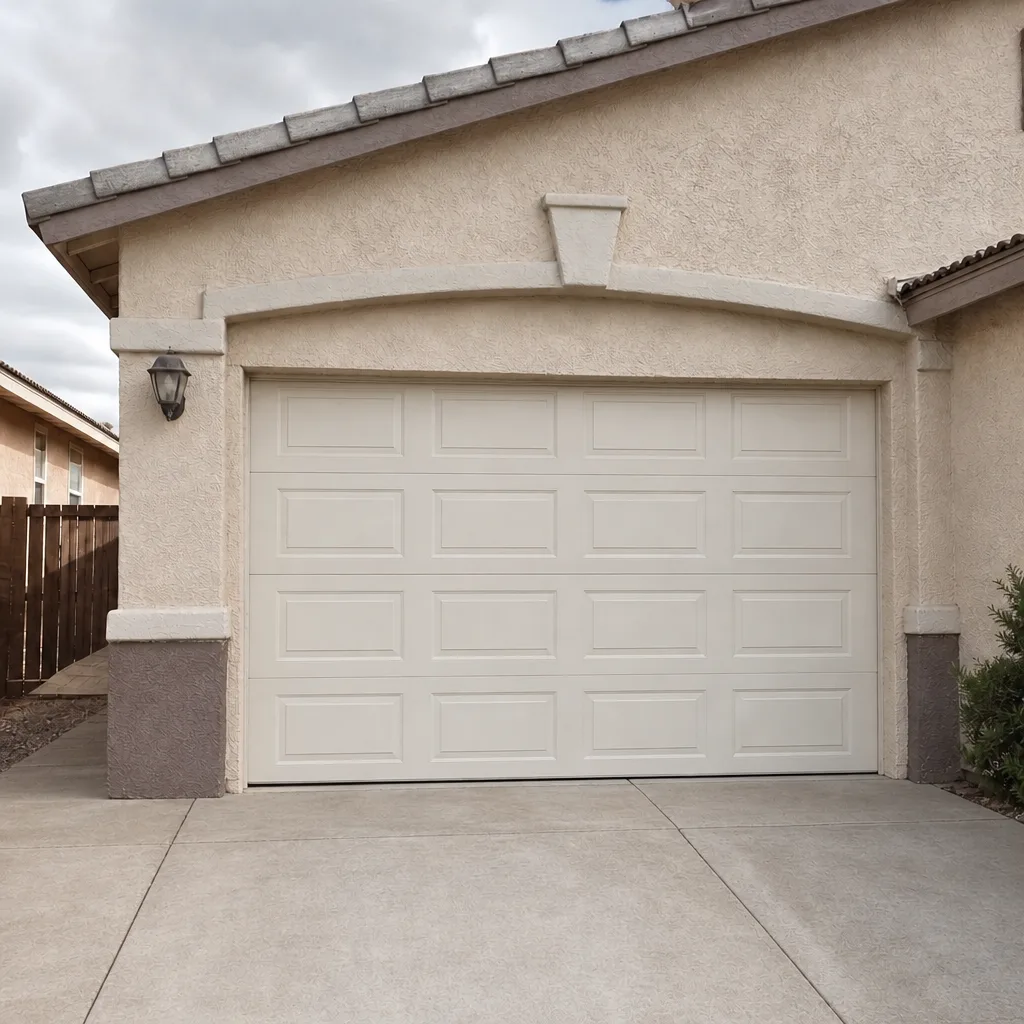 After
When to Call a Professional
Some things are a screwdriver and ten minutes. Others are a call. Call us when the door reverses without warning, when the opener strains or grinds on every cycle, when the motor runs but the door doesn’t move, when a spring is visibly bent or making a bang, or when the door is off its track. Also call when the opener is over a decade old, still running, and you want to know what’s left on it before it quits with your car trapped inside. We’ll tell you what’s worth fixing and what isn’t. Otto’s Garage Door North Las Vegas offers free estimates in North Las Vegas and answers the phone around the clock. Call (866) 347-9495.
Frequently Asked Questions
A standard belt-drive opener installed in North Las Vegas runs $450 to $850, while chain drive runs $350 to $550 and a jackshaft conversion runs $600 to $1,100. The price depends on door size, header room, and whether the electrical feed needs work. We quote before we arrive and hold the number at the door. Call (866) 347-9495 for an exact quote, and estimates are free.
A like-for-like swap of an existing opener usually doesn’t need a permit, but adding a new circuit or installing an opener where none existed can. The key is what’s changing on the electrical side, not the opener itself. We tell you which side of the line your job sits on before we start, and we put the scope in writing. Call (866) 347-9495 and we’ll walk through your situation.
LiftMaster and Chamberlain belt-drive units tend to hold up well in North Las Vegas garages, and Raynor and Craftsman are solid choices too if the model’s right for your door. What matters more than the brand is the drive type and how much dust your garage gets. A well-maintained belt drive from any of these will outlast a neglected premium unit. Call (866) 347-9495 and we’ll match a model to your door and your garage.
Every three months for sensor cleaning, every six months for a lube and inspection, and once a year for a full look at the motor and mounting hardware. That’s tighter than the manual suggests because dust and heat accelerate wear here. If you’d rather not climb a ladder in July, call (866) 347-9495 and we’ll handle the annual service for you.
Yes. A low-profile ceiling unit or a wall-mounted jackshaft opener solves most tight-clearance garages, including a lot of the mid-2000s build in North Las Vegas. We measure the header and ceiling before quoting, so you’re not surprised on install day. Call (866) 347-9495 and we’ll do a free measure and give you a written price.
Repair if the unit is under eight years old and the problem is one worn part. Replace if the logic board or motor is gone on an aged unit, or if parts are getting hard to find. We quote both paths when it’s close and let you choose. Call (866) 347-9495 for an honest recommendation before you buy anything.
The Bottom Line
North Las Vegas garages are hard on openers. Heat, dust, and the peculiarities of the 2000s housing stock all push gear toward failure faster than the manufacturer’s schedule allows for, and the only real defense is picking the right unit and keeping up with maintenance. Belt drive usually wins here, jackshaft solves the tight-header problem, and quarterly sensor cleaning prevents more service calls than anything else. Get the permit question answered in writing, and get your number quoted before anyone comes out. If you want a straight answer and a handshake guarantee, give us a call.
Call (866) 347-9495 today for a free estimate on opener repair or installation in North Las Vegas. A live person answers, any hour, and we’ll quote the job on that call and hold the number when we arrive. The name on the van is the name on the invoice and the name on the license, and we’d rather keep you for twenty years than win one big ticket.
Written by the team at Otto’s Garage Door North Las Vegas.