
Last updated November 18, 2026
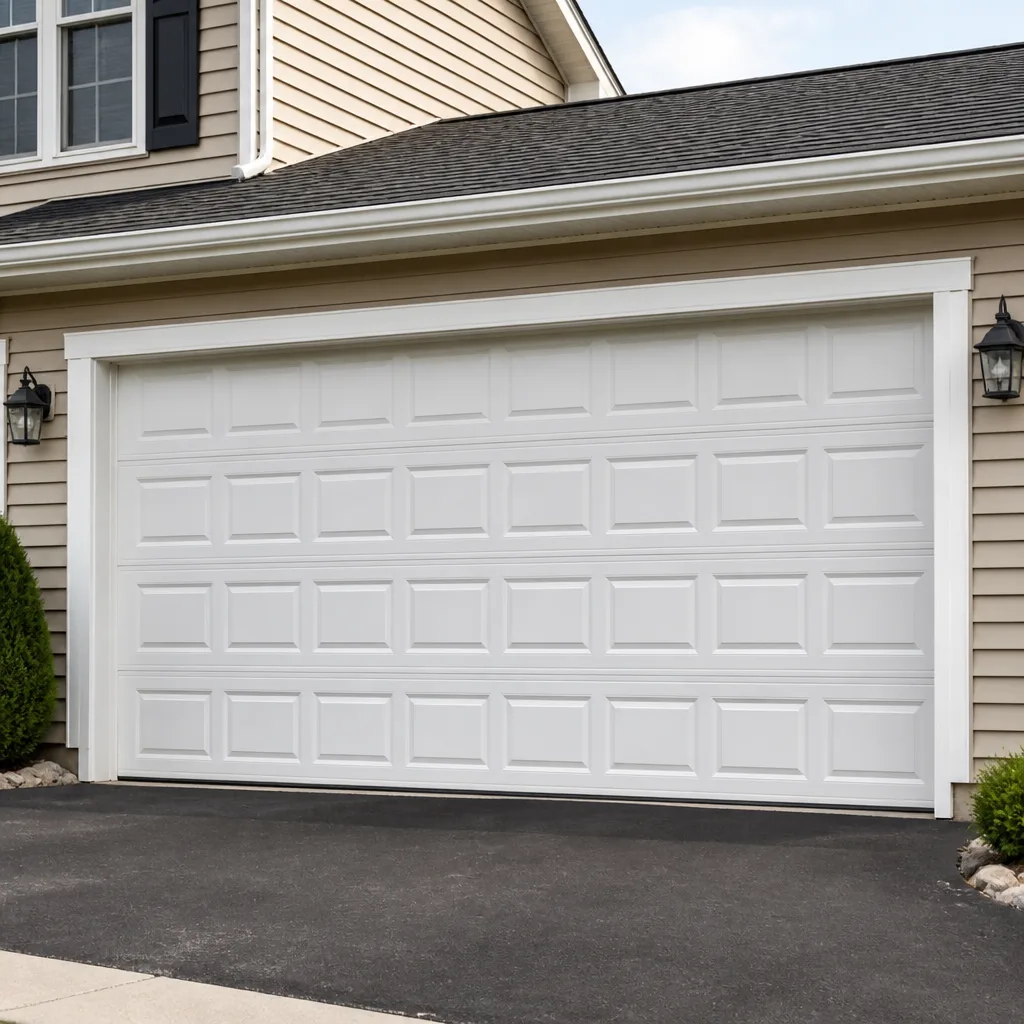 Raised-panel steel
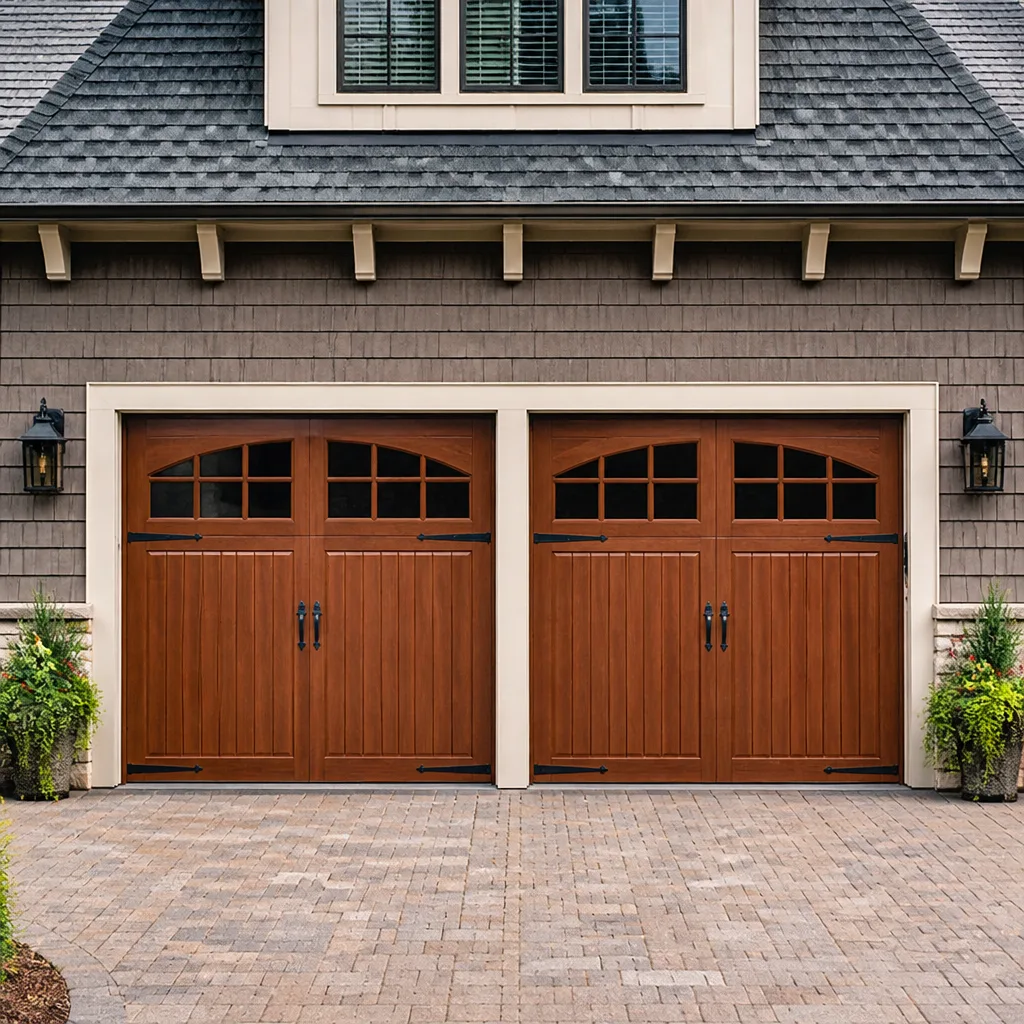 Carriage house
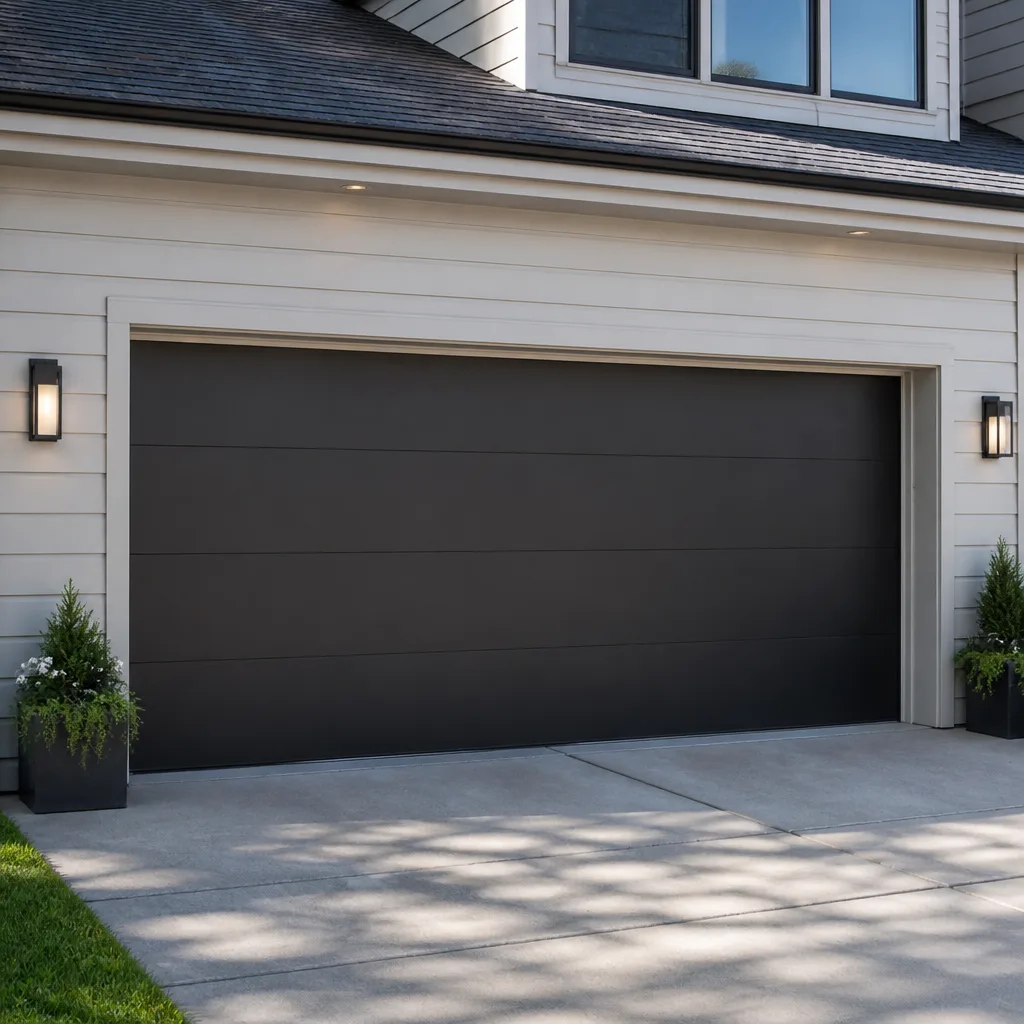 Modern flush
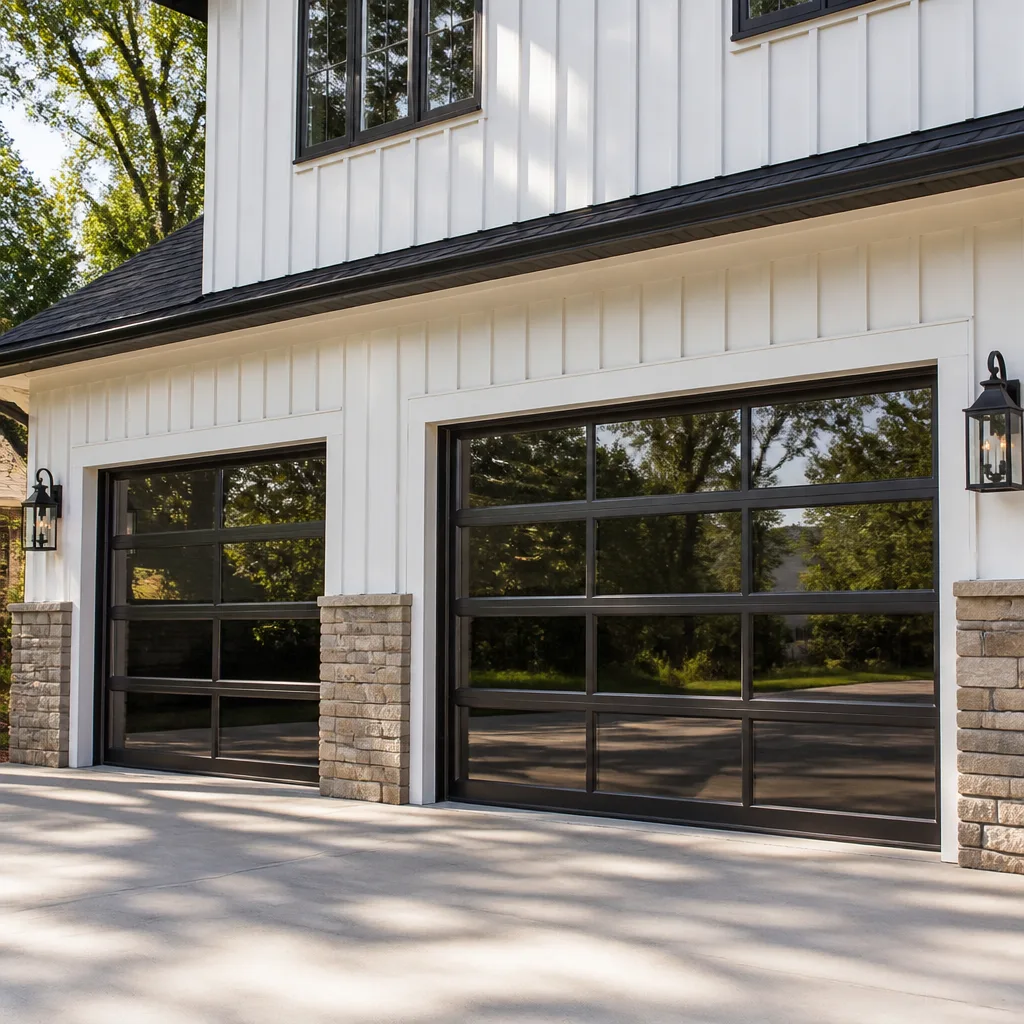 Full-view glass
 LiftMaster openers
 Chamberlain openers
Full 25-point door and opener safety check with every visit - springs, cables, rollers, tracks, and your LiftMaster or Chamberlain opener included
You get a price before we start. It does not change when the pro arrives.
Get your free estimateDIY vs Professional Garage Door Parts: What’s Safe to Do Yourself
A torsion spring stores roughly 100 foot-pounds of torque. When it lets go uncontrolled, it doesn’t bend – it launches. That’s not a scare tactic; it’s physics that sends people to the ER every year. Here in North Las Vegas, we’ve walked into garages where a homeowner tried to save $150 on a spring swap and ended up with a hole in the drywall and a permanent limp. This guide draws a hard line through your door, part by part: what’s genuinely safe for a homeowner to handle, what absolutely requires a trained hand, and the tools you should never go near a wound spring. You’ll get a cost comparison that accounts for the real risk of a wrong repair, and a plain answer on which side of the line each part falls on.
Quick Answer
You can safely replace your garage door’s weatherstripping, bottom seal, remote controls, photo-eye sensors, and rollers on older extension-spring systems. Torsion springs, cables under tension, and track realignment are dangerous enough that you should call a professional – the stored force in those parts can kill or maim when it releases unexpectedly. When in doubt, the part that holds the door’s full weight is never a DIY part.
Styles & brands we work with
- Raised-panel steel
- Carriage house
- Modern flush
- Full-view glass
- LiftMaster openers
- Chamberlain openers
Table of Contents
- Where the Line Actually Is
- Parts You Can Safely Replace Yourself
- Parts That Require a Pro
- Torsion vs Extension: Telling Which You Have in 30 Seconds
- Why “Replacing a Cable” Sounds Easy and Isn’t
- The One Tool You Should Never Use Near a Wound Spring
- Real Cost Comparison: DIY vs Professional
- Common Mistakes to Avoid
Where the Line Actually Is
Most DIY advice on garage doors frames the decision around skill level. That’s the wrong axis. The right question is what happens when you get it wrong. Replace a bottom seal badly and you’ve got a draft. Replace a torsion spring badly and someone gets hurt. In our experience working doors across North Las Vegas, the consequence – not the difficulty – is what should decide whether you pick up a wrench or pick up the phone.
Think of your door as two zones. The bottom zone – everything that touches the ground or drives an ordinary moving part with no stored energy – is mostly fair game. Seals, weatherstripping, remotes, sensors, and rollers on older systems live here. The top zone – anything holding the door’s full weight or storing energy to lift it – is where the professionals belong. Springs, cables, torsion drums, and the brackets those connect to all carry stored force that doesn’t ask before it releases.
Here’s why the North Las Vegas climate matters. Summer temperatures regularly push past 110°F in the valley, and a garage absorbs every degree. That heat cycles springs and rollers hundreds of times a year, weakens the oil-tempered steel faster than in cooler climates, and dries out cheap rubber seals within one or two summers. We see seals fail fast here and springs fail suddenly. The two failure modes are completely different in how dangerous they are to fix.
So the honest line is this: if a part stores energy or holds the door’s weight, call someone. If it sits at the bottom of the door keeping out dust and heat, or it lives on your keychain, do it yourself.
Parts You Can Safely Replace Yourself
These are the jobs a homeowner with basic tools can genuinely finish in an afternoon without putting themselves in danger. We’re not gatekeeping – we want you to handle these and save the money, especially in a market where a mechanical issue can otherwise cost a service call for a $15 part.
Here’s the shortlist of safe, DIY-friendly parts:
- Weatherstripping – the foam or vinyl strip that runs along the sides and top of the door frame. Push it into the jamb channel, trim to fit. No springs involved.
- Bottom seal (astragal) – the rubber or vinyl strip in the bottom section’s retainer. Pull the old one out, slide the new one in, and it snaps home. A garage door repair in North Las Vegas pro can handle this too, but there’s no shame in doing it yourself.
- Photo-eye sensors – the small units at the base of the tracks about six inches off the floor. They clip or screw on and wire into the opener’s low-voltage terminals.
- Remote controls and keypads – replacing batteries or programming a new remote is a five-minute job if your opener’s manual is handy. Chamberlain, LiftMaster, and Craftsman remotes all reprogram through a “learn” button on the motor head.
- Rollers on extension-spring systems – if your door has springs mounted along the horizontal tracks on either side (we’ll explain the difference below), the rollers can usually be replaced without touching spring tension.
- Hinges on the door panels – with the door fully closed and the springs at rest, the hinges that connect panel to panel can be swapped without any stored tension on them.
For any of these, the rule is simple: work with the door fully closed. Don’t reach up between panels. Don’t try to lift or pry anything while the door is open. Panel work with the door down is safe; panel work with the door up is where people get hurt. If you’re also planning to upgrade the whole door rather than fix it, start with garage door installation in North Las Vegas and get a written measure and price before you buy a single part.
Parts That Require a Pro
These are the parts we won’t sell to a walk-in at the parts counter without a warning. A professional handles them every week with tools designed to release stored tension safely. If you’ve never done it, this is not the place to learn.
The high-risk list:
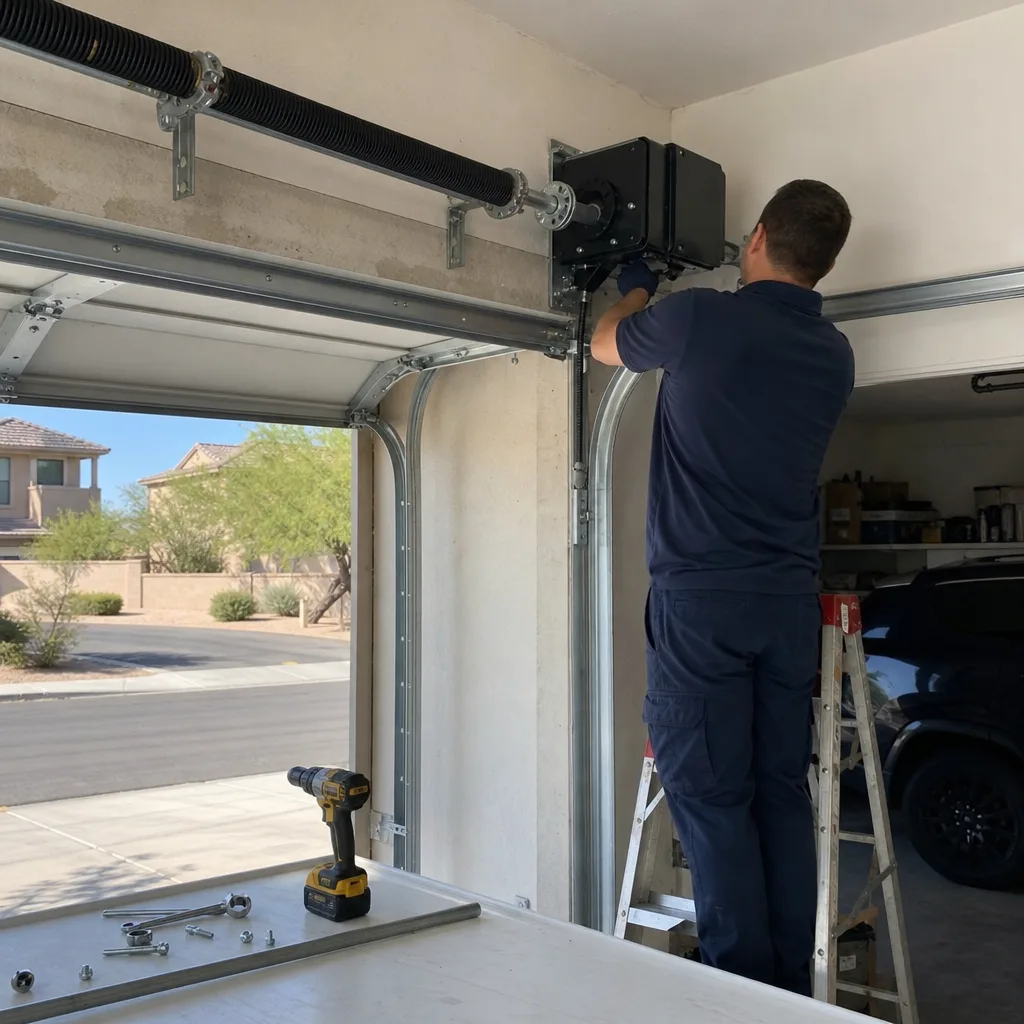
- Torsion springs – mounted on a shaft above the door. They carry the full lifting load and store the most energy. Winding or unwinding them requires two steel winding bars (not substitutes) and a clear understanding of what happens if one slips.
- Extension springs – mounted alongside the horizontal tracks. Older ones have no safety containment cable; if one snaps, it flies. Even swapping a worn extension spring requires releasing tension and understanding the door’s balance.
- Cables – the thin steel cables under tension that ride in the drums at each end of the torsion shaft, or run alongside extension springs. These are always under load when the door is down, and they can slice through a hand when they release.
- Track realignment – bent or knocked-out of plumb tracks require the door off its spring tension entirely. Trying to pry a track back into place with the door in the system puts the full load of the door against the pry bar.
- Center brackets, end plates, and drums – the metal that holds the spring assembly together. These are structural to the safer operation of the whole door, and a wrong bolt can drop the entire assembly on you.
- Opener rail and drive assembly – the opener itself is survivable to replace, but a misaligned rail can jam the door mid-travel. If the opener is straining, the problem is usually the door – see our garage door opener repair and installation in North Las Vegas page for what a proper diagnosis looks like.
Clopay, Amarr, and Wayne Dalton all publish service bulletins that warn against homeowner spring work. The strongest is simple: the manufacturer’s panel warranty is void if the failure traces back to an improperly serviced spring or track. Fix it wrong once and you may lose coverage on a $2,000 door.
Torsion vs Extension: Telling Which You Have in 30 Seconds
This matters because the DIY risk category is totally different between the two systems. Extension-spring doors are older, cheaper, and more forgiving to inspect. Torsion-spring doors are more modern and store far more force. Here’s how to tell them apart without ever touching the spring itself.
- Look up. Stand outside the door with it fully closed and look at the ceiling inside the garage above the door opening.
- If you see a horizontal metal shaft running the width of the door with a coiled spring wrapped around it – that’s a torsion setup. Stop here. This is the pro-only category.
- If you see springs running front-to-back along the horizontal tracks at each side – that’s extension. Check whether there’s a steel cable running through the center of each spring (that’s the safety containment); if not, it’s old-style and adds another failure point.
- Check the door weight rating. Look at the sticker on one of the bottom panels. Any label that lists spring “cycle life” (10,000, 15,000, 20,000) is a torsion door. Extension springs usually only list a color code.
In North Las Vegas, most homes built after the mid-1990s have torsion systems. Older builds in neighborhoods near Craig Road and Civic Center Drive are more likely to have extension setups. We’ll never talk you into a torsion conversion you don’t need, but if yours is failing, the torsion upgrade is usually the better long-term call.
Why “Replacing a Cable” Sounds Easy and Isn’t
A lot of videos online walk through replacing a garage door cable. They skip the part that matters. Here’s what the job actually involves, so you can decide honestly whether you’ll finish it.
- You release the opener and put the door in manual mode.
- You raise the door to relieve cable tension – except the cable is under tension the whole time the door is up. You now have a live cable you’re trying to disconnect from the drum at the top of the shaft.
- You lock the door in the up position with clamps or locking pliers on the track, because with the cables off, the door has nothing holding it up but you.
- You slip the old cable off the drum and lay the new cable through the same path, then loop the end, crimp the ferrule, and re-seat the drum.
- You check cable seating on BOTH sides – because if one side rides up unevenly, the door will bind, the panel will twist, and you’ll be right back to step one with a bent door.
Most homeowners stop at step three. We’ve been called into North Las Vegas garages at 9 p.m. with a door hanging by one cable, the other wrapped around the track, and a homeowner standing there not sure whether to cut it loose. That’s the honest outcome: the “simple” video is really a two-person job with a proper holding clamp and the experience to spot drum seating issues. If you’re not confident you’ll finish, don’t start.
The One Tool You Should Never Use Near a Wound Spring
The wrong tool is a screwdriver. Worse is a piece of rebar, an Allen wrench, or a pry bar. All of them look like they’d work in a pinch, and that’s exactly why so many people get hurt.
Torsion springs are wound with two steel winding bars made specifically for the task. They’re long enough to give your hands clearance, they seat fully into the winding cone’s holes, and they don’t bend or snap under torque. A screwdriver shaft is short, its tip rounds off under load, and it can slip out with the full stored force of the spring behind it. When that happens, the tool goes one direction and the cone goes another – and your hand is somewhere between.
Substituting seems logical because the winding cone has small holes and a screwdriver looks like it fits. But the tool that fits loosely is the tool that slips. There’s no safe shortcut here. If you don’t have two winding bars and a clear understanding of the spring’s residual tension, the job ends the moment you look at it. This is exactly why we’ll answer the phone at 2 a.m. for a spring failure in North Las Vegas – because the alternative is somebody just like you trying a screwdriver.
Real Cost Comparison: DIY vs Professional
On a bottom seal or a remote, DIY genuinely saves money. On a spring, cable, or track, the numbers flip fast once you account for what a bad repair can cost. Here’s how the math runs in our North Las Vegas market – the parts prices are what you’ll find at a big-box store, and the pro prices are typical installed ranges.
- Bottom seal replacement – DIY parts: $15 – $30. Pro installed: $90 – $150. DIY saves real money here; the job is 20 minutes with no risk.
- Weatherstripping (side and top) – DIY parts: $20 – $45. Pro installed: $100 – $180. Same story; a careful homeowner can handle it.
- Remote control – DIY: $25 – $50 for a new remote. Pro: $45 – $90. If you can follow a manual, skip the service call.
- Photo-eye sensors – DIY: $20 – $40. Pro: $80 – $140. Fine to DIY unless the wiring is already pulled through the wall.
- Torsion spring replacement (single) – DIY parts: $60 – $120 (and possibly a 2-week wait from a specialty supplier). Pro installed: $180 – $340. The $200 you save is not worth a trip to the ER.
- Cable replacement (pair) – DIY parts: $25 – $50. Pro installed: $150 – $280. Most homeowners can’t safely finish this; treat it as pro-only.
- Track realignment – DIY parts: none worth buying. Pro: $120 – $250. A bent track is a system problem, not a part swap.
Now add the invisible costs. A wrong DIY repair can void your door panel’s warranty – a full panel replacement on a Clopay or Amarr door runs $300 – $800 for one section. A misaligned cable can burn out your opener’s gear and sprocket assembly, another $150 – $300 in parts. And a door that fails mid-cycle because a hinge was installed with the wrong tension can bend the top section permanently. In our experience, the homeowners who call after a DIY attempt gone sideways are out $200-$600 more than if they’d called us on the first day.
That said, we want you to save money. If it’s a bottom seal or a remote, do it. If it’s a spring, call us – we’ll quote it on the call and hold the price when we get there.
Common Mistakes to Avoid
- Working the door open instead of closed. Every safe DIY job happens with the door fully closed and the springs at rest. An open door is under load.
- Using a screwdriver or pry bar as a winding bar. This is the single most common cause of serious injury we see on the trade. It’s not negotiable.
- Buying an off-brand spring. Parts bin springs rarely match the cycle rating your door was built for. On a North Las Vegas door that faces 110°F summers, cycle life matters.
- Ignoring the safety containment cable on extension springs. If your extension springs have no cable running through the middle, a snapped spring will fly across the garage. That’s a pro upgrade, not a hardware store fix.
- Bumping the door on the way in. A car bumper nudging a bottom panel is one of the most expensive small mistakes we see – panel replacement often runs $400 – $800 for a single section.
- Trusting a phone quote without a written price. National call centers often quote one number on the phone and add “diagnostics” at the door. Get the number in writing before anyone touches the door.
- Over-greasing rollers and tracks. In a dusty valley like North Las Vegas, heavy grease turns to grit. A light silicone spray on rollers, sparingly, holds up better.
See the difference
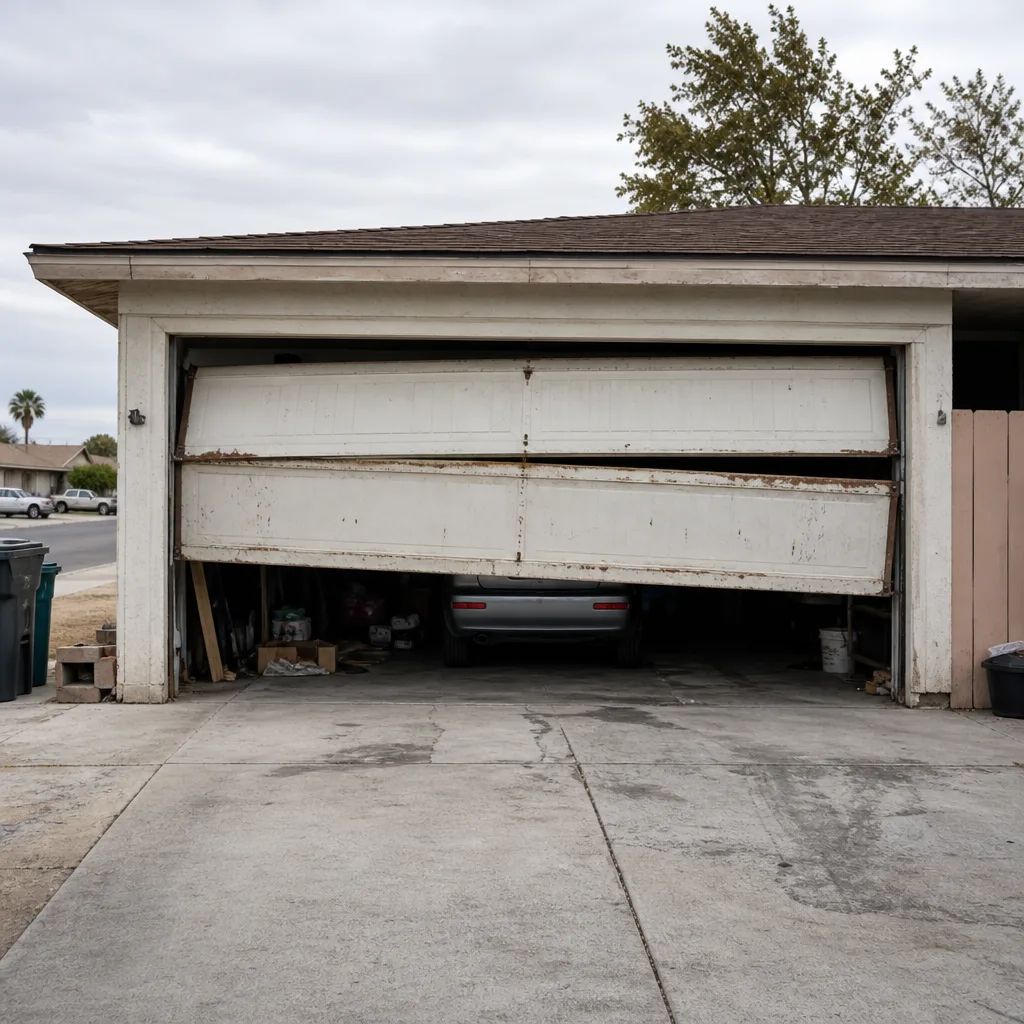 Before
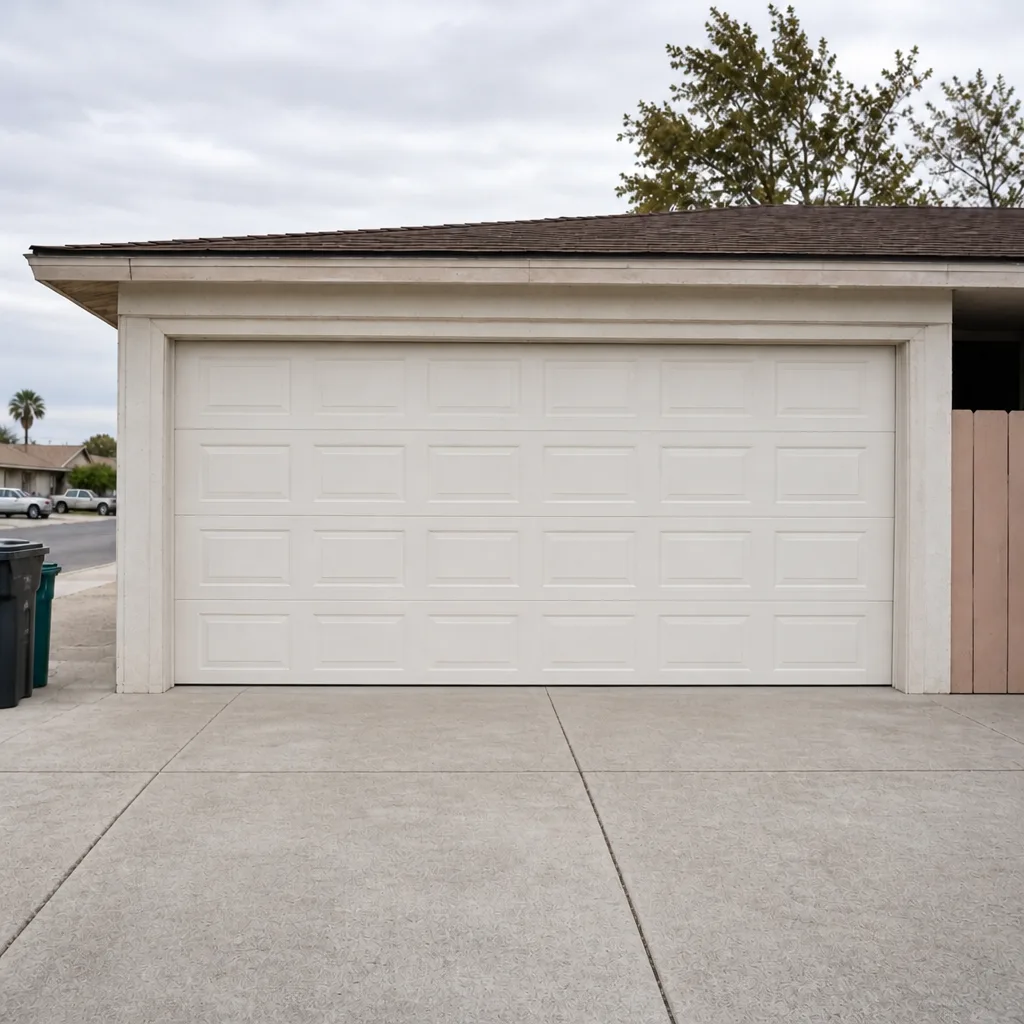 After
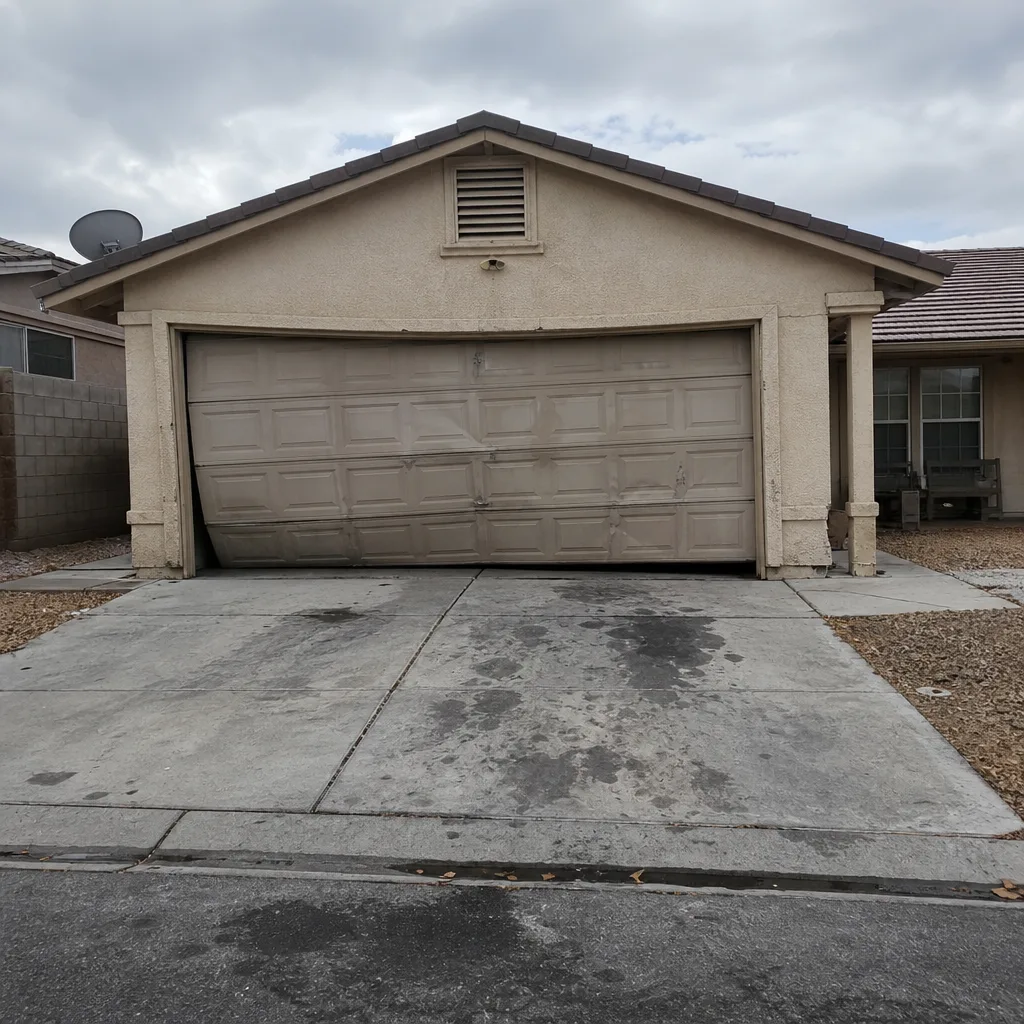 Before
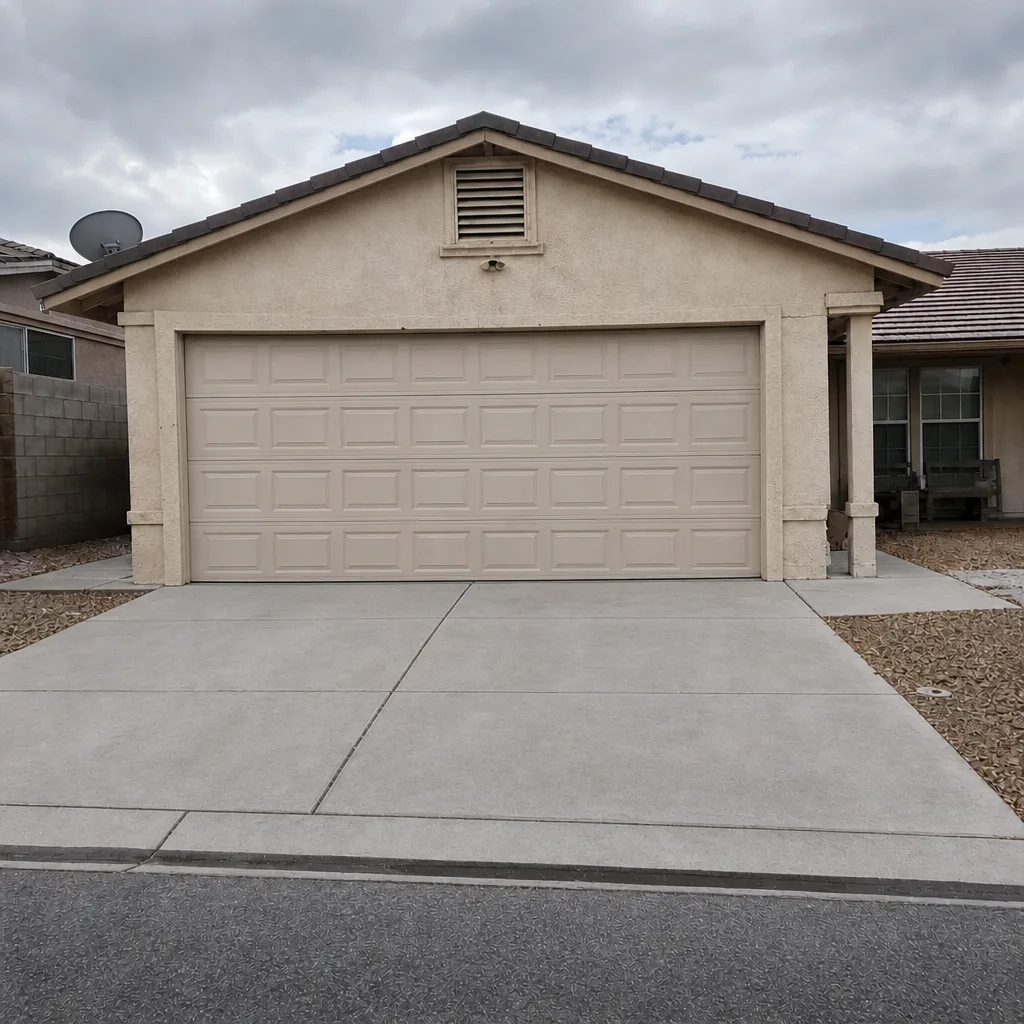 After
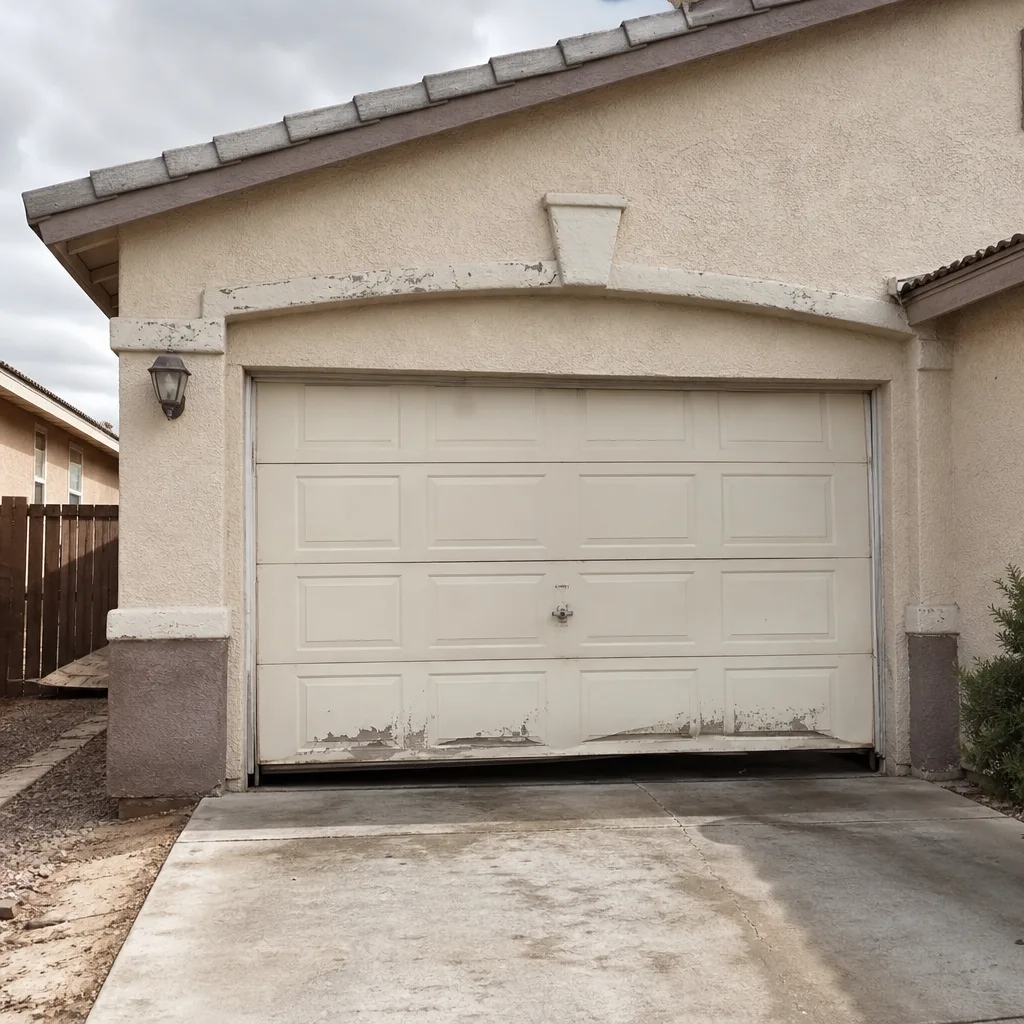 Before
 After
When to Call a Professional
Call a professional the moment the problem touches a spring, a cable, a track, or a drum – the parts that hold the door’s weight or store energy. Call if the door is off its tracks, hanging by one side, or has any visible bend in a panel or bracket. Call if you hear a bang from the garage and the door won’t lift. Call if you smell burning from the motor or the door stalls halfway up. In a North Las Vegas summer, don’t wait on a door that won’t open – heat and door strain compound fast, and a jammed door in 110°F can cook an opener motor in a single afternoon.
If you’re not sure whether the job is safe to touch, that’s your answer – call. We’d rather tell you to handle the seal yourself and save the money. Otto’s Garage Door North Las Vegas offers free estimates in North Las Vegas – call (866) 347-9495. A live person answers around the clock, and the number we quote on that call is the number on the invoice.
Frequently Asked Questions
No. A garage door torsion spring stores enough force to cause serious injury or worse when it releases unexpectedly, and winding or unwinding it requires two steel winding bars and training most homeowners don’t have. Call a professional – the job typically runs $180 – $340 installed in North Las Vegas, which is far less than an emergency room visit. Call (866) 347-9495 for a free estimate.
You can safely replace weatherstripping, the bottom seal, remote controls, photo-eye sensors, and hinges with the door fully closed. Rollers on older extension-spring doors are also fair game. Anything that stores energy or holds the door’s weight is a pro job. Call (866) 347-9495 if you’re unsure which category your part falls into – we’ll tell you straight.
Torsion spring replacement in North Las Vegas typically runs $180 – $340 installed for a single spring, and around $280 – $500 for the pair. Extension spring replacement is usually $140 – $260. The price is quoted and agreed before any work starts, and we hold it when we arrive. Call (866) 347-9495 for an exact number.
No. We quote the job on the phone, put it in writing, and hold that number when we arrive. The price only changes if you ask for additional work. That’s the standard we’ve held since we opened in 2004, and it’s on every invoice. Call (866) 347-9495 for a free estimate.
Yes. Otto’s Garage Door is locally owned and owner-operated in North Las Vegas, with a published address and license number any homeowner can verify before the truck pulls up. Our technicians have up to 22 years of experience across LiftMaster, Chamberlain, Genie, Clopay, Amarr, Wayne Dalton, Craftsman, and Raynor systems. Call (866) 347-9495 to schedule.
Yes on both counts. Clopay, Amarr, and Wayne Dalton all void panel warranty coverage when a failure traces back to homeowner spring or track work. And a misaligned cable or roller can strain the opener’s gear assembly, which typically runs $150 – $300 to repair. A free second opinion on any written estimate costs you less than a bad fix. Call (866) 347-9495 before you buy the part.
The Bottom Line
The line between DIY and call-a-pro on your garage door isn’t about how handy you are. It’s about what happens when the part fails. Seals, weatherstripping, remotes, sensors, and hinges are all safe, and we want you to save the money on them. Torsion springs, extension springs, cables, drums, and track work are the parts that store force or hold the door’s weight – those belong in trained hands, with the right tools, every time. North Las Vegas heat amplifies the risk because springs cycle harder here. Respect the physics, do the safe jobs yourself, and call for the ones that matter.
Written by the team at Otto’s Garage Door North Las Vegas.
If you’ve read this far and still aren’t sure which side of the line your repair falls on, pick up the phone. Otto’s Garage Door North Las Vegas – locally owned, owner-operated since 2004, with a published address and license number you can verify. A live person answers at (866) 347-9495, any hour, and quotes the job on the call. We’ll tell you which parts to replace yourself, which to leave alone, and what a fair price looks like for the rest. Our 90-Day Done Right Promise stands behind every job in writing, and our Senior & Veteran 10% discount is always on. Start at our Otto’s Garage Door North Las Vegas home page or call (866) 347-9495 for a free estimate.