
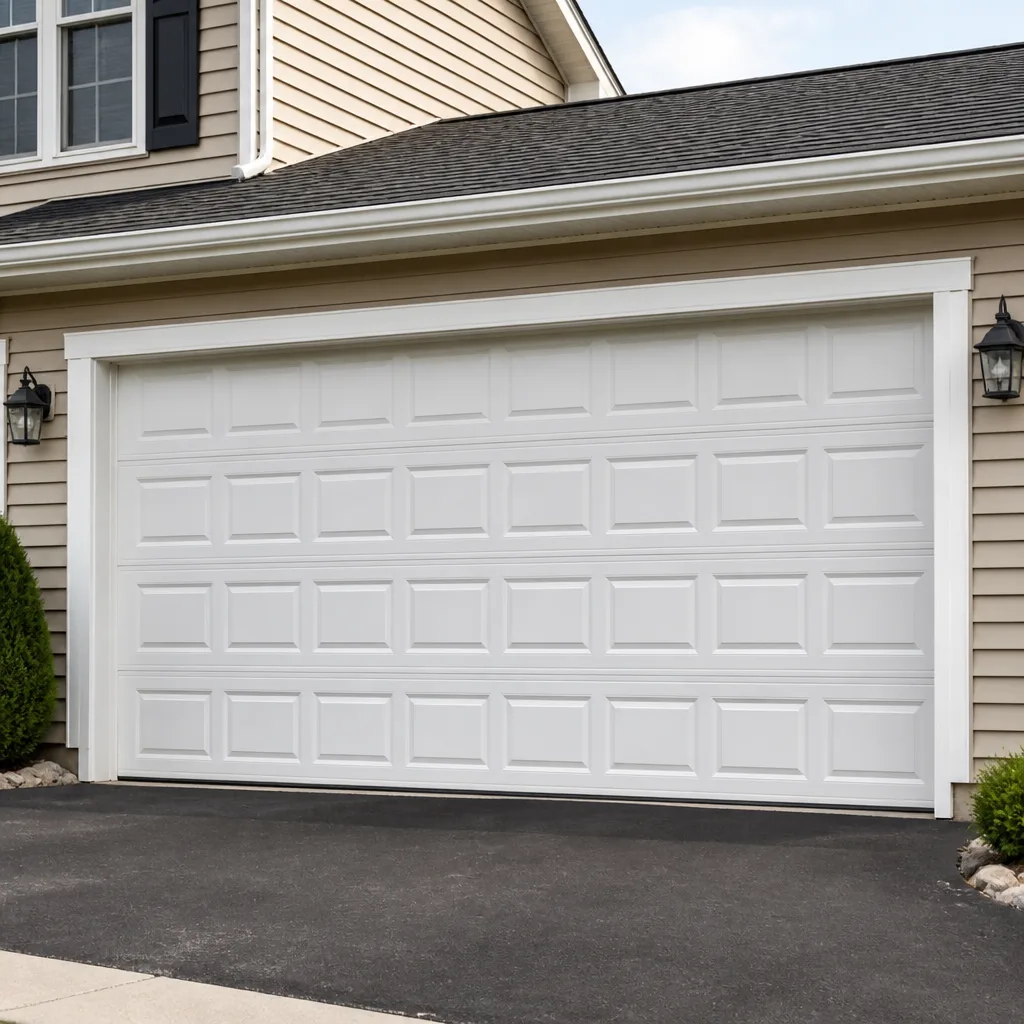
 Raised-panel steel
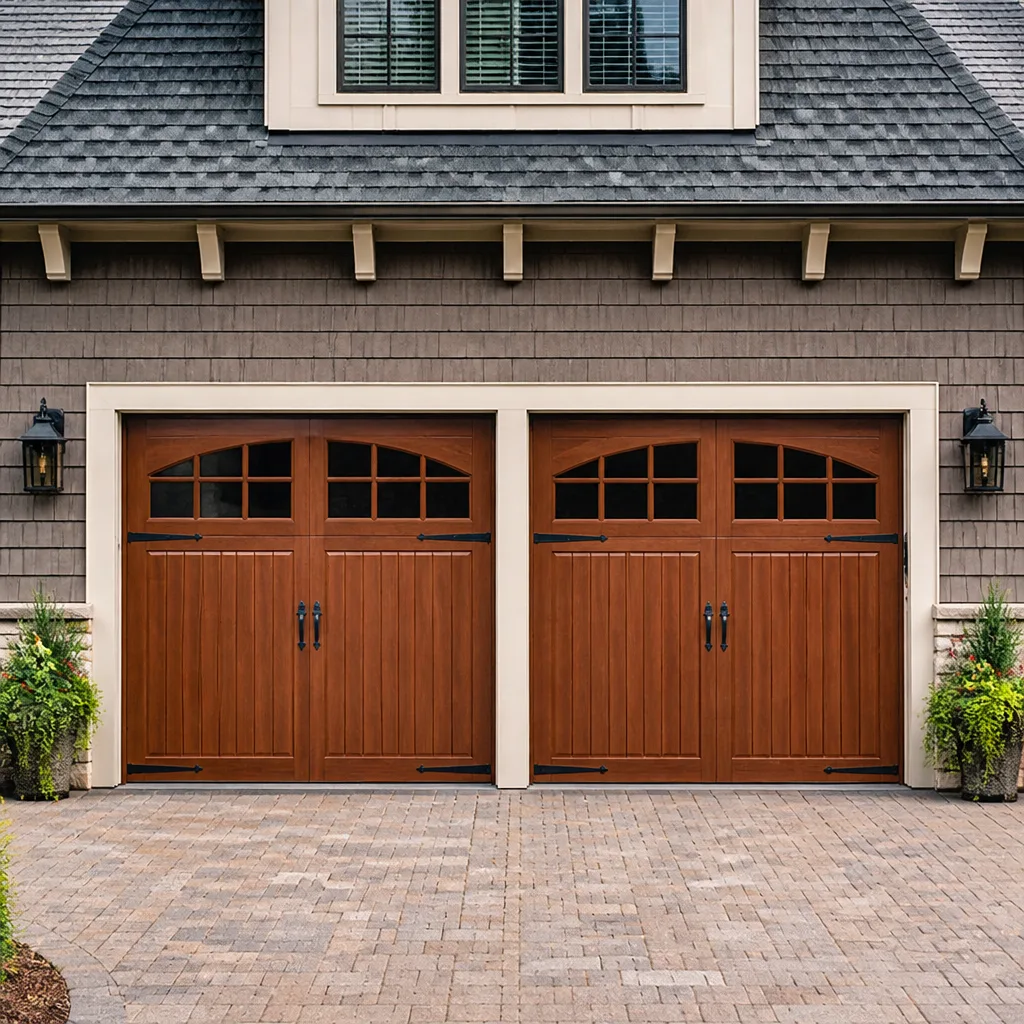 Carriage house
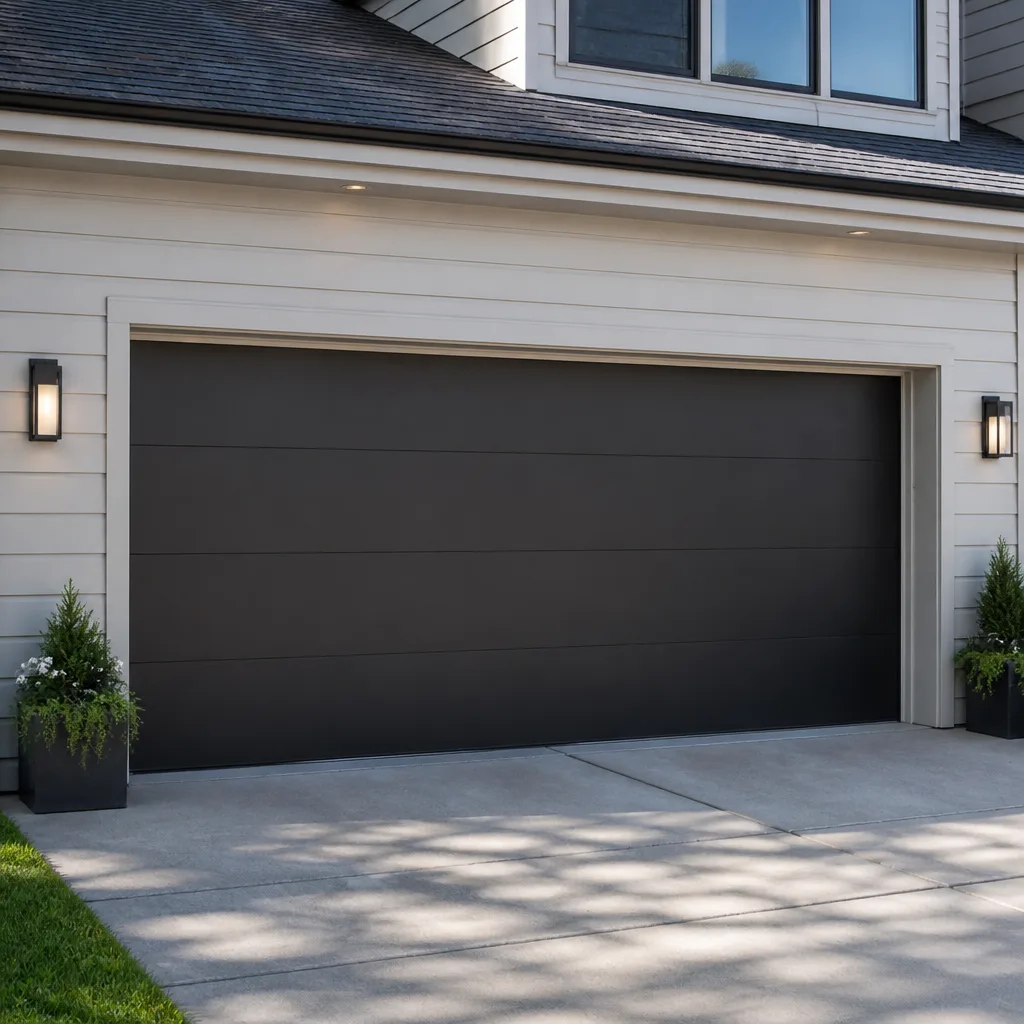 Modern flush
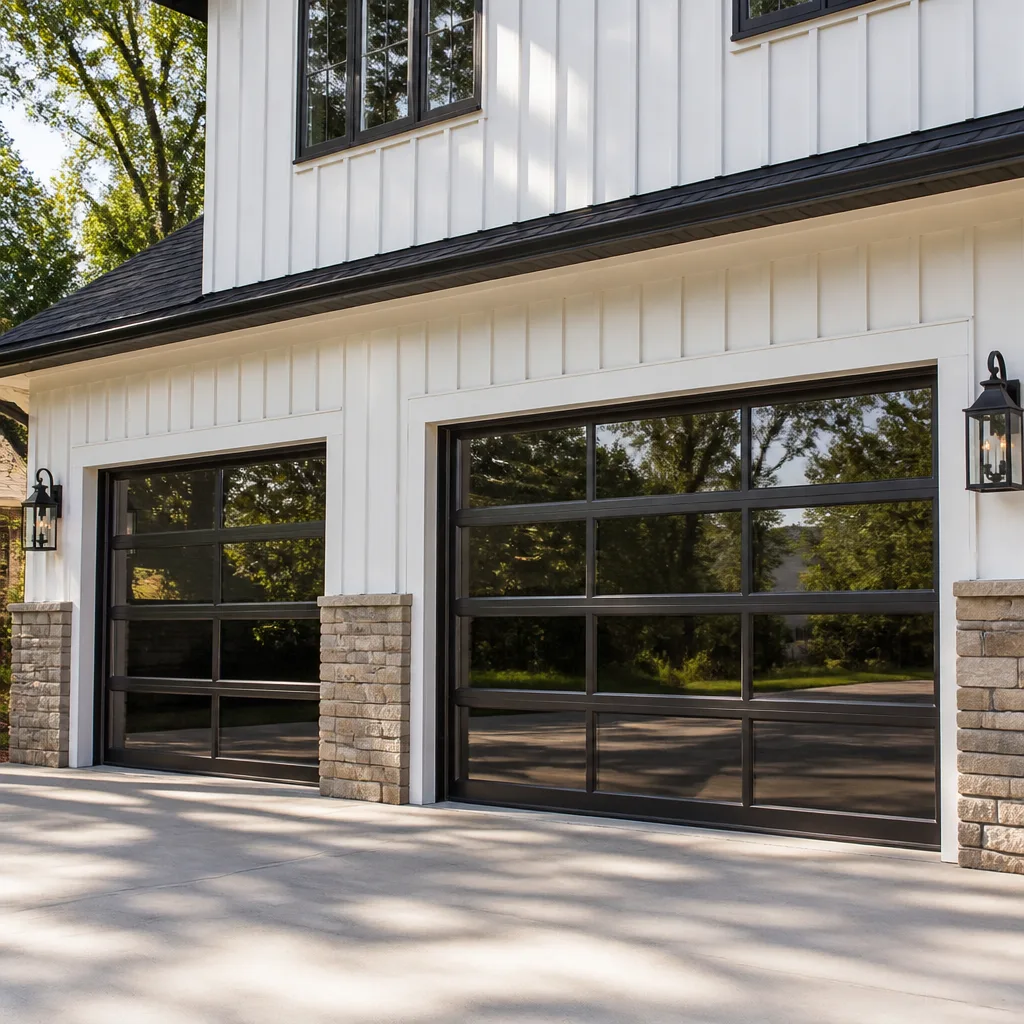 Full-view glass
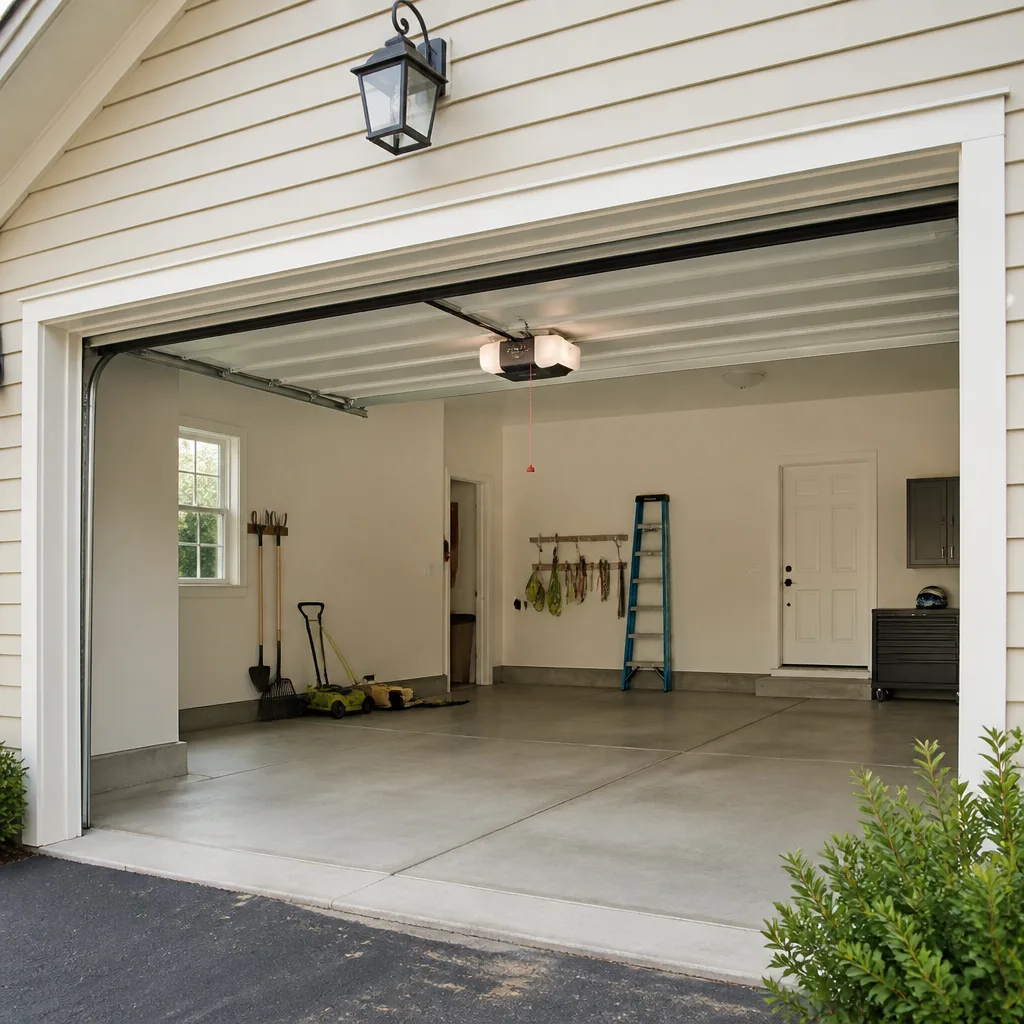 LiftMaster openers
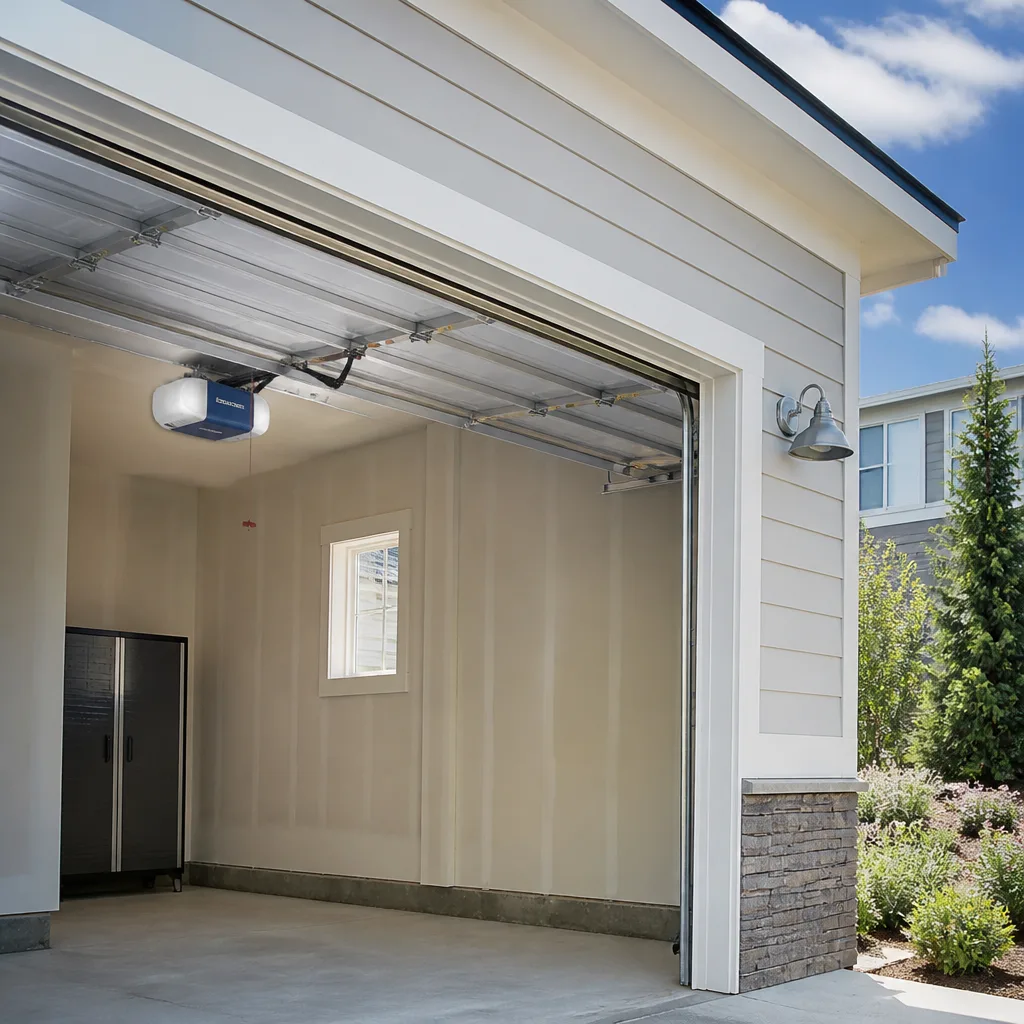 Chamberlain openers
Full 25-point door and opener safety check with every visit - springs, cables, rollers, tracks, and your LiftMaster or Chamberlain opener included
You get a price before we start. It does not change when the pro arrives.
Get your free estimateStyles & brands we work with
- Raised-panel steel
- Carriage house
- Modern flush
- Full-view glass
- LiftMaster openers
- Chamberlain openers
See the difference
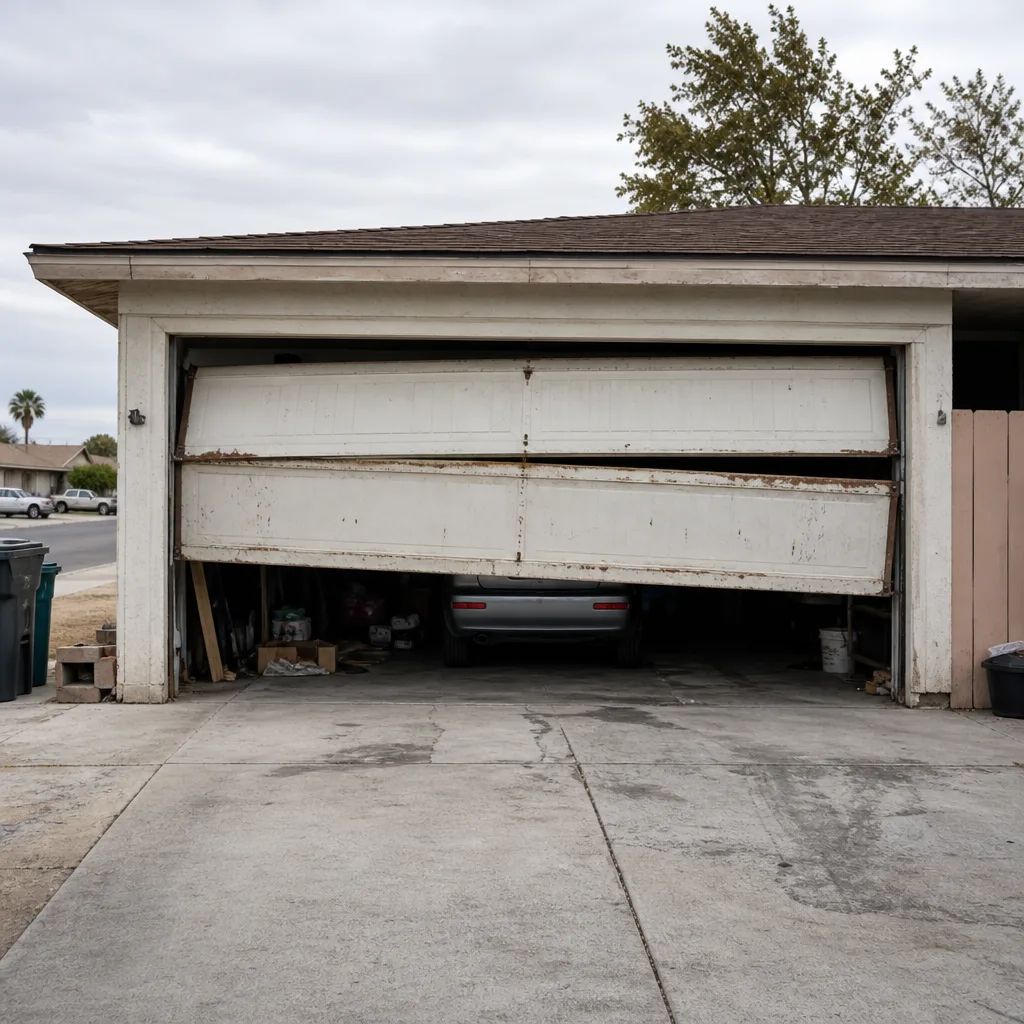 Before
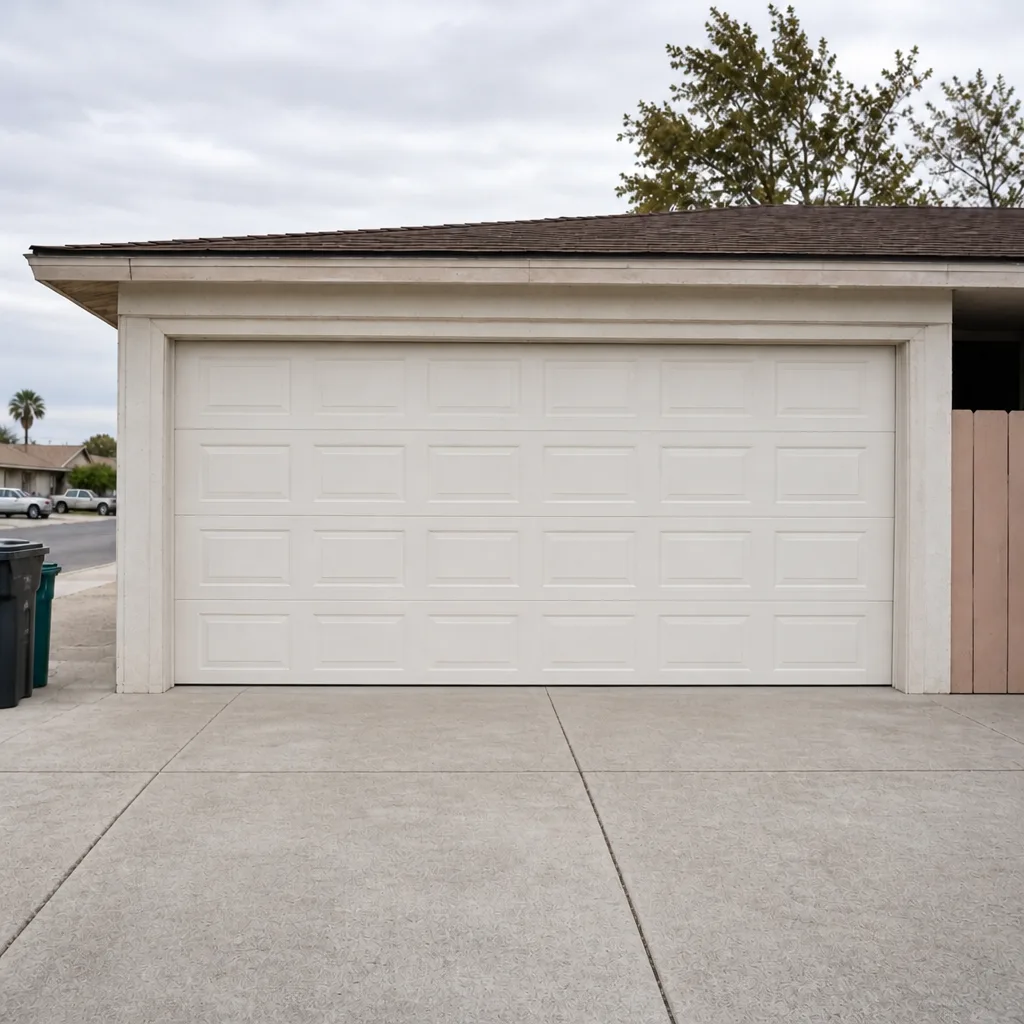 After
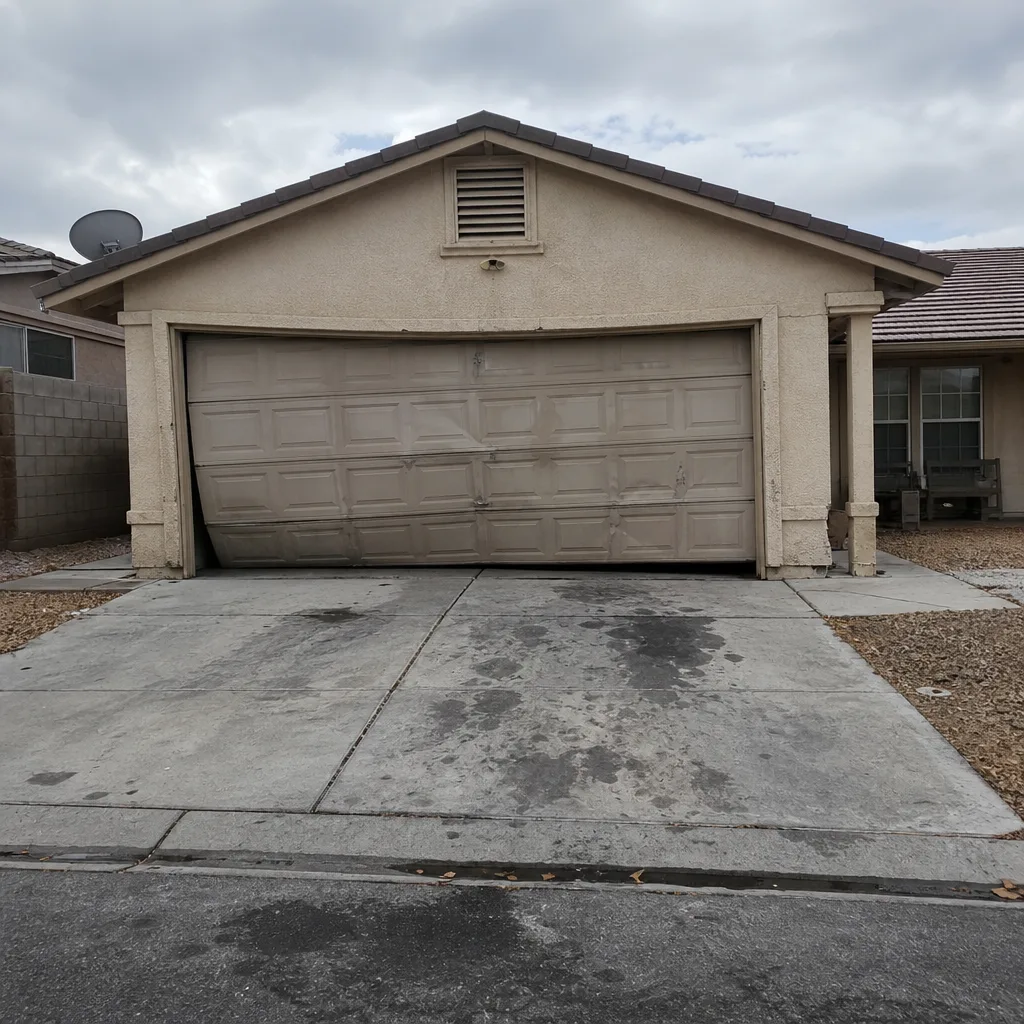 Before
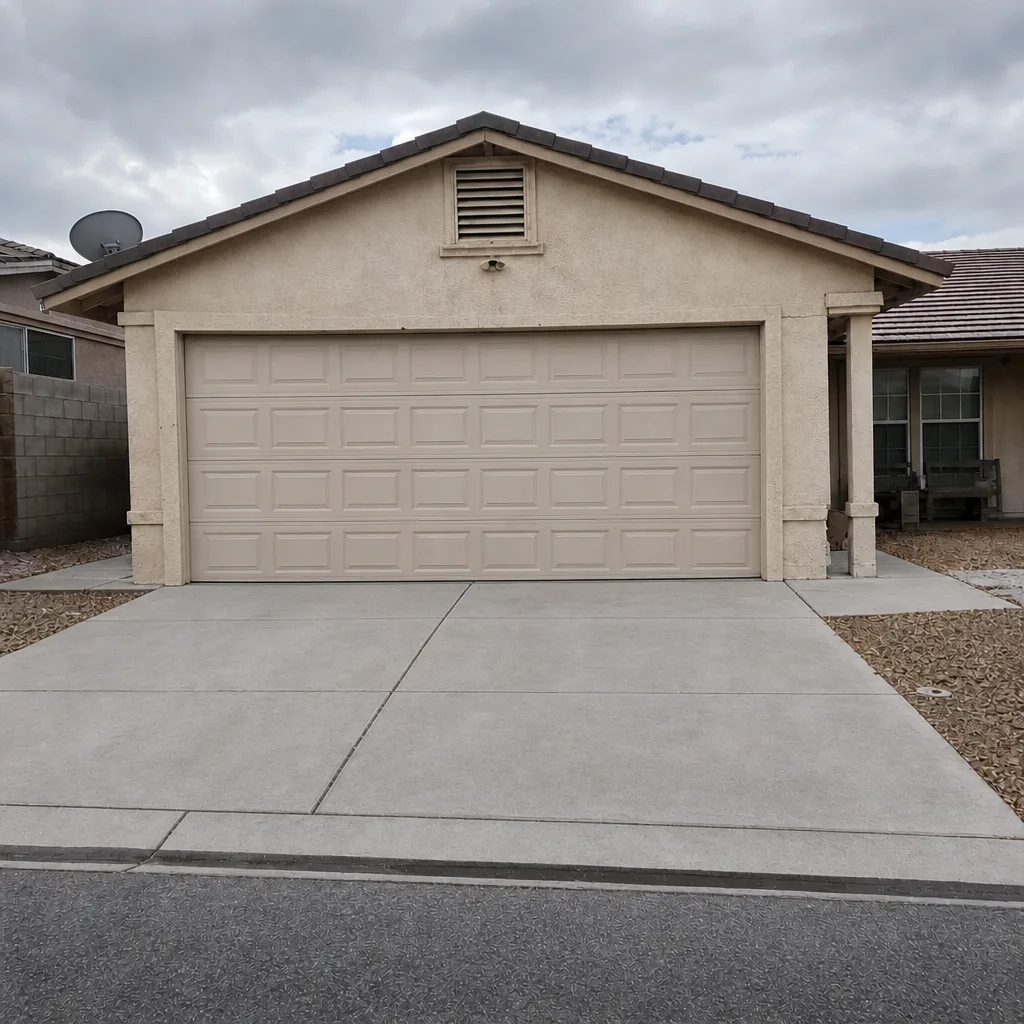 After
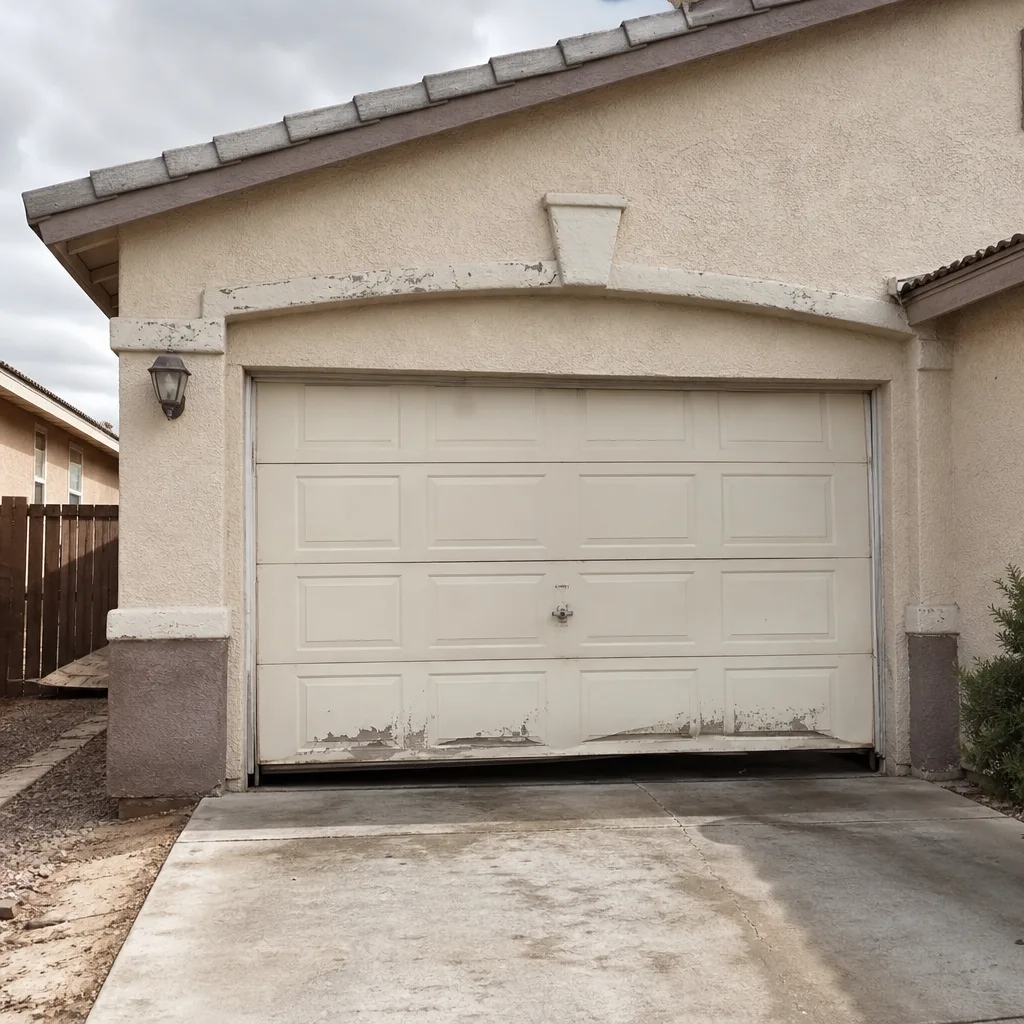 Before
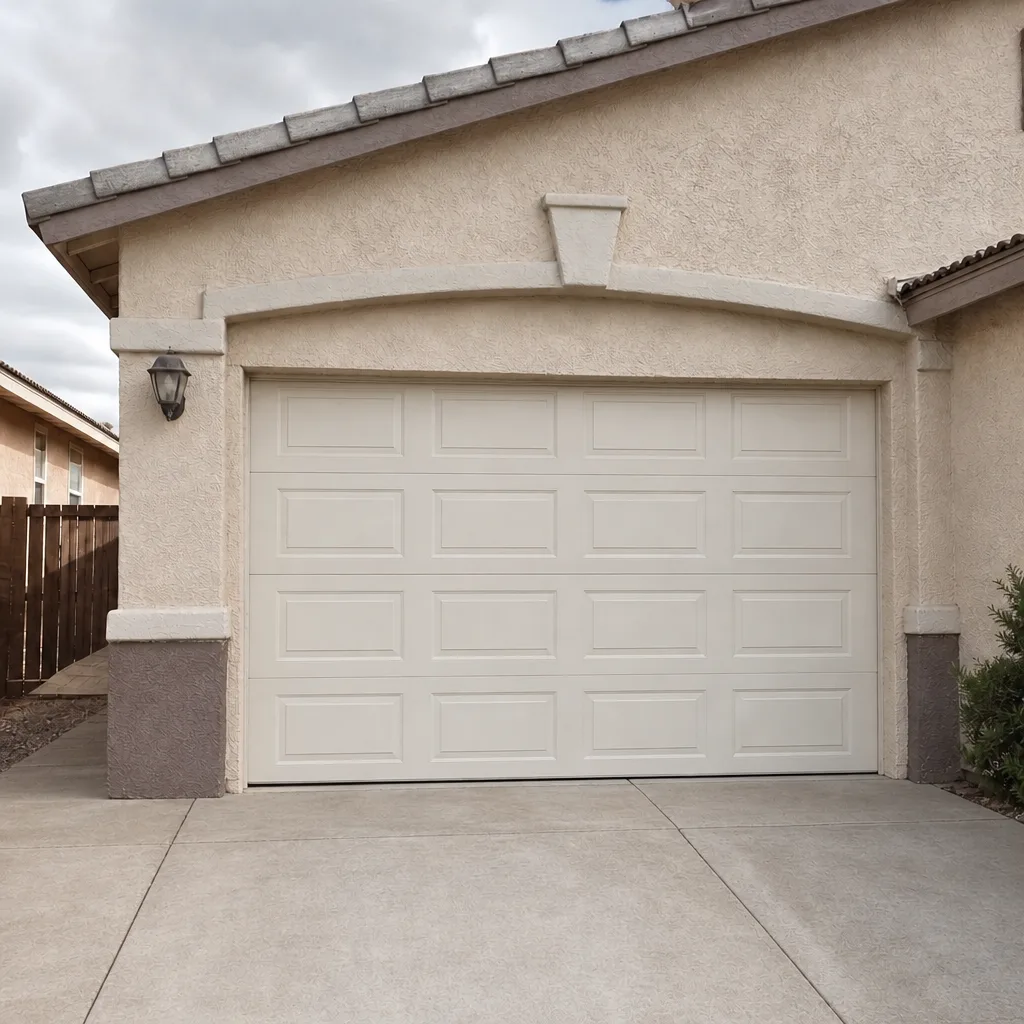 After
Torsion vs Extension Springs in North Las Vegas: The Honest Answer for Local Doors
Choose torsion springs unless you’re replacing like-for-like on an older door that isn’t set up for the conversion, and in that case, add safety cables. Here’s the short version: torsion springs wind on a rod above the door and fail inward; extension springs stretch along the horizontal tracks and, when they snap, throw themselves outward. On North Las Vegas ranch homes built in the 1960s and 70s, those extension springs have no safety cable threaded through them, which means a break turns the spring into shrapnel inside your garage. If your door is newer or you’re due for new springs, torsion wins. Call (866) 347-9495 and we’ll look at what you actually have.
Two things make this a North Las Vegas question, not a generic one. First, the housing stock here is split: the tract boom from the 1990s through the 2010s left thousands of homes with builder-grade torsion springs hitting the 10-to-15-year mark right now, and the older pockets near downtown are still running 40-plus-year-old extension springs on original wooden doors. Second, the heat. A spring rated for 10,000 cycles doesn’t get those cycles here at the rate the spec sheet implies, because it’s flexing through temperature swings most of the country never sees.
Key Takeaways
- Torsion springs are the safer choice and the one we recommend for new installs.
- Extension springs on pre-1980 North Las Vegas ranch homes are the highest-risk doors in the valley right now, mostly because they’re 40-plus years old and unprotected.
- A missing safety cable is an inexpensive part and a huge difference in what a break looks like.
- Not every door can convert to torsion without measuring first, especially two-story tract homes with low headroom.
How the two spring types actually fail
Plain mechanics: a torsion spring is a coil mounted on a rod above the door, and it stores energy by winding and unwinding as the door travels. An extension spring lives along the horizontal track on each side and stores energy by stretching. Same job, opposite direction of force.
What that means at the moment of failure is the part that matters. A torsion spring breaks and stays on its rod, up and out of the way. You find out when the door won’t lift. An extension spring breaks and travels. It flies along the track and slams into whatever’s in its path.
That’s why the safety cable matters. It’s a steel cable threaded through the center of the extension spring so that when the spring lets go, the cable catches it and the spring drops instead of launching. On the original 1960s and 70s ranch homes near downtown North Las Vegas, most of these springs were installed without one. Not because anyone did anything wrong, but because that wasn’t standard practice in the era those doors went in. So a break that would be a nuisance elsewhere becomes a hazard here, and it’s happening on thousands of local doors right now.
This is not a DIY fix. A door is a heavy, spring-loaded piece of machinery, and the springs are under tension whether the door is up or down. Do not cut, unwind, or loosen a spring yourself. We’re licensed and insured for this work, and the honest advice on a spring under tension is always the same: let someone trained handle it.
The heat fatigue math nobody quotes
Manufacturers rate torsion springs in cycles: 10,000 cycles for a standard spring, more for a heavier-duty one. One cycle is one open and one close, so a two-car household running the door four times a day lands around 1,460 cycles a year. That math looks like a seven-year spring.
Now put that spring through a North Las Vegas summer. A garage interior can swing from a cool 70°F overnight to well past 115°F in the afternoon, and the metal door and the springs expand and contract along with it. Every cycle in that temperature range does slightly more wear than a cycle at a steady 70°F. The manufacturer’s number isn’t wrong, it just wasn’t written for our climate. Practically, a builder-grade spring that should last seven years often gives out closer to five or six, and after a 115°F July, we see clusters of snapped torsion springs in subdivisions like Aliante and Eldorado, often on the same day, because the doors up and down the street all went in around the same time.
The other thing heat does is dry out lubricant. A dry spring grinds, a grinding spring fatigues faster, and the rollers in those sand-blasted tracks from our spring wind season wear down too. If your opener strains to lift the door, the opener is almost never the problem; the springs and rollers are. More on that in our guide to Garage Door Parts in North Las Vegas.
Torsion vs extension: a side-by-side for your door
| What you’re comparing | Torsion spring | Extension spring |
|---|---|---|
| Where it sits | On a rod above the door | Along the horizontal track, one per side |
| What happens when it breaks | Stays on the rod, door won’t lift | Travels, which is why a safety cable is essential |
| Lifespan in North Las Vegas heat | Usually 5-7-8 years on a standard spring, longer on heavy-duty | Varies wildly; on original 1960s-70s doors, often decades past replacement age |
| Safety cable needed | No | Yes, and often missing here |
| What we recommend | Standard choice for new springs and conversions | Only when the door can’t take torsion, and only with cables |
The recommendation, plainly: if you’re replacing springs, go torsion. If you’ve got an old extension-spring door near downtown and the goal is to get it safe without a full conversion, at minimum get the safety cables installed. That’s a small job that changes the whole risk picture.
Low headroom and why the choice isn’t always yours
A standard torsion setup needs clearance above the door to mount the rod and springs, and it needs the door’s top panel to clear the opening as it travels. Some two-story tract homes in North Las Vegas have attached garages with tight headroom, and on those doors a standard torsion install can’t fit the way it fits on a house with more height above the opening. There’s a fix (a low-headroom torsion setup, or a rear-mount in some cases), but it has to be measured, not guessed. We measure headroom, track configuration, and door weight before recommending anything, and every so often the answer for a particular door is to stay with extension springs and add the cables. We tell you that when it’s true instead of upselling a conversion your door can’t take cleanly.
What spring work costs in North Las Vegas
Our spring repair runs $180-$340, which covers replacing and balancing the spring (or springs) matched to your door. That’s the price we quote on the phone and the price at the door, no surprises.
- Spring repair/replacement: $180-$340
- Cable repair, including safety cables: $130-$250
- Roller replacement (often paired with spring work): $110-$220
- Opener repair if the motor got worked too hard: $120-$320
- Opener installation if you’re replacing it: $250-$550
- Panel replacement if a broken extension spring hit the door: $250-$500
- Full garage door repair: $150-$600
Not sure which you have? A quick look at our Garage Door Parts page shows the difference. And if you’ve already got a written estimate from someone else, we’re happy to give a free second opinion on it. No trip charge inside the county, a standing $40 off any repair over $200, and a permanent 10% for seniors and veterans. Calls are answered by a live person around the clock, so if a spring lets go at nine at night and your car is sealed inside, call and we’ll quote it on the spot.
It’s all backed by the 90-Day Done Right Promise: if the door balance is off or the tension isn’t right within 90 days, we come back and make it right, one call, no runaround. We’re also fluent in the brands on our own streets, Chamberlain, Genie, Clopay, Amarr, and the rest, so parts aren’t special-ordered.
FAQs
Repairing (replacing the spring) is almost always cheaper and is what we recommend, at $180-$340 versus a full door installation in the $700-$2,200 range, provided the door and hardware are otherwise sound. We inspect the panels, tracks, and rollers before suggesting anything bigger. Call (866) 347-9495 for a free estimate.
Yes, in most cases, because torsion springs fail safer and last longer in our heat, but it depends on headroom and the door’s condition, which we measure before quoting. If a conversion doesn’t fit, we’ll tell you so and install safety cables instead. Call (866) 347-9495 and we’ll look at your door.
Because an extension spring stores energy along the track and travels outward when it snaps, while a torsion spring stays on its rod. That’s why a safety cable threaded through the extension spring is essential, and on many older North Las Vegas ranch homes, it isn’t there. Call (866) 347-9495 if you’re not sure yours has one.
Yes, we handle same-day and emergency spring calls, and a live person answers the phone to quote it before we roll. Spring repair is $180-$340, quoted on the call and held at the door. Call (866) 347-9495 for a free estimate.
If you’d rather have it looked at, Otto’s Garage Door North Las Vegas offers a no-pressure assessment in North Las Vegas, and we’ll tell you straight whether your door needs torsion, extension with cables, or just a tune-up. Call (866) 347-9495 for a free estimate.
Written by the team at Otto’s Garage Door North Las Vegas, serving North Las Vegas, NV.