
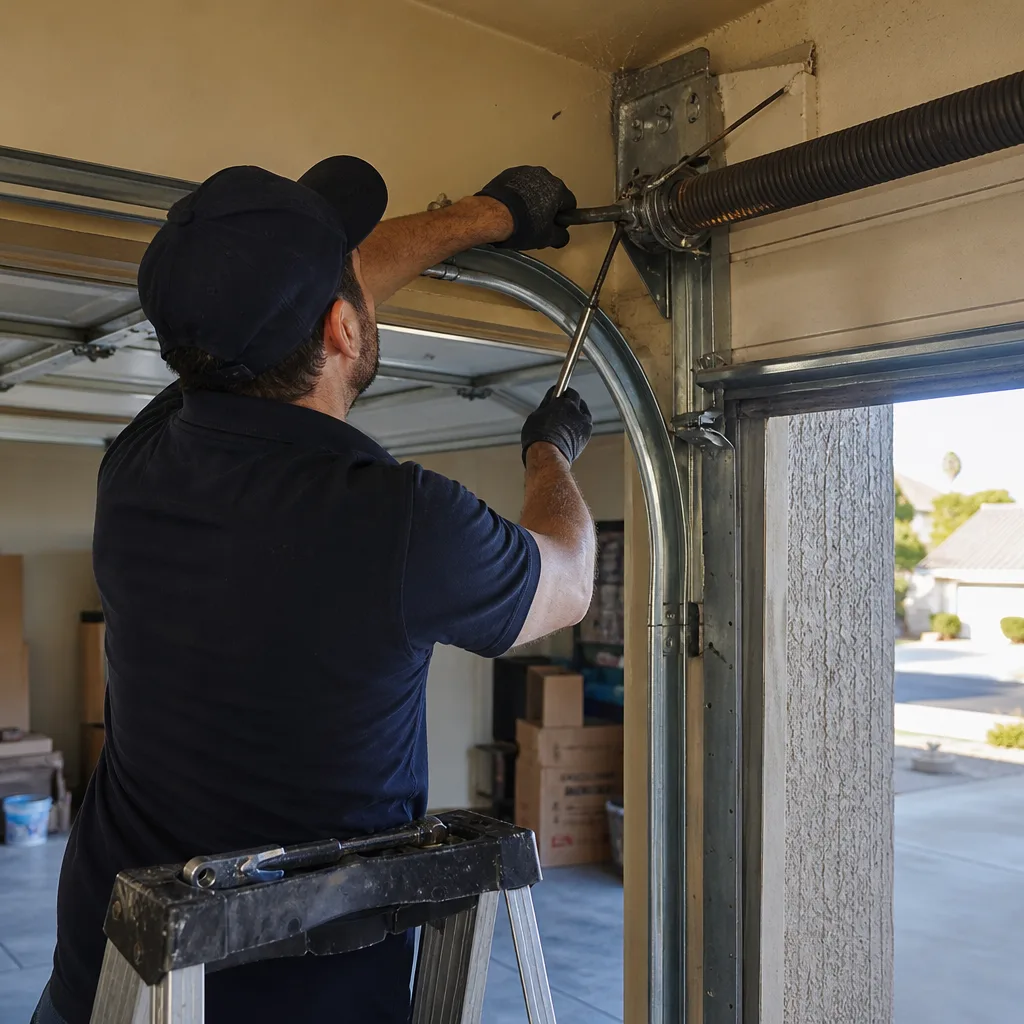
Last updated November 18, 2026
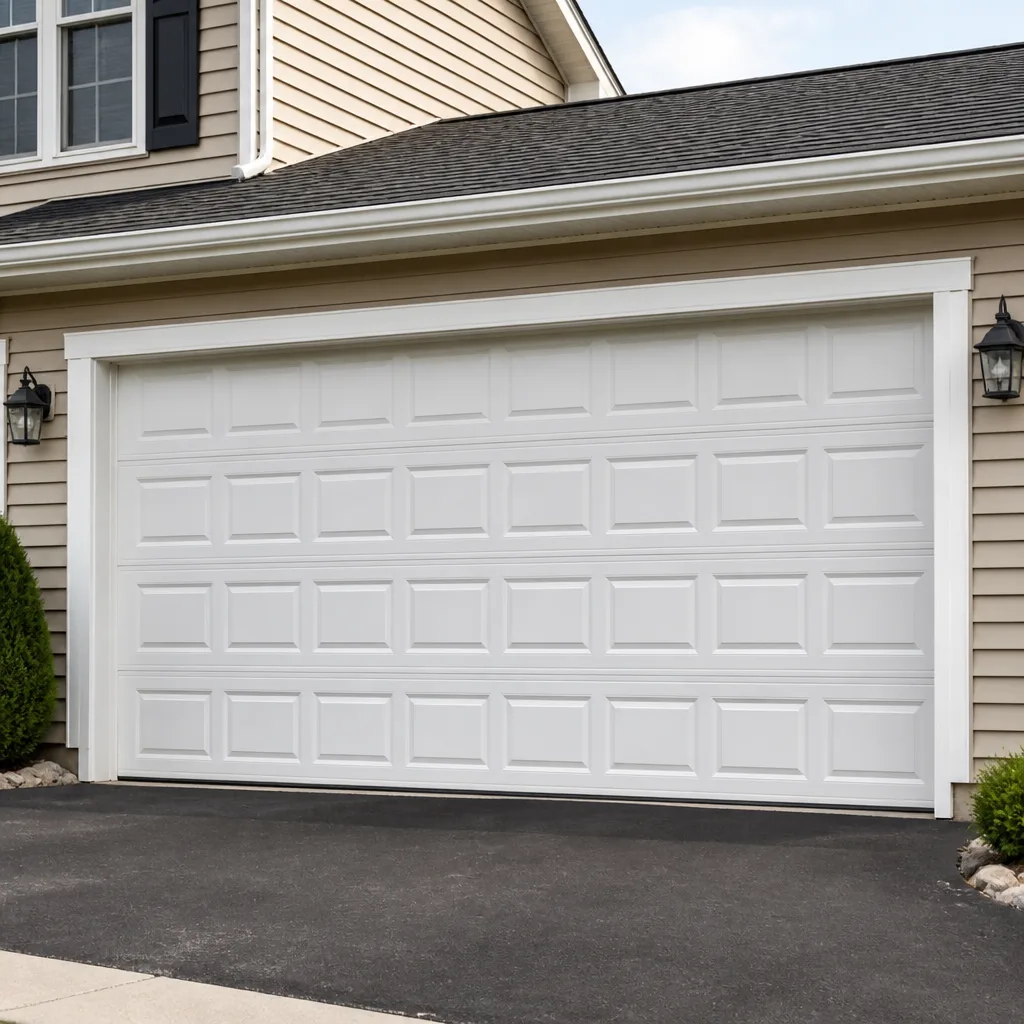 Raised-panel steel
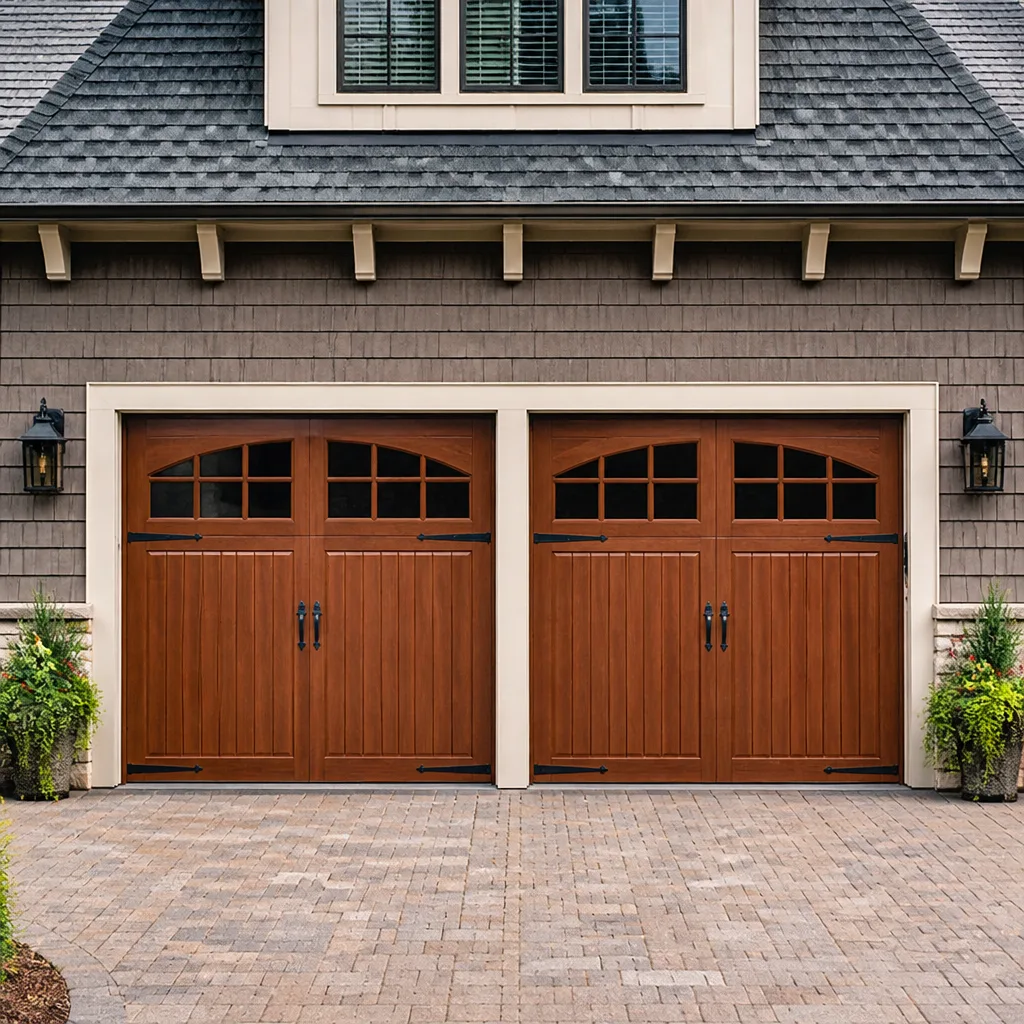 Carriage house
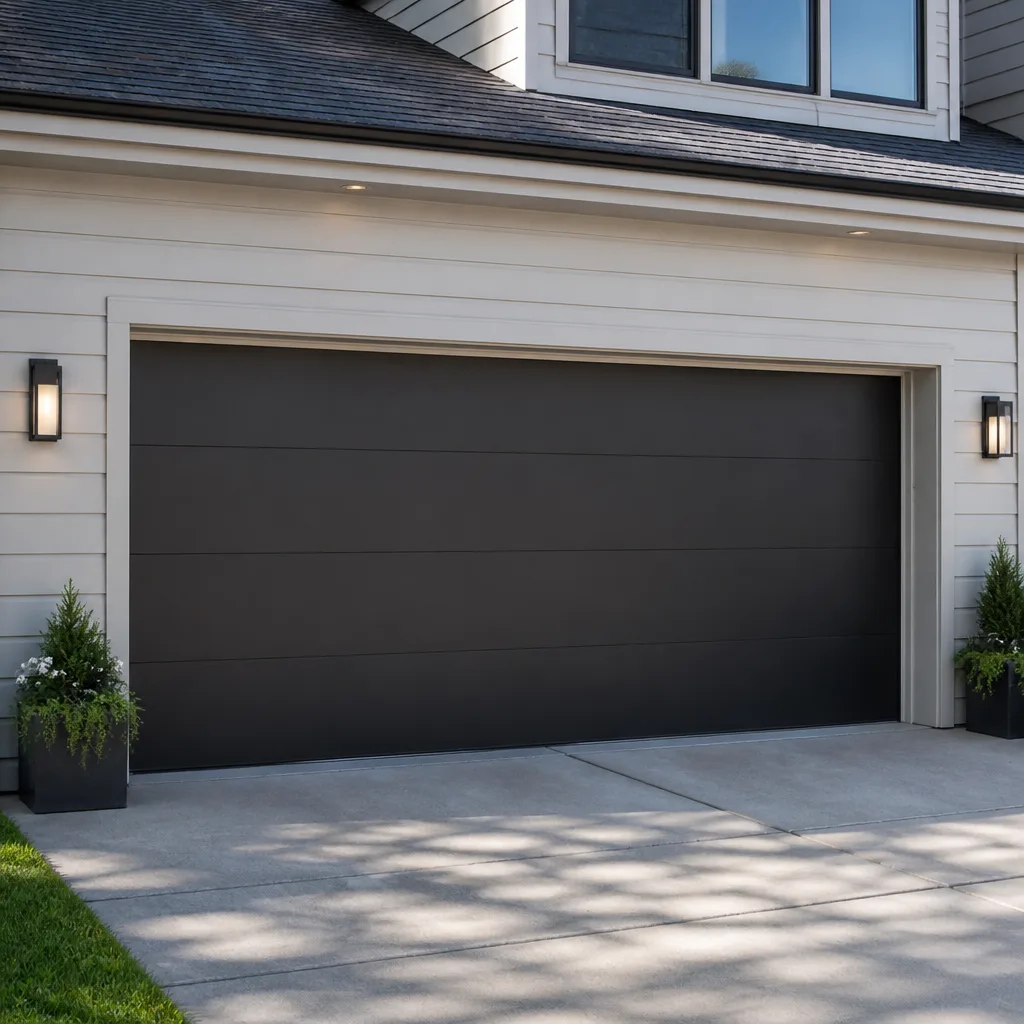 Modern flush
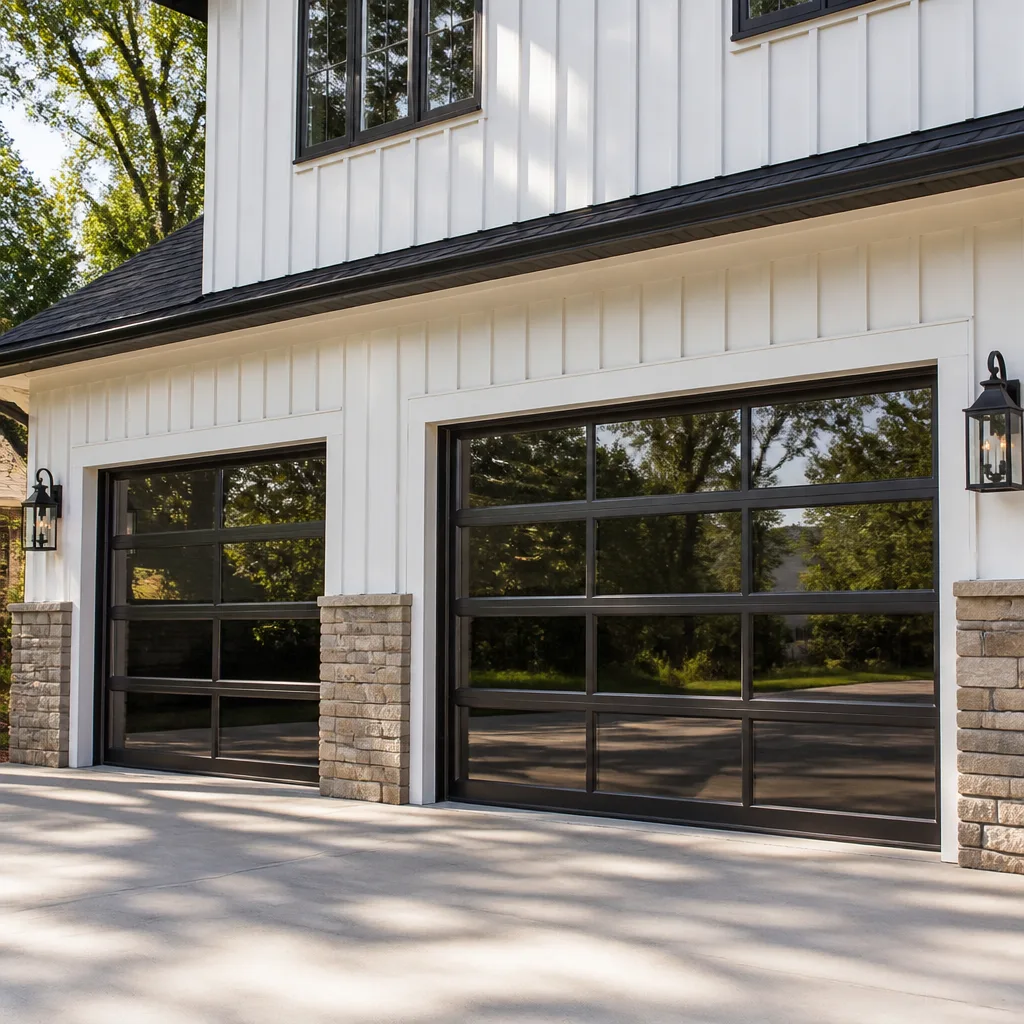 Full-view glass
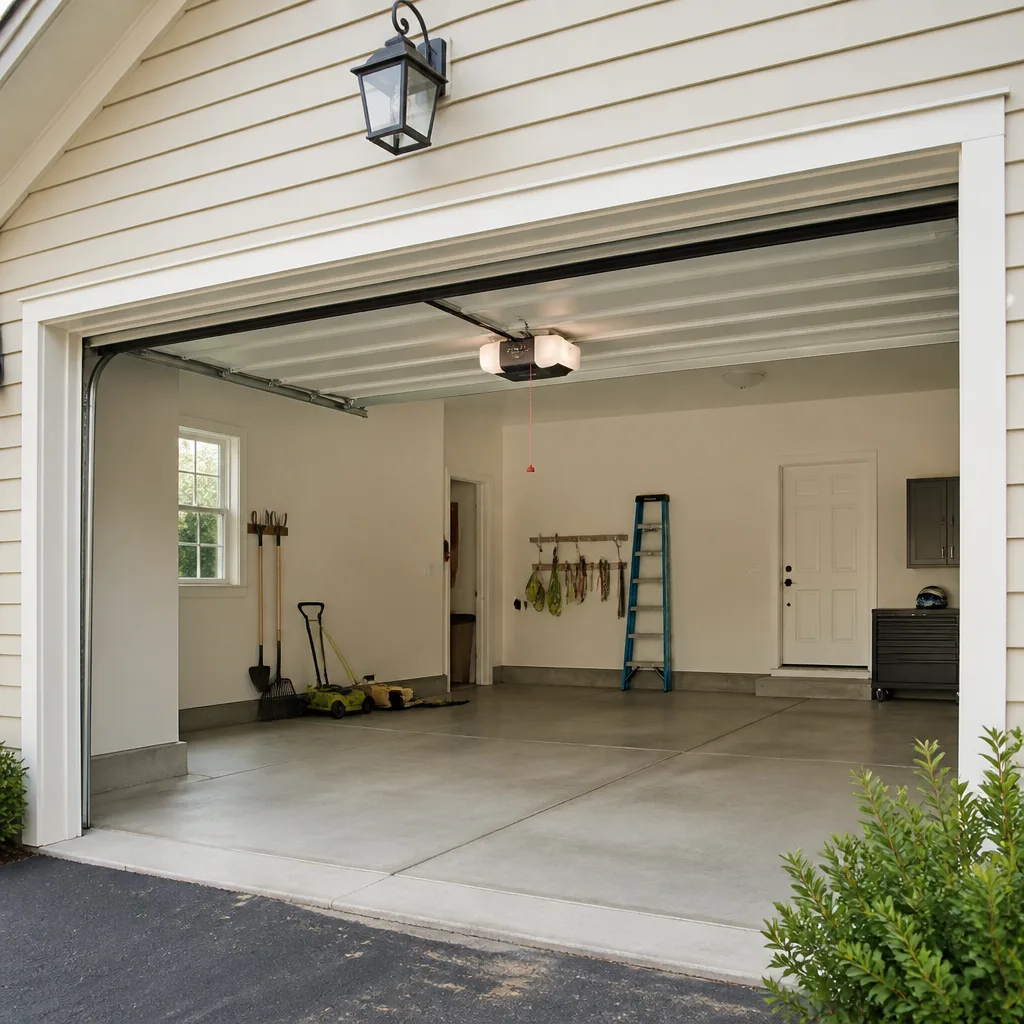 LiftMaster openers
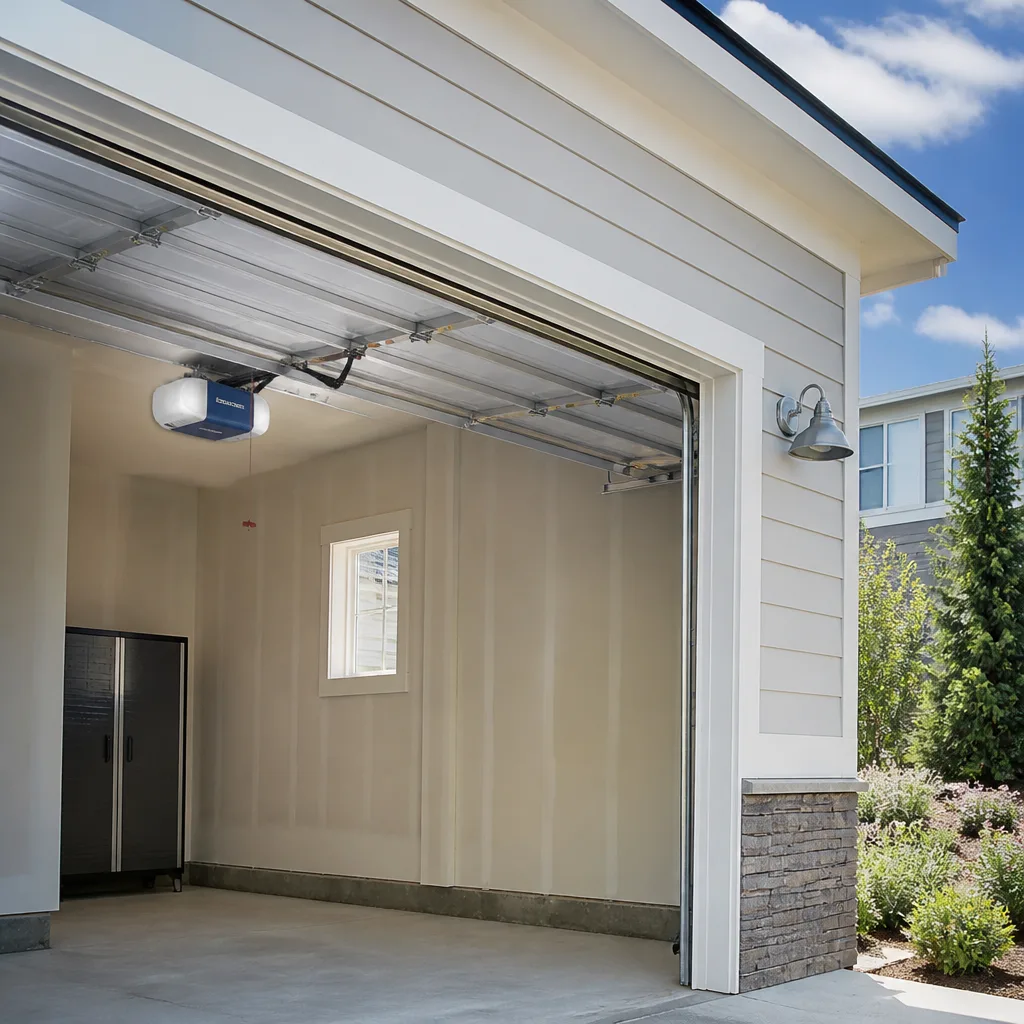 Chamberlain openers
Full 25-point door and opener safety check with every visit - springs, cables, rollers, tracks, and your LiftMaster or Chamberlain opener included
You get a price before we start. It does not change when the pro arrives.
Get your free estimateGarage Door Opener Repair & Installation Warning Signs Every Homeowner Should Know
The opener that hesitates for two seconds before engaging isn’t “warming up” – it’s a capacitor that’s failing, and capacitors don’t recover. They just quit completely, usually on a Tuesday afternoon in July when it’s 108°F in North Las Vegas and your car is on the wrong side of the door. Most homeowners miss the warnings because nobody tells them what to listen for. This guide names the specific signals, what’s actually causing each one, how urgent it really is, and where the honest line sits between fixing what you have and replacing it.
Quick Answer
A garage door opener gives you roughly six weeks of warning before it fails, and the reliable early signs are hesitation before the door moves, grinding on engage, the door reversing with nothing in its path, a blinking wall button, and any burning smell or sparking. Burning smells, sparking, and a door that drops on close mean stop using it today and call a professional before the door comes down on a car, a pet, or a person.
Styles & brands we work with
- Raised-panel steel
- Carriage house
- Modern flush
- Full-view glass
- LiftMaster openers
- Chamberlain openers
Table of Contents
- The Warning Sign Urgency Ladder
- What Vibration Patterns Tell You
- The Age-Plus-Symptom Calculation
- Safety Sensor Failures That Aren’t Obvious
- Why a Las Vegas Garage Punishes Openers
- Keep It or Replace It: The Honest Framework
- What Different Brands Tell You
- The 10-Minute Monthly Check
The Warning Sign Urgency Ladder
Not every symptom deserves the same reaction. Some mean “watch it,” some mean “schedule service this week,” and a few mean “stop using the door right now.” Sorting your symptom into the right rung is the single most useful thing you can do before you pick up the phone, because it tells you whether you have a week or an hour. Here’s how we sort them when a homeowner calls Otto’s Garage Door in North Las Vegas.
Rung 1 – Watch It
- Intermittent wall button that works on the second or third press
- Door responds slowly, or the light comes on but the motor lags
- Remote works from the driveway but not from inside the garage
- One remote works and another doesn’t, with fresh batteries in both
None of these are emergencies. They’re the two-second hesitation that points to a failing capacitor or a weakening logic board, and they’re worth a service call before they turn into rung 3.
Rung 2 – Schedule Service This Week
- Grinding or growling the moment the motor engages
- Door reverses on its own with nothing in the path
- Door travels partway and stops, then won’t respond
- Chain or belt visibly sagging or slapping the rail
- Opener runs but the door doesn’t move at all
These mean a mechanical part is wearing or a safety circuit is misfiring. The door still works, but it’s working harder every cycle, and the parts doing the extra work are the ones you don’t want to lose.
Rung 3 – Stop Using It Today
- Burning smell near the opener head or wall control
- Visible sparking or scorching at the outlet or wiring
- Door drops fast on close instead of lowering smoothly
- Door falls when you disconnect the opener (pull the release handle only if you can safely hold it – see the safety note below)
Stop here. A burning smell means the motor windings or wiring are overheating, and a door that drops on close means the springs or cables have failed. A garage door is 200 pounds riding on two springs. Respect it. Don’t run the opener to “see if it does it again,” and don’t try to adjust springs or cables yourself – those are the parts that injure homeowners every year, and they belong to a trained professional.
What Vibration Patterns Tell You
Put your hand flat on the opener rail while the door runs. You’ll feel one of three things, and each one points to a different repair with a very different price tag. This is the fastest diagnostic a homeowner can do without tools.
A loose chain or belt feels like a rapid rattle that speeds up and slows down with the door’s travel. It’s usually the cheapest fix on this list – a tension adjustment or a belt that’s stretched past its service life. On a Chamberlain or Genie belt-drive unit, a worn belt is a small job. On a chain-drive, a slack chain that slaps the rail is often just tension.
A worn main gear feels like a coarse, rhythmic grind that comes from the opener head itself, not the rail. You’ll hear it even with the door disconnected from the opener. That gear is the plastic or metal drive gear inside the unit, and when its teeth wear down the opener strains and eventually strips out. It’s a bigger job than a belt, and by the time you hear it, the opener has been working hard for a while. It’s also the moment to weigh repair against replacement, because a gear replacement on a twelve-year-old unit is money into a motor that’s near the end of its line.
A rumble from the door, not the opener feels like a low shudder that comes through the rail from the door side. That’s usually a roller, hinge, or track issue, not the opener at all. If the opener is straining, the problem is almost never the opener – something downstream is fighting it. Our Garage Door Repair in North Las Vegas team sees this constantly: a homeowner books an opener repair and the real fix is four rollers and a track adjustment.
The Age-Plus-Symptom Calculation
The same symptom means two different things depending on how old the unit is. A three-year-old opener that hesitates is a warranty conversation or a single failing component. A twelve-year-old opener that hesitates in a hot North Las Vegas garage is a system telling you it’s near the end. We count opener cycles the way you count tire miles – a door that runs four times a day has a very different life ahead of it than one that runs twenty times a day for a family of five.
Run this calculation before you decide anything:
- How old is the opener? If it’s past ten years, treat every symptom as a signal about the whole unit, not just one part.
- How many times a day does the door run? Four cycles a day is light use. Twenty cycles a day is heavy, and it ages the unit fast in the heat.
- Is the symptom intermittent or constant? Constant means a part has failed. Intermittent in the heat usually means a capacitor or a logic board that’s degrading.
- Has anything else gone wrong in the last year? Two repairs in twelve months on a ten-year-old unit is a pattern, not bad luck.
- Does the unit have a battery backup and safety reverse that still work? If not, safety code considerations start to weigh in.
A twelve-year-old unit with intermittent behavior and one prior repair in North Las Vegas typically gets a “plan for replacement soon” recommendation from us. A three-year-old unit with the same symptom gets a diagnostic and a repair, because the motor clearly has life left. Same symptom, different answer, because the math is different.
Safety Sensor Failures That Aren’t Obvious
The two little sensors at the bottom of your tracks are the most misunderstood part of the whole system. When they fail cleanly, the door won’t close and you know it. When they fail quietly, the door closes just fine until it doesn’t stop for a kid’s tricycle. The quiet failures are the ones worth knowing about.
- The cracked lens. The sensor LED still blinks the correct color, so nothing looks wrong. But a hairline crack or a sun-baked film on the lens scatters the infrared beam, and the sensor drifts in and out of detection. In North Las Vegas, the low angle of the afternoon sun through an open garage door pushes these sensors hard, and sun-damaged lenses are a common cause of “it works in the morning and not in the afternoon.”
- Slow misalignment. The sensors are mounted to the tracks by small brackets, and those brackets drift over months as the door vibrates on every cycle. A sensor that’s a quarter inch out of line still lights up, still looks aimed, and still misses the beam forty percent of the time. This is why “it just started doing it for no reason” is almost always drift, not a failed sensor.
- Dirty or spider-webbed. A spider web across the lens or a film of desert dust is enough to weaken the beam. Clean both lenses with a soft cloth before you call anyone – it’s the cheapest fix in the book.
Don’t blind the safety eyes to “fix” a door that won’t close. If the sensors are the problem, the right answer is to repair or replace them, not to tape over the beam. The safety reverse is what keeps a closing door from crushing what’s underneath it.
Why a Las Vegas Garage Punishes Openers
A garage in North Las Vegas routinely hits 130°F or higher in the summer, and that heat ages every part of the opener faster than the manufacturer’s rating assumes. Capacitors dry out. Lubricant on the rail thins and stops doing its job, so the chain or belt works harder. Logic boards bake. A unit that would give you fifteen years in a mild climate often gives you ten here, and the failures cluster in June through September, when the heat is worst and the opener gets the least break.
That’s why our advice on a North Las Vegas unit is a little more conservative about age than what you’d hear in a milder market. A ten-year-old opener in this heat is working past what the ratings promise. When we quote a repair in North Las Vegas, we think about how much of that unit’s life the heat has already used. If the door is straining in July, our Garage Door Opener Repair & Installation in North Las Vegas team will tell you straight whether you’re putting money into a motor with years left or patching one that’s running on borrowed time.
Here’s the good news: the door itself is a different calculation. Springs, cables, rollers, and tracks don’t care about the heat the way the electronics do, and the door hardware can outlast two or three openers. If the door is sound, the opener is the piece you replace.
Keep It or Replace It: The Honest Framework
This is where a lot of homeowners get sold a replacement they didn’t need. Here’s the framework we use, and it doesn’t require you to buy anything to apply it.
Repair when: the opener is under ten years old, the repair cost is well under the price of a new unit, the motor is quiet and runs smooth, and this is the first real failure. A belt, a safety sensor, a wall button, or a capacitor on a younger unit is a repair, full stop.
Replace when: the opener is past ten years in this heat, the repair is a main gear or a logic board on an aging unit, you’ve had two or more repairs in a year, the unit lacks a safety reverse or battery backup you want, or the motor is straining because the door hardware is fighting it and the whole system needs a rebuild.
The hard line: if the cost of the repair climbs past roughly half the price of a quality replacement, and the unit is already in its late years, you’re paying to save a motor that’s about to make the same decision for you. That’s the moment we’ll tell you to let it go.
What we won’t do is push a replacement on a sound unit because it’s easier to sell. A door is 200 pounds riding on two springs, and the opener is just doing the lifting – if the door and springs are healthy, a repair is usually the answer. When the time does come for a new unit, our Garage Door Installation in North Las Vegas page lays out what a quality replacement looks like in this market.
What Different Brands Tell You
Brand matters less than condition, but it does tell you something about parts and how the repair will go. We work on all the majors, and a few patterns show up again and again.
Chamberlain and Genie units are the most common openers we see in homes around North Las Vegas, and parts are available for both. A Genie belt drive that’s slapping its rail is a different fix than a Chamberlain chain drive that’s grinding at the head, but both are routine for a trained tech. The failure modes are predictable, which is why our technicians have up to 22 years of experience across these brands and can usually isolate the problem on the first visit.
Clopay and Amarr come into play when the door itself is the conversation – different door lines, different spring systems, different track hardware. If your opener is straining and the door is a Clopay or Amarr, the door side of the system is worth checking before you spend money on the opener. If the opener is straining, the problem is almost never the opener.
If your opener is a brand we don’t list, that doesn’t mean you’re stuck. Bring us the model and we’ll tell you what a diagnostic and repair looks like before anyone touches the unit.
The 10-Minute Monthly Check
Ten minutes a month catches most of what fails. This is the routine our techs run, adapted for homeowners.
- Test the safety reverse. Lay a 2×4 flat on the ground under the closing door. The door should stop and reverse on contact. If it doesn’t, stop and schedule service.
- Test the safety sensors. Wave your foot across the beam with the door closing. It should reverse. If it doesn’t, don’t run the door until it’s fixed.
- Listen. Run the door and listen for grind, growl, or slap. Compare what you hear now to what you heard last month.
- Feel. Put a flat hand on the rail while it runs. Rattle is a chain or belt. Coarse grind is the gear. Shudder is the door.
- Look at the springs. If you see a gap in a torsion spring or a stretched extension spring, don’t run the door – call a professional.
- Check the door balance. With the opener disconnected and the door halfway up, it should hold. If it falls, a spring or balance issue is in play.
- Test the wall button and every remote. If only one input fails, it’s the input, not the motor.
If anything on this list fails, you’ve found your problem a week earlier than you would have. If you’re in North Las Vegas and you’d rather have a trained eye do it, that’s what a free estimate is for.
Common Mistakes to Avoid
- Assuming a slow opener needs a new opener. Most of the time, the opener is straining because the door, springs, or rollers are the real problem. Diagnose the door first, because replacing the opener won’t fix a door that’s fighting it.
- Ignoring the two-second hesitation. That hesitation is a capacitor or a logic board that’s about to fail completely. It doesn’t “settle in” or “get better with use.” It fails, usually at the worst time.
- Oiling the tracks. Don’t. Lubricant on the tracks attracts grit, and grit wears rollers faster. Lubricate the rollers, hinges, and springs; leave the tracks clean and dry.
- Adjusting the safety sensors by eye. Aim them with a flashlight and a helper, not from memory. A sensor that’s a quarter inch out of line still lights up and still misses the beam, and North Las Vegas’s sun angle is unforgiving in the afternoon.
- Taping over a safety sensor to make the door close. It works until it doesn’t, and the thing it stops for is often a kid on a tricycle or a pet. Fix the sensor, don’t blind it.
- Using a national call center that quotes one price and bills another. We’ve heard this exact story from North Las Vegas homeowners more times than we can count. The price quoted on the phone should be the price on the invoice – if it isn’t, that’s not a pricing problem, that’s a trust problem.
- Replacing an opener without checking the door. A new opener bolted to a door with a failing spring will strain and fail too. The door is the foundation; the opener is the power.
See the difference
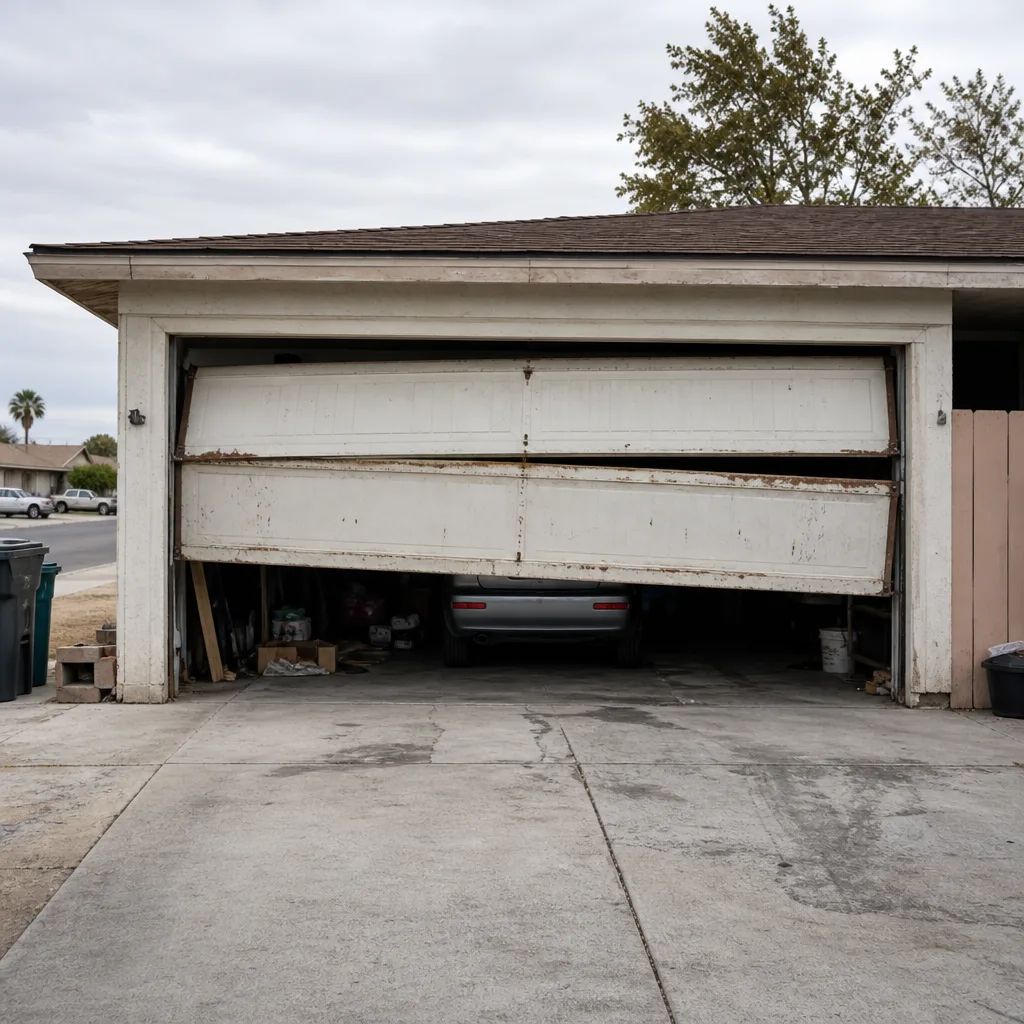 Before
 After
 Before
 After
 Before
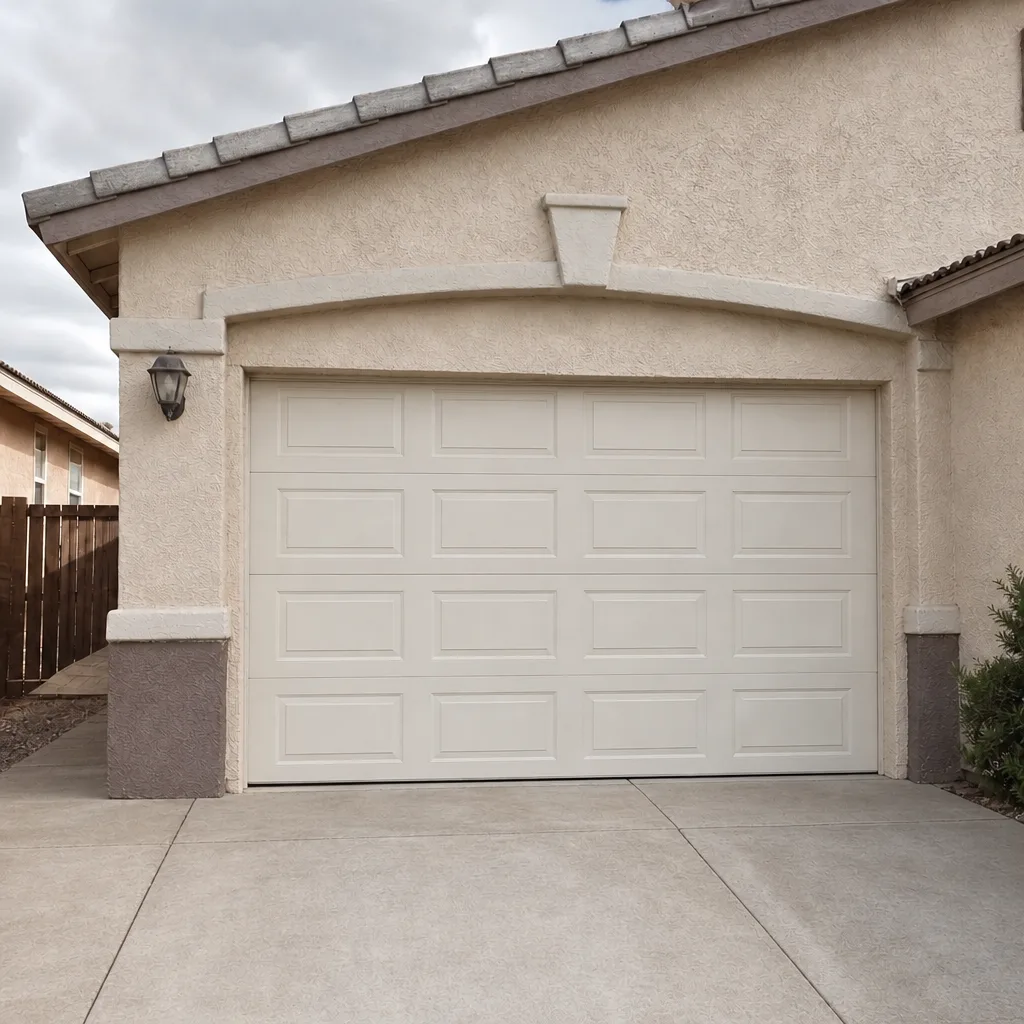 After
When to Call a Professional
Call a professional when you smell burning, see sparking, or the door drops on close – those are stop-now signals. Call when the safety reverse fails, when the door reverses on its own with nothing in the path, or when you hear grinding on engage. Call when the door is out of balance, when a spring shows a gap, or when the opener runs but the door doesn’t. And call when you’ve hit rung 2 on the ladder and you’re not sure whether it’s a belt or a gear. We don’t believe in guessing with a door that weighs 200 pounds. Otto’s Garage Door North Las Vegas offers free estimates in North Las Vegas – call (866) 347-9495, and a live person picks up, quotes the job on the call, and holds that number at the door.
Frequently Asked Questions
The first reliable sign is hesitation before the door moves – a two-second lag that points to a failing capacitor or logic board. From there, grinding on engage, intermittent wall button response, the door reversing with nothing in the path, and vibration that changes over weeks are the warnings that show up before a full failure. In North Las Vegas heat, these signs often appear in early summer and worsen as the garage climbs past 130°F.
Most openers can be repaired. Belts, capacitors, safety sensors, wall buttons, and logic boards are all common repairs, and on a unit under ten years old, repair is almost always the right call. Replacement makes sense when the unit is past ten years in this heat, the main gear or logic board has failed on an aging motor, or you’ve had multiple repairs in a year. We’ll tell you which side of that line you’re on before anyone touches the unit.
Once a year is the baseline, and twice a year for a door that runs more than eight cycles a day. The heat in a North Las Vegas garage dries out capacitors, thins the lubricant, and ages logic boards faster than the manufacturer’s rating assumes. An annual service catches the worn belt, the drifting sensor, and the straining motor before any of them turn into a rung 3 failure.
A hesitation points to a capacitor that’s failing or a logic board that’s losing timing. Capacitors don’t recover – they fail completely, usually within weeks of the first hesitation. It’s not “warming up,” and it doesn’t get better with use. Get it looked at before it quits on a hot Tuesday afternoon with your car trapped inside.
Stop using the door immediately and call a professional. A burning smell means the motor windings or the wiring are overheating, and continuing to run the opener can start a fire or cause a shock. Don’t open the unit to look inside, and don’t try to “run it once more” to confirm. Call (866) 347-9495 and we’ll tell you what to do while help is on the way – estimates are free.
No. We quote the job on the phone, and the number holds when the technician gets to the door. If the diagnosis turns up something the phone call couldn’t reveal, you’ll hear the new number before anyone touches a tool, and nothing starts until you agree to it. That’s the standard for every job under the 90-Day Done Right Promise.
The Bottom Line
Your opener gives you about six weeks of warning, and the warnings are specific: hesitation, grinding on engage, reversing with nothing in the path, a blinking wall button, and any burning smell or sparking. Sort your symptom into the ladder – watch it, schedule this week, or stop using it today – and you’ll know exactly how urgent it is before you call anyone. If the unit is past ten years in this North Las Vegas heat, run the age-plus-symptom calculation before you spend money. If it’s younger and the door is sound, repair it and move on. If the door is the problem, the opener is the wrong place to spend.
The name on the invoice should be the name on the license and the name on the door. If you’re in North Las Vegas and your opener is giving you one of these warnings, call (866) 347-9495 for a free estimate. A live person answers, quotes the job on the call, and holds that number when the truck pulls in. You can start at the Otto’s Garage Door North Las Vegas home page, and every job comes with the 90-Day Done Right Promise in writing.
Written by the team at Otto’s Garage Door North Las Vegas.