
Last updated November 18, 2026
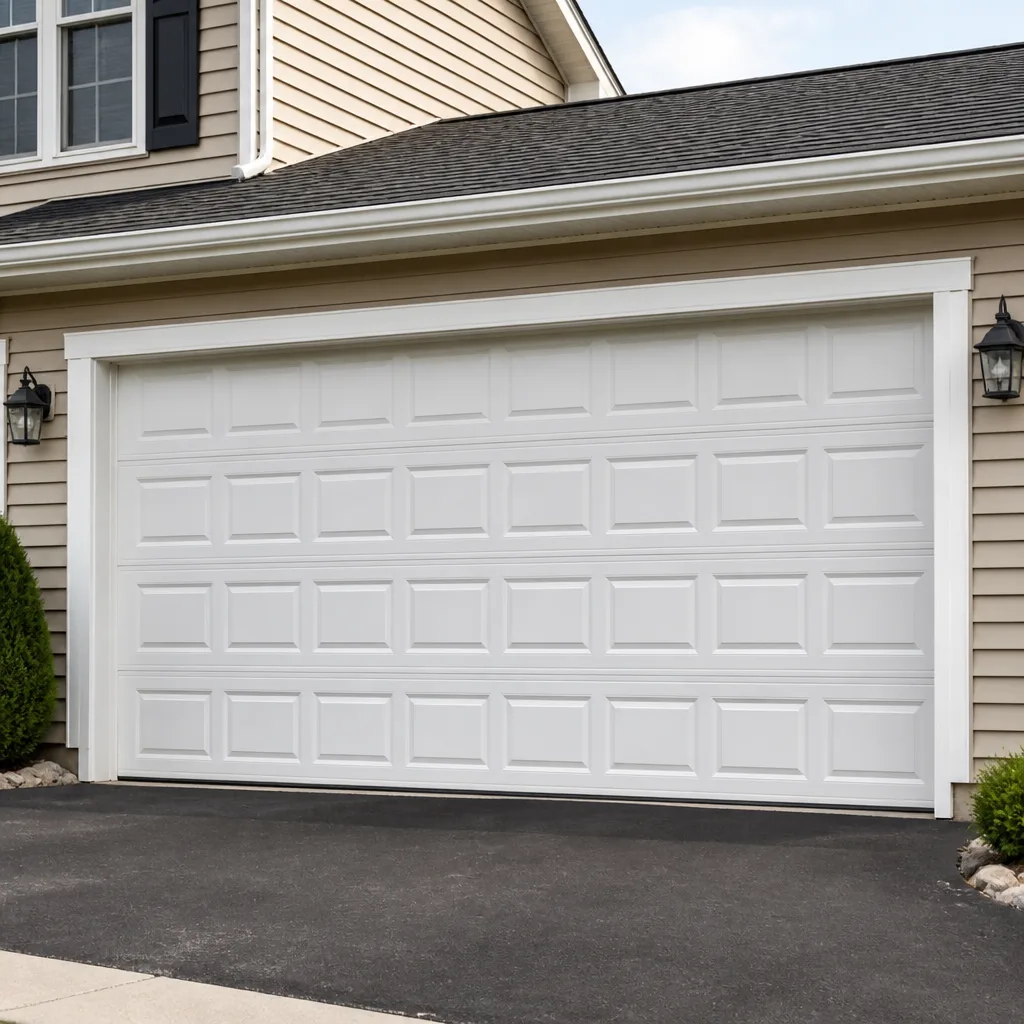 Raised-panel steel
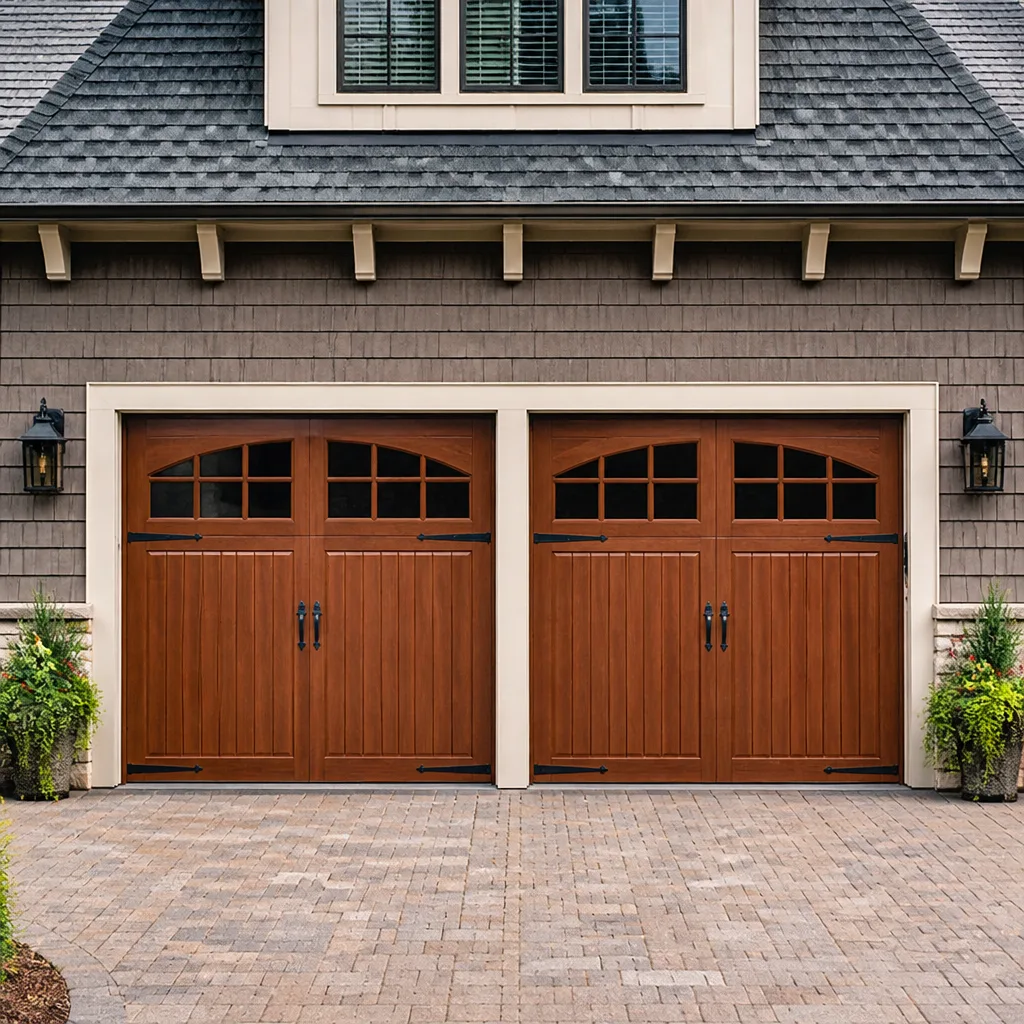 Carriage house
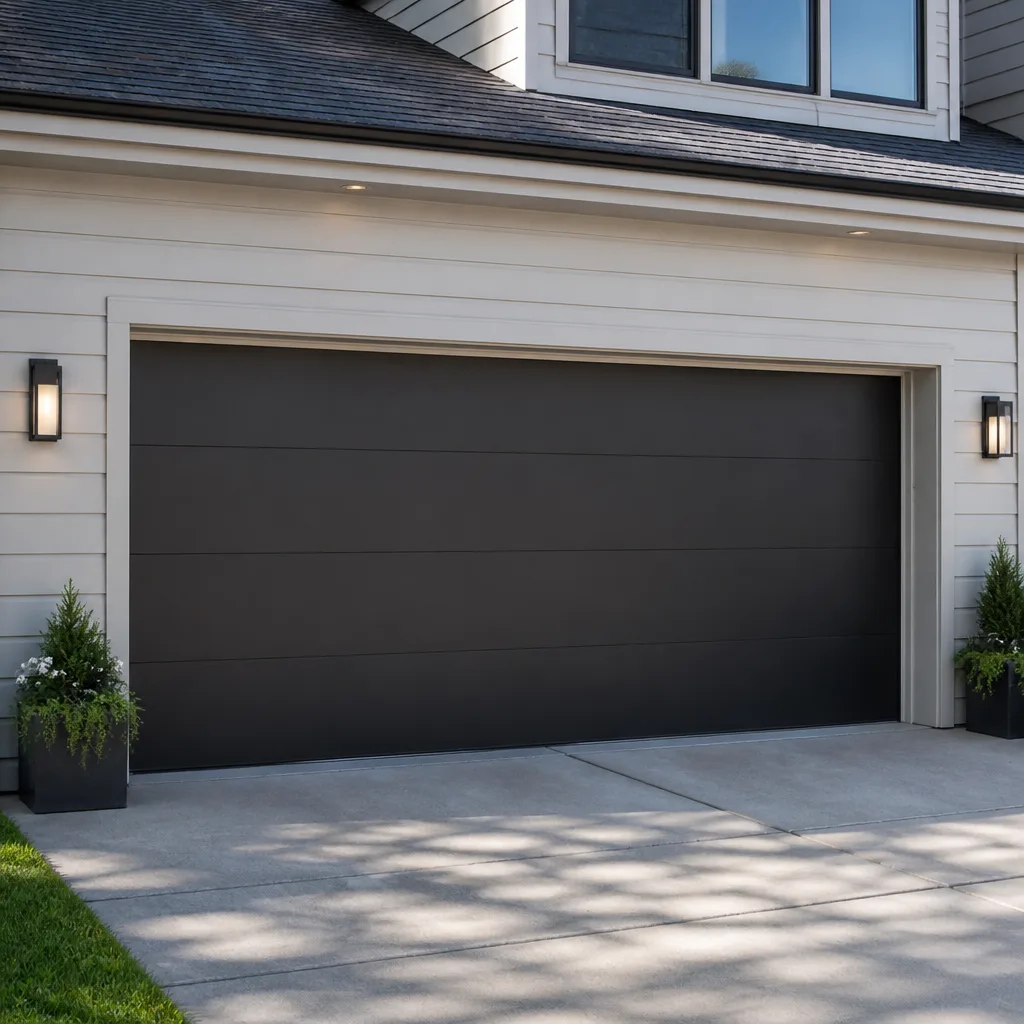 Modern flush
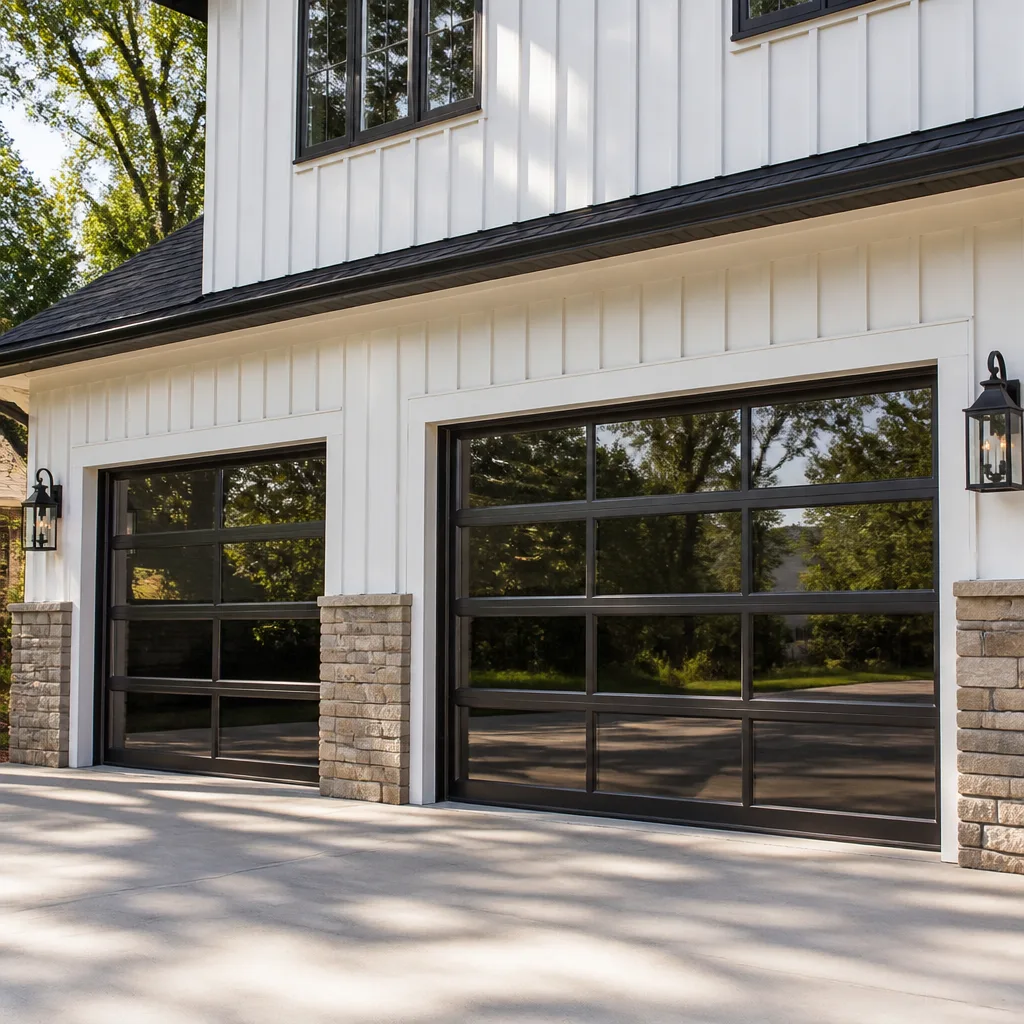 Full-view glass
 LiftMaster openers
 Chamberlain openers
Full 25-point door and opener safety check with every visit - springs, cables, rollers, tracks, and your LiftMaster or Chamberlain opener included
You get a price before we start. It does not change when the pro arrives.
Get your free estimateGarage Door Parts Warning Signs Every Homeowner Should Know
If your door hesitates for half a second before moving in the morning, then runs fine by afternoon, that’s not an opener glitch. That’s a spring losing tension unevenly, and it’s telling you something. The same is true of a door that pops once on the way up, a cable that suddenly wears a fuzzy spot of rust, or a close cycle that suddenly needs a second button press. Parts don’t usually snap out of nowhere. They warn you for weeks. This guide names the sounds, movements, and wear patterns that mean a part is weeks from failure, not years, and it’s written from North Las Vegas, where dust and dry heat write their own set of rules.
Quick Answer
Garage door parts almost never fail without warning. The most reliable signs a part is weeks from failure are a half-second morning hesitation, a popping sound on the way up, an uneven drop on one side, a second button press needed to close, and visible rust fuzzing on cables or coils. A spring near the end of its life will usually show two or more of these at once. Grinding means rollers or hinges, popping means spring coils binding, scraping means track misalignment. Catch them early and the repair is a small ticket.
Styles & brands we work with
- Raised-panel steel
- Carriage house
- Modern flush
- Full-view glass
- LiftMaster openers
- Chamberlain openers
Table of Contents
- How to Read the Three Sounds: Grinding, Popping, and Scraping
- Uneven Movement and What It Means Mechanically
- Why Your Door Needs Two Button Presses to Close
- Rust and Wear Patterns: Three Months Out vs. Three Weeks Out
- How North Las Vegas Dust Wears Rollers and Hinges Faster
- The Spring Is the Part That Actually Runs Your Door
- What to Check Yourself (and What to Never Touch)
- Common Mistakes to Avoid
How to Read the Three Sounds: Grinding, Popping, and Scraping
Sounds are the most honest warning your door gives you, and they’re also the most misunderstood. Three noises are worth learning by ear, and once you can tell them apart, you’ll know which part to look at before you ever touch a wrench.
Grinding: rollers or hinges
A steady metal-on-metal grind that starts a second or two after the door begins moving usually points to the rollers or the hinges. Rollers that have lost their bearings drag and grind against the track. Hinges with dried-out pivots squeal and grind at each joint. If you can move the door by hand (carefully, with the opener disengaged) and the grind changes pitch from one side to the other, that’s the classic roller signature. It’s the cheapest of the three sounds to fix and the one most often ignored until a roller seizes and stalls the whole door mid-travel.
Popping: spring coils binding
A sharp pop, often one “bang” per several inches of travel and typically on the way up, means spring coils are binding against each other or the spring is losing its even wind. Popping is the noise that most deserves your full attention because it’s the sound a torsion spring makes in the weeks before it lets go. If you hear popping and the door seems to sag slightly toward one side, stop running it and get a professional eyes-on it. A torsion spring under load is dangerous to touch.
Scraping: track misalignment
A rough scrape, usually along the floor or against one of the vertical tracks, means the track has been nudged out of alignment or the door panel edge is riding wrong. It’s often a panel or a bracket issue, not a spring issue. Check whether the small gap between the door edge and the track is consistent on both sides. In North Las Vegas, a track that got clipped by a garbage can or a garage full of summer toys is a common culprit, since doors here often swing into tight, packed spaces.
If you can’t tell which sound you’re hearing, that alone is worth a call. A trained ear on site sorts it in five minutes, and the fix may be smaller than you expect.
Uneven Movement and What It Means Mechanically
Watch the top edge of the door as it goes up. Does one side reach the fully-open position a beat before the other? Or does the bottom edge lift and dip like a wobbling table? Uneven movement is one of the most reliable early signals that a part is on borrowed time, and it always comes from the same two places: uneven tension at the springs, or a cable winding crooked on one of the drums.
One side dropping faster than the other
If the door sags on one side on the way down, the spring on that side has likely lost some of its lift. Torsion spring doors carry two springs; extension spring doors carry two springs as well. When one loses tension before the other, that side falls faster. Over time, the sagging side puts more weight on that cable and drum, and cable wear accelerates. What starts as a half-inch dip becomes a full misalignment.
The mechanical chain
Here’s the sequence in plain terms, and it’s the part homeowners rarely hear:
- The spring on one side loses tension gradually.
- The cable on that side starts winding sloppily on the drum.
- The door runs slightly crooked, which drags the rollers on that side.
- Rollers and hinges on the sagging side wear faster than the others.
- The door binds, the opener strains, and now the opener is doing a job it wasn’t built to do.
An uneven door in North Las Vegas will frequently progress faster in summer because heat expands the metal slightly and the door runs tighter in the afternoon than in the cool morning. If your door sags more in June than in January, that’s not your imagination. It’s a spring and cable problem showing you what’s wearing out.
Why Your Door Needs Two Button Presses to Close
This one is almost never the battery. When a door that used to close on the first press suddenly needs two, nine times out of ten it’s a safety sensor symptom, not a remote or opener power symptom. The safety sensors are the two small electric eyes mounted at floor level on each side of the door. If one sensor sees dust, sun glare, or misalignment, the door reverses or refuses to close on the first press. The second press often works because the door has reset slightly.
How to tell the difference in 60 seconds
Walk to the door and look at the two sensor eyes at the bottom of each track. They usually have a small indicator light. If either light is off, blinking, or red instead of solid, it’s the sensor or its wiring. If both are solid, press the button and watch the door’s first attempt carefully. If the door starts to close and reverses after a foot, that’s sensor logic kicking in. If it doesn’t move at all on the first press but moves fine on the second, check the sensor lights first. Fresh remote batteries rarely change behavior within a single day; sensor behavior often does.
What this means for part life
A sensor that’s triggering on dust is a nuisance. A sensor that’s triggering because the door has started to sag toward it is a warning. If the door body is dropping lower than it used to on the side nearest a sensor, you’ve got a spring or alignment issue presenting as a sensor problem. In our North Las Vegas experience, dust on the sensor lens is by far the most common trigger of the two-press symptom, and it’s fixed with a dry cloth in under a minute. But if the sensor light stays red after a cleaning, get the door looked at.
Rust and Wear Patterns: Three Months Out vs. Three Weeks Out
Cables and springs rarely break cleanly. They show their age in surface patterns that tell you how much life is left. This is the part of the inspection most homeowners skip, and it’s the part that catches the failure first.
Three to six months out: the early signals
- Light surface rust on cables: a fine orange haze on the braided steel, no fraying yet. The cable is starting to dry out and lose its protective coating.
- Faint grooves on spring coils: the paint on the spring is wearing through at the coils, showing bare metal in thin lines.
- Hinges with visible dryness: pivot points look chalky or powdery, and the hinge squeaks in dry weather.
- Roller wheels with flattened edges: the round plastic bumpers start to look a little “tired” with a subtle flat spot.
Three to six weeks out: the warnings that move you to action
- Cables with visible broken strands: a single stray wire poking out of the braid is a cable that should be replaced soon.
- Heavy rust patches on the spring coils, especially if the spring looks pitted or visibly deformed.
- Wear on the cable drum: the groove where the cable sits looks gouged or shiny from slipping.
- Popping during travel plus visible coil wear means you’re in the final stretch.
A cable or spring in the three-to-six-week window will fail unpredictably, often on a cold morning or at the worst possible moment. Respect the pattern. If you’re seeing visible broken strands, a pitted spring, or a cable that’s wound crooked, get it inspected today.
How North Las Vegas Dust Wears Rollers and Hinges Faster
North Las Vegas weather is hard on door parts in a way coastal or humid climates aren’t, and it’s a specific combination that matters. Wind-blown desert dust gets into every little gap in the door system. Where humidity might soften wear, dust here acts more like sandpaper on a slow motor. The particles work their way into roller bearings, hinge pivots, and the drum grooves, and once they’re in there, they grind every cycle.
The specific problem with our dust
- Rollers: plastic rollers in an older door will pick up dust in the wheel channel and freeze up faster than they would in a wetter climate. A seized roller is one of the most common mid-cycle stalls we see in North Las Vegas.
- Hinges: hinge pins dry out, collect dust, and stop pivoting smoothly. That’s the “why does my door sound louder in summer” question a lot of homeowners ask.
- Tracks: dust accumulates in the bottom track and mixes with grease to form a gummy paste that drags the door. This is the sneaky one. It feels like it’s “just getting old” until a roller catches.
- Sensors and openers: dust on sensor lenses is the single most common cause of the two-button-close problem in North Las Vegas.
What you can do about it
Keep the door dusty-side clean. Wipe the sensor lenses monthly with a dry cloth. Wipe the bottom tracks with a dry rag to clear the grease-dust paste. Every few months, have a professional look at hinge lubrication and roller condition. The point isn’t a spotless door; it’s that in North Las Vegas, wear happens at a faster cadence than it would in a milder climate, and a little routine attention stretches the life of the parts significantly. If your door is a Chamberlain or Genie system with plastic rollers, that attention matters even more.
The Spring Is the Part That Actually Runs Your Door
Your double garage door weighs in the neighborhood of 200 pounds. The opener doesn’t lift it; the springs do. The opener is essentially the button-pusher, and the springs are the muscle. That’s why a spring warning sign is the highest-priority one in this entire guide. A door is 200 pounds riding on two springs. Respect it.
How to count your spring’s life
Standard torsion springs are rated for a certain number of open-close cycles, often somewhere between 10,000 and 15,000 for a typical residential spring, though heavy-use doors and cheaper springs fall short of that. If your family opens the door six times a day, do the math: that’s roughly 2,200 cycles a year, so a good spring could last a handful of years and a marginal one might not. Our technicians have up to 22 years of experience with this math, and we’ll tell you what’s left on yours – we count spring cycles the way you count tire miles.
The signs a spring is the culprit
- The door hesitates before moving, especially the first time each morning.
- The door feels noticeably heavier when you try to lift it by hand with the opener disengaged.
- You hear popping on the way up.
- The door sags to one side, or drops too fast when closing.
- The spring coils show rust or visible deformation.
If two or more of those are true, the spring is likely the root cause, even if the door still opens. Springs rarely fail while you’re watching. They fail when a coil finally lets go, and the door snaps down or up hard. On a torsion spring, the tension alone can cause serious injury. Do not attempt to inspect, adjust, or replace a spring yourself. Have a trained professional do it – the risk isn’t worth the ticket.
What to Check Yourself (and What to Never Touch)
A quick visual inspection once a month catches the vast majority of warning signs before they become a failure. Here’s what it’s safe to look at, and where the line is.
Safe to check yourself
- Run the door and listen for the three sounds – grinding, popping, scraping.
- Watch the top edge of the door for uneven lift or sag.
- Check the two sensor lights at floor level – both should be solid.
- Look at the cables for broken strands or heavy rust.
- Look at the springs for rust, pitting, or visible damage.
- Wipe the sensor lenses and the bottom track with a dry cloth.
Never touch, adjust, or replace yourself
- Any part of a torsion or extension spring.
- Cable adjustments or replacement.
- Winding or unwinding a cable drum.
- Loosening or replacing track bolts under spring tension.
Those components are under enough live tension to injure you badly. A trained professional uses winding bars and the right tools, and has the experience to know when a part is close to failing. There’s no DIY shortcut worth the risk here.
If your visual check turns up anything on the second list, get in touch with Garage Door Repair in North Las Vegas and let someone with the right tools handle it.
Common Mistakes to Avoid
- Chalking it up to “just getting old.” Old is a description, not a diagnosis. If your North Las Vegas door hesitates in the morning, that’s a spring telling you exactly what it needs, not an age problem.
- Replacing the opener when the door is the problem. If the opener is straining, the problem is almost never the opener. It’s usually the spring, the rollers, or the track. A new opener on a worn door just goes through the same cycle faster.
- Ignoring visible rust on cables or springs. A hazy orange cable means you’re in the three-to-six-week window. Skip it and the failure stops being a minor repair.
- Treating the two-press close as a remote issue. Nine times out of ten it’s the safety sensor. Check the lights before you buy batteries.
- Overlooking dust as a maintenance item in North Las Vegas. Our desert dust turns roller channels and track grease into an abrasive paste that quietly speeds up wear. Wipe it out monthly.
- Heeding a national caller instead of a local one. A phone quote that gets revised upward at the door isn’t a discount – it’s a leak. Real local pricing is quoted before the visit and held at the door.
- Attempting spring replacement yourself. This is the single most dangerous mistake a homeowner can make on a garage door. The spring carries enough tension to cause serious injury, and there’s no scenario where it’s worth it.
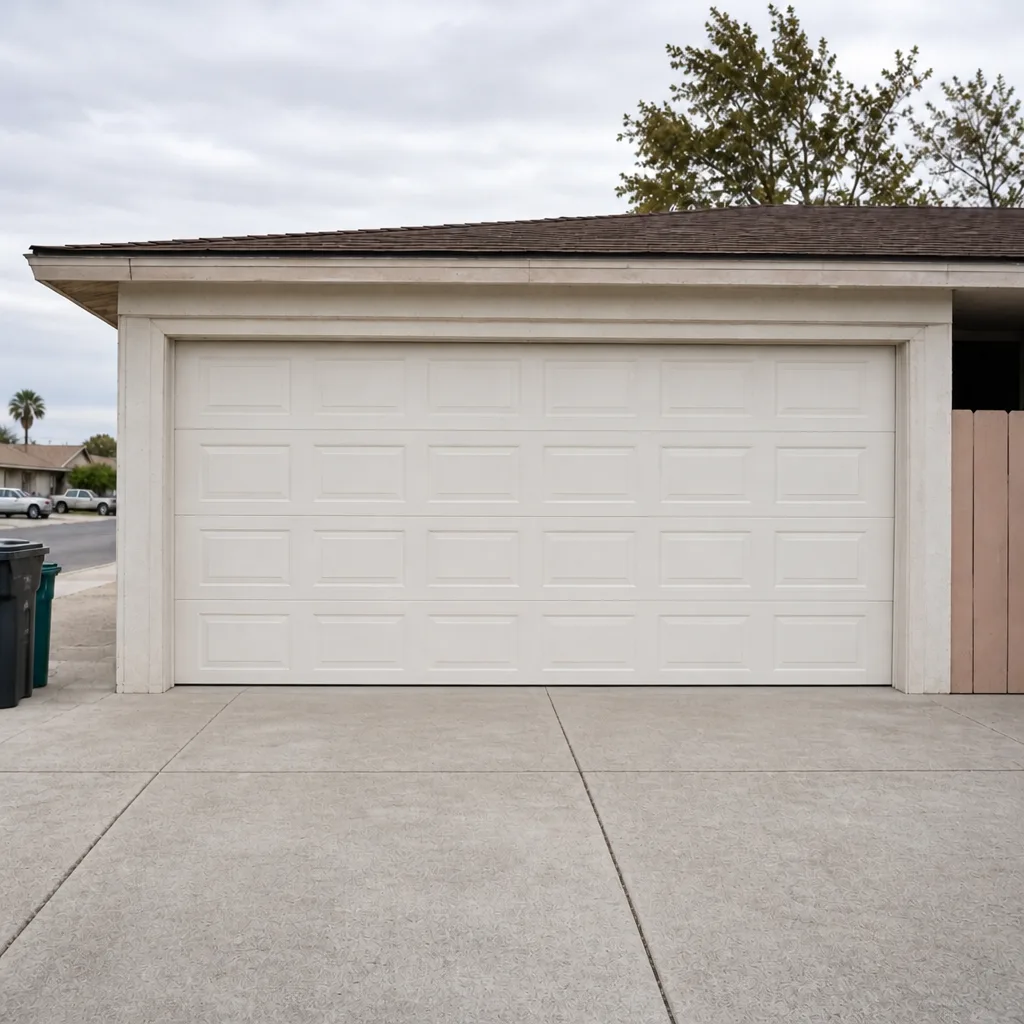
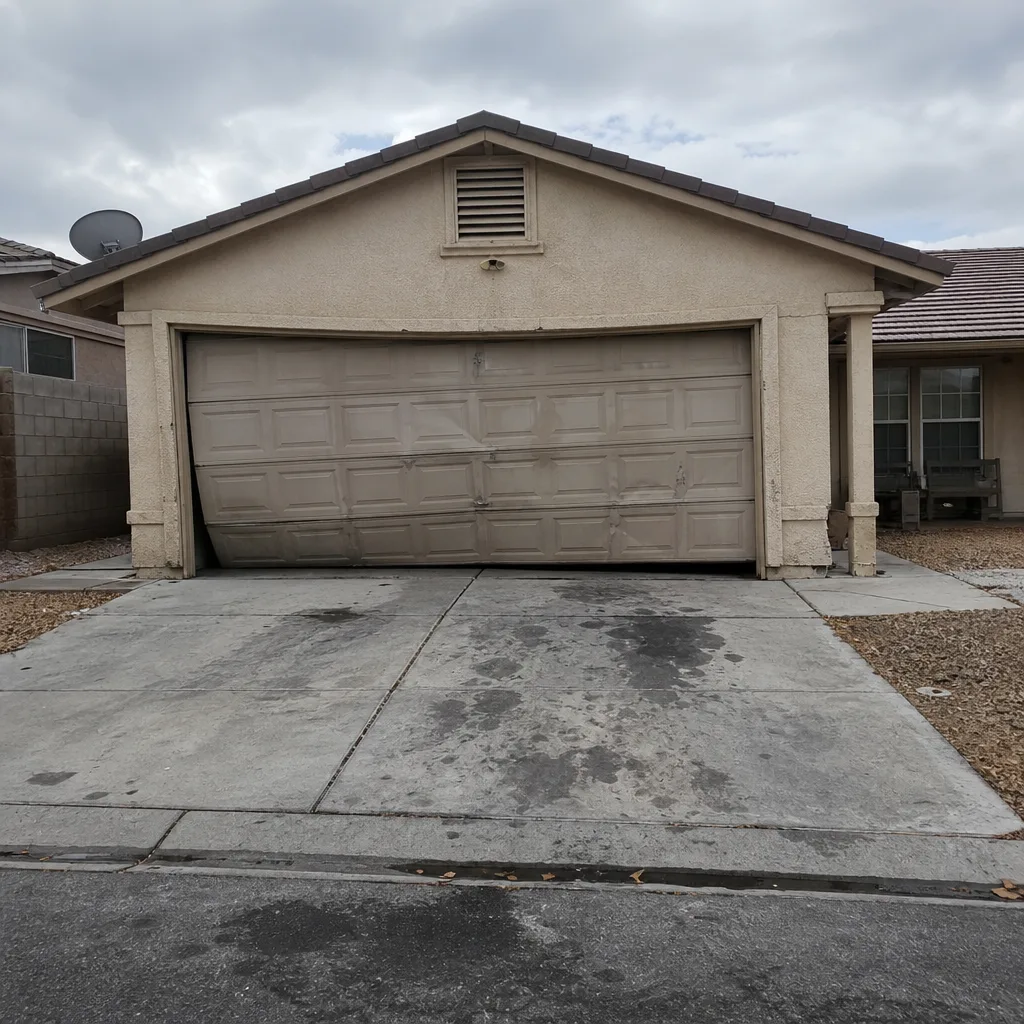
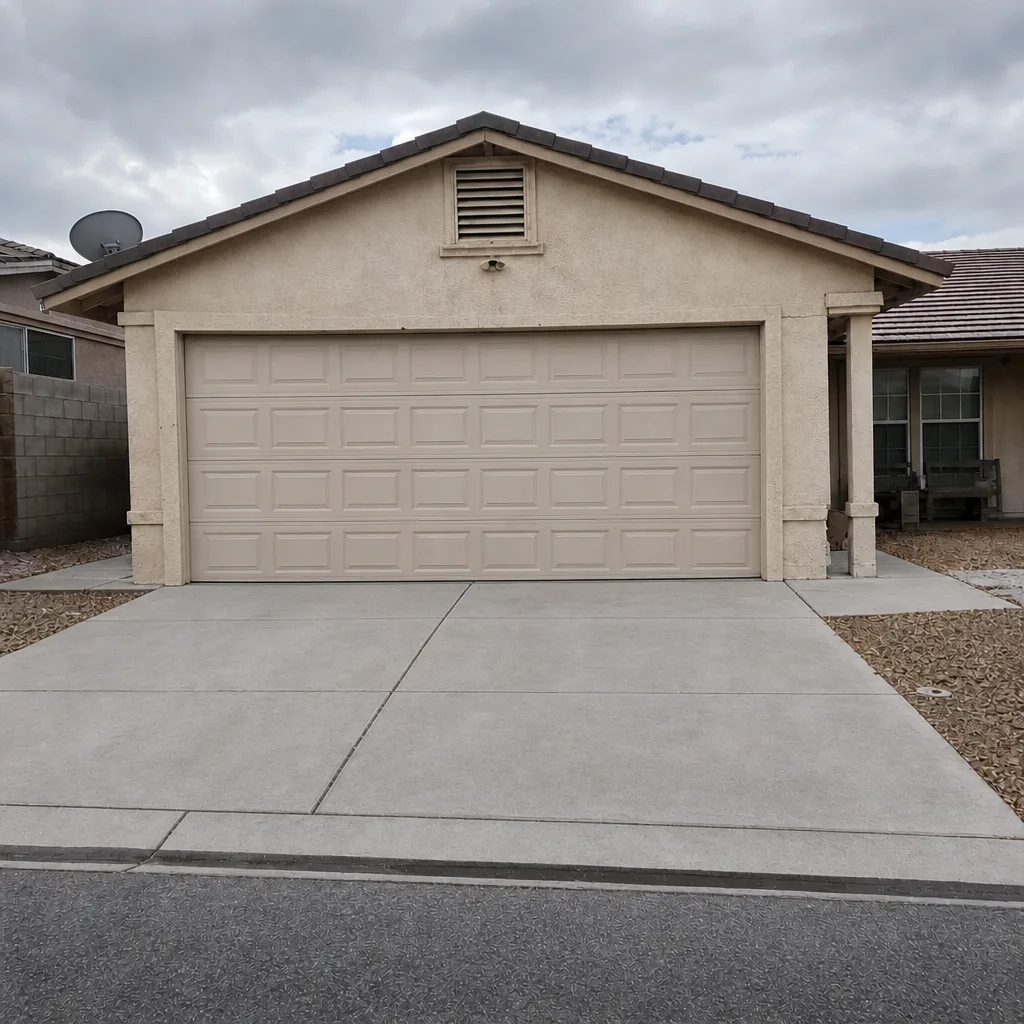
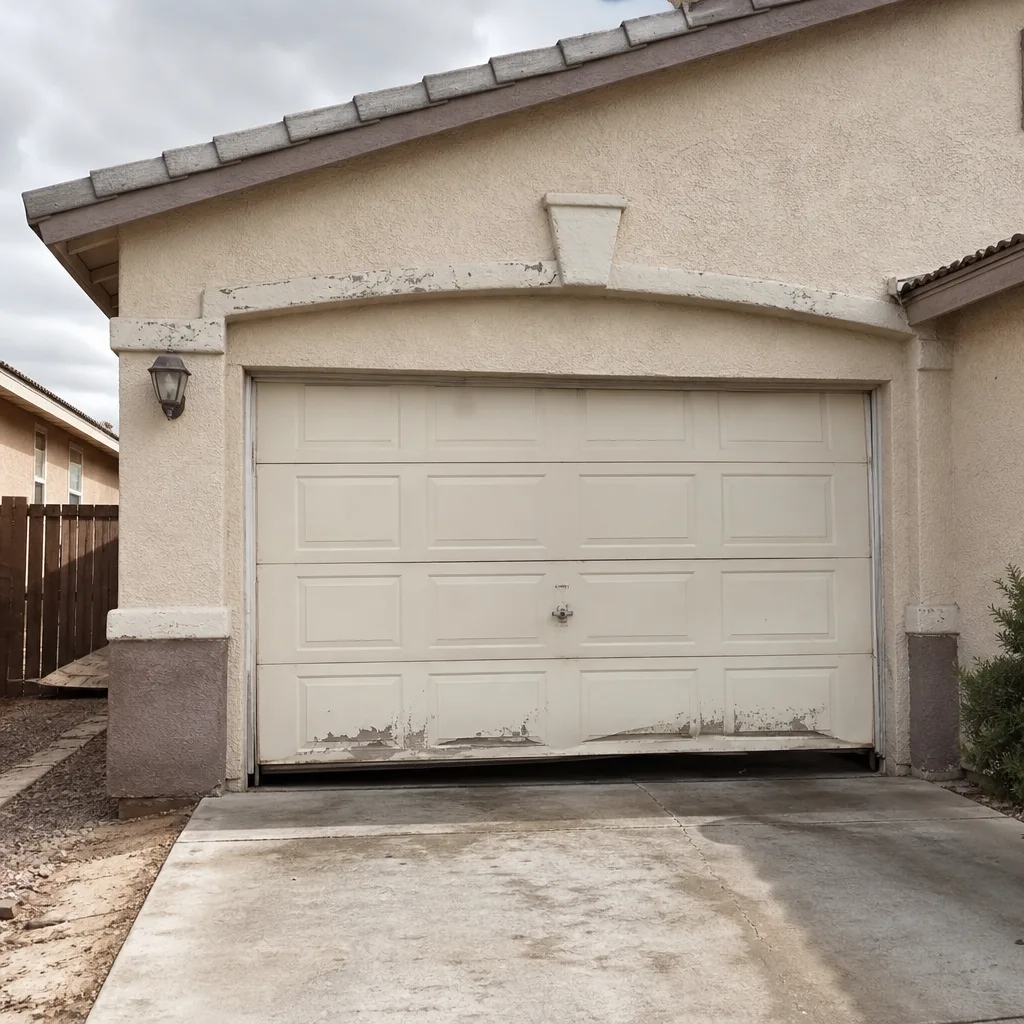
See the difference
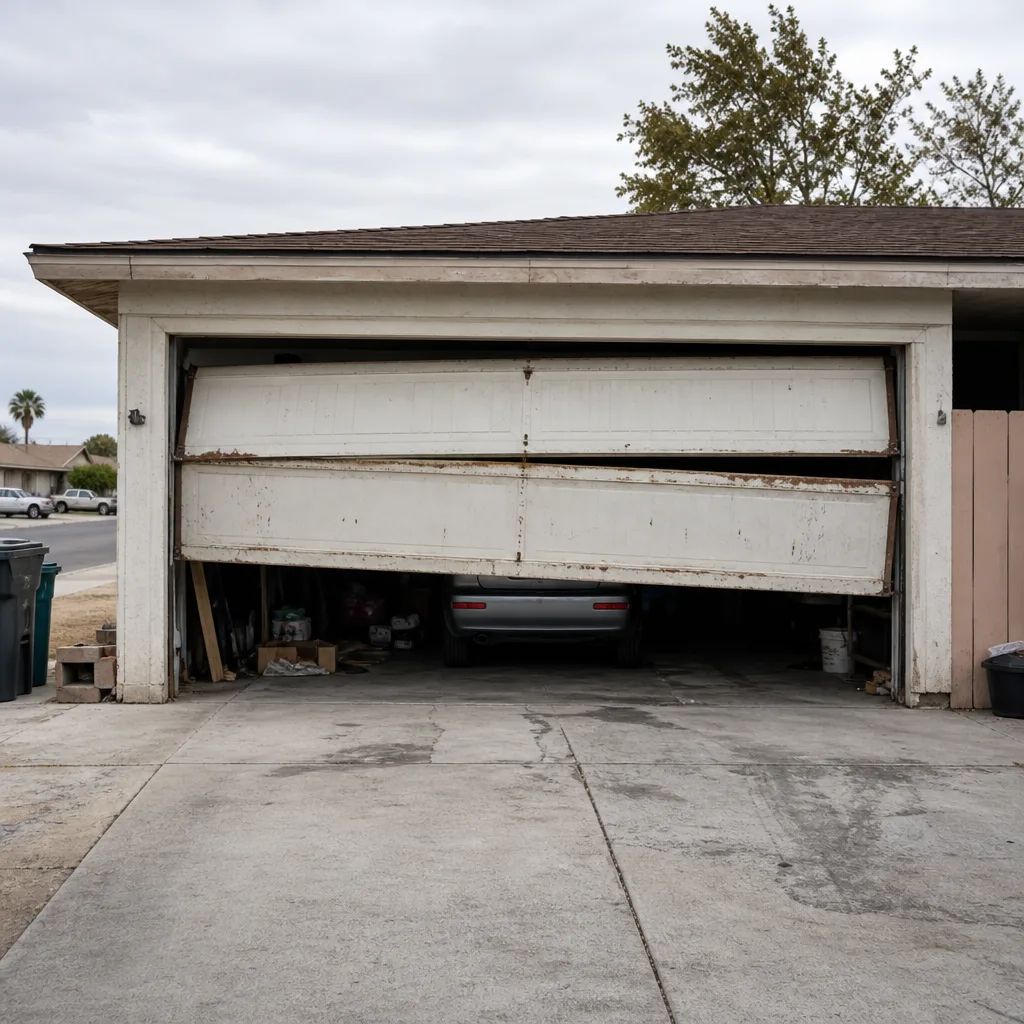 Before
 After
 Before
 After
 Before
 After
When to Call a Professional
Some signs are wait-and-watch. Some are call-today. A single two-button-close event is a cleaning job. A popping sound on the way up, a visible broken cable strand, or a door that sags to one side are call-today. So is any month where you see multiple warning signs piling up – those combined signals usually mean one part is in its final weeks and you’re about to hit the “I had to park in the driveway all night” scenario. If you’re in North Las Vegas and you’re not sure what you’re hearing, don’t wait to see if the door survives another month. Otto’s Garage Door North Las Vegas offers free estimates in North Las Vegas – call (866) 347-9495. And if you’re considering a full replacement rather than a repair, look at Garage Door Installation in North Las Vegas first so you know your options.
Frequently Asked Questions
Most spring repairs in North Las Vegas run a few hundred dollars, and the precise number depends on spring type and door weight. We quote before we start and hold the number when we arrive. If you want a standalone check before deciding, our Free Second Opinion on any written estimate is a good starting point. Call (866) 347-9495 for an exact quote – estimates are free.
Same-day emergency service is common in North Las Vegas when the door is stuck or won’t close, and if it’s a spring failure we try to get there the same day. A live person answers the phone around the clock, and Otto often quotes the job right on that call. Call (866) 347-9495 and we’ll tell you honestly what’s possible on the day.
No. The price we quote on the phone is the price on the invoice before the work begins, and it does not change between the phone and the driveway. If we discover something else once we’re there, we explain it and quote that piece separately before touching it. Call (866) 347-9495 to get the upfront price.
Yes. The people we send are background-checked, uniformed technicians who carry the name Otto’s Garage Door on their clothing, and the company carries a published address and license number any homeowner can verify before the truck arrives. Our technicians have up to 22 years of experience across LiftMaster, Chamberlain, Genie, Clopay, Amarr, Wayne Dalton, Craftsman, and Raynor. Call (866) 347-9495 with any question.
The 3-month-out window looks like light rust and faint coil wear. The 3-week window looks like popping on the way up, visible broken cable strands, or a pitted spring. If you see any of the 3-week signals, treat it as call-today. For a real answer on your specific door, call (866) 347-9495 – a quick look tells us how far out you are.
Yes. Desert dust collects in roller channels and hinge pins and acts like a slow abrasive, which is why North Las Vegas doors wear rollers and hinges faster than doors in humid climates. Wiping the bottom track and sensor lenses monthly and having the hinges looked at every few months is the practical defense. If you’re not sure what your door needs, our Garage Door Opener Repair & Installation in North Las Vegas team can check opener and roller condition together. Call (866) 347-9495 to see if it’s time.
The Bottom Line
Garage door parts tell you they’re failing, sometimes for weeks before they actually do. The sounds, the unevenness, the two-press close, the rust on cables and springs – every one of those is a warning, not an age-related quirk. Read them early and the repair is a modest ticket. Read them late and you’re dealing with a stuck door at the exact worst moment. In North Las Vegas, desert dust makes the whole chain wear faster than most homeowners expect, so the monthly look under the door is worth more here than it is anywhere. If your door is showing any of the signs above, get it on the calendar. Otto’s Garage Door North Las Vegas home is where to start, or just call and tell us what you’re hearing. Call (866) 347-9495 for a free estimate – the price is quoted before any work starts, and if we don’t do it right, our 90-Day Done Right Promise brings us back with one call. Seniors and veterans always get 10% off, no trip charge inside the county, and $40 off any repair over $200.
Written by the team at Otto’s Garage Door North Las Vegas.