
Last updated November 18, 2026
 Raised-panel steel
 Carriage house
 Modern flush
 Full-view glass
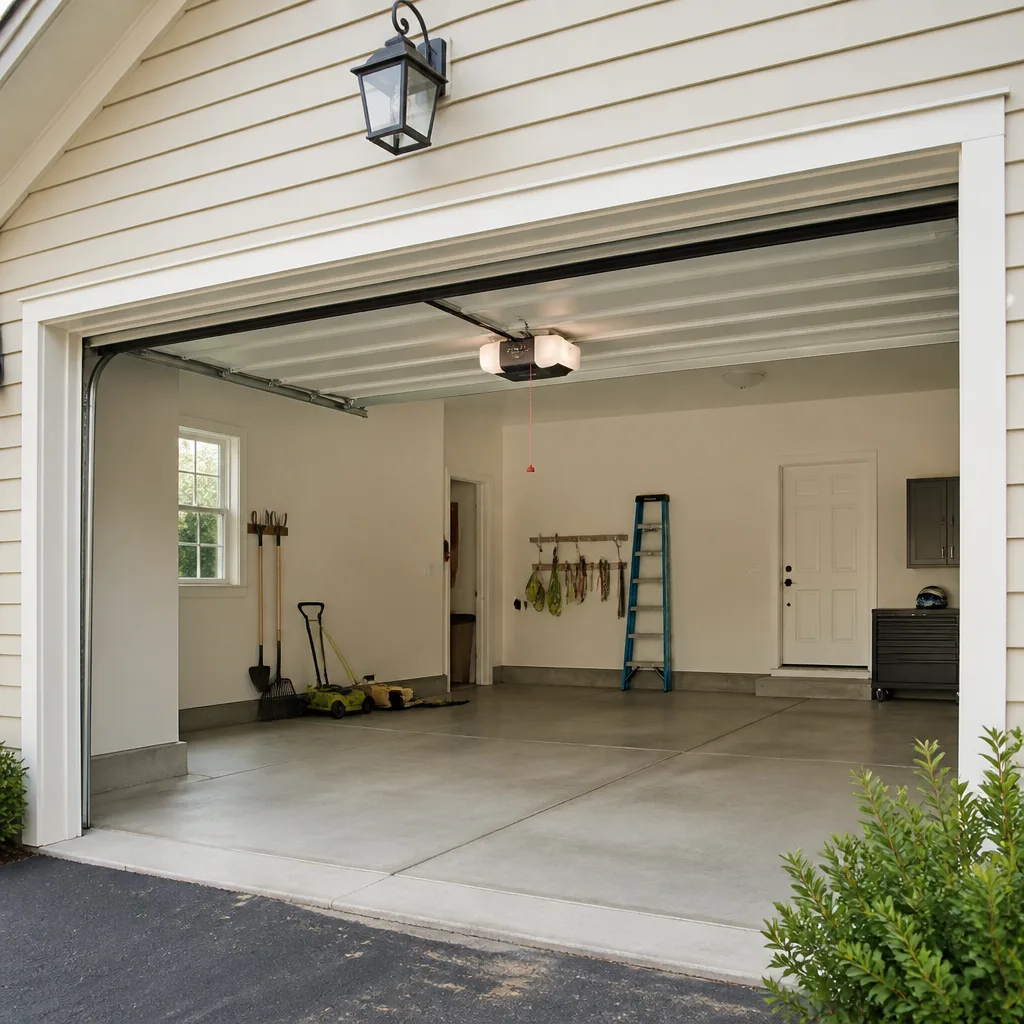 LiftMaster openers
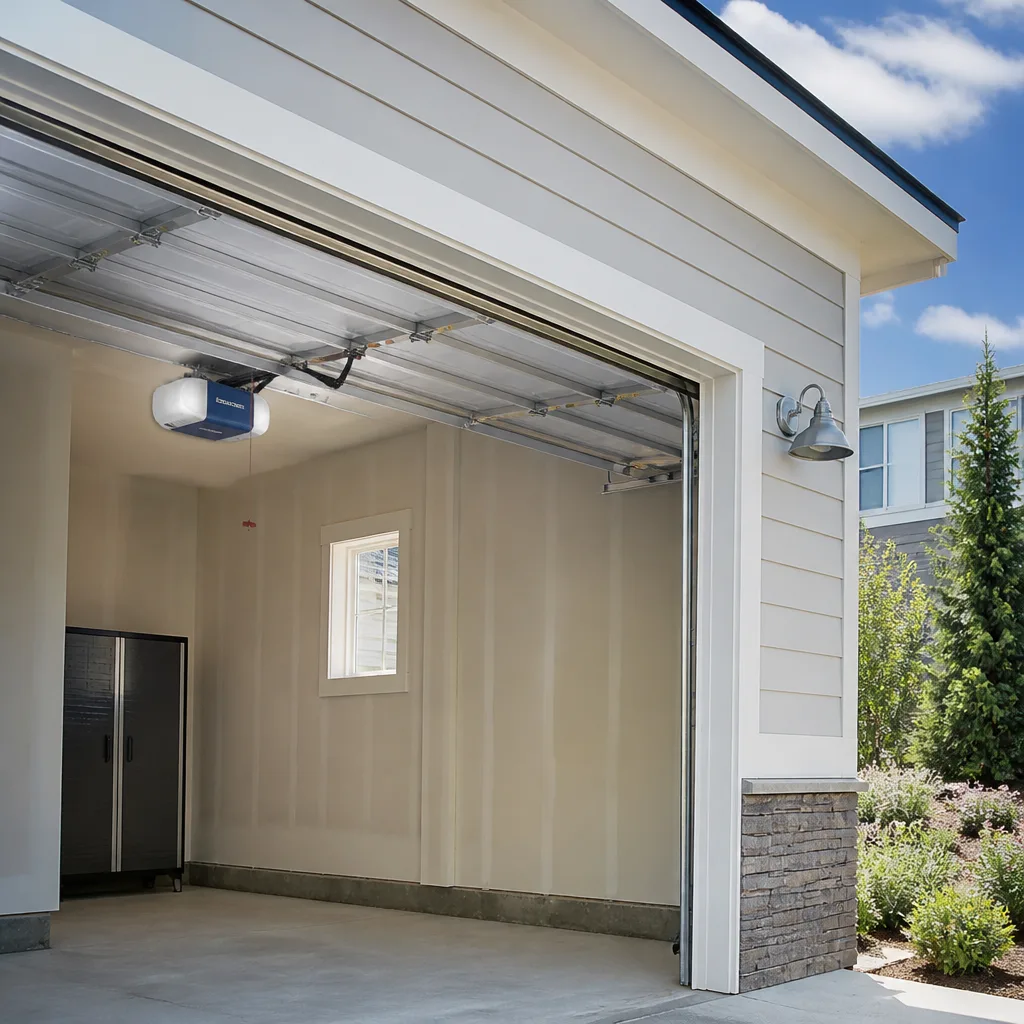 Chamberlain openers
Full 25-point door and opener safety check with every visit - springs, cables, rollers, tracks, and your LiftMaster or Chamberlain opener included
You get a price before we start. It does not change when the pro arrives.
Get your free estimateGarage Door Repair Maintenance Schedule: What to Do and When
The doors that last in this valley are not the ones that got “maintained annually.” We’ve seen doors with a yearly tune-up sticker on the jamb fail by year four, and doors that got a quick twenty-minute going-over every time the clocks changed still running clean at year fifteen. The difference is timing. In North Las Vegas, one August of 110-degree afternoons cycles your springs and cooks your opener harder than six months in a mild climate. So this schedule is built around temperature milestones, not calendar months. You’ll learn what to check before the heat hits, what to re-check when it breaks, and how to keep a record that tells Otto what’s wrong before he’s even out of the truck.
Quick Answer
In North Las Vegas, check your garage door four times a year: a full walk-through in late spring before temps lock above 100°F, a quick post-summer inspection after the first cool spell in October, a lubrication and balance check at the winter solstice, and a fast pre-summer tune-up in March. Lubricate hinges and rollers with white lithium grease, test the balance by hand every season, and clear the tracks monthly during dust season. Anything that squeaks, binds, or slows down gets logged and looked at, not ignored until it breaks.
Styles & brands we work with
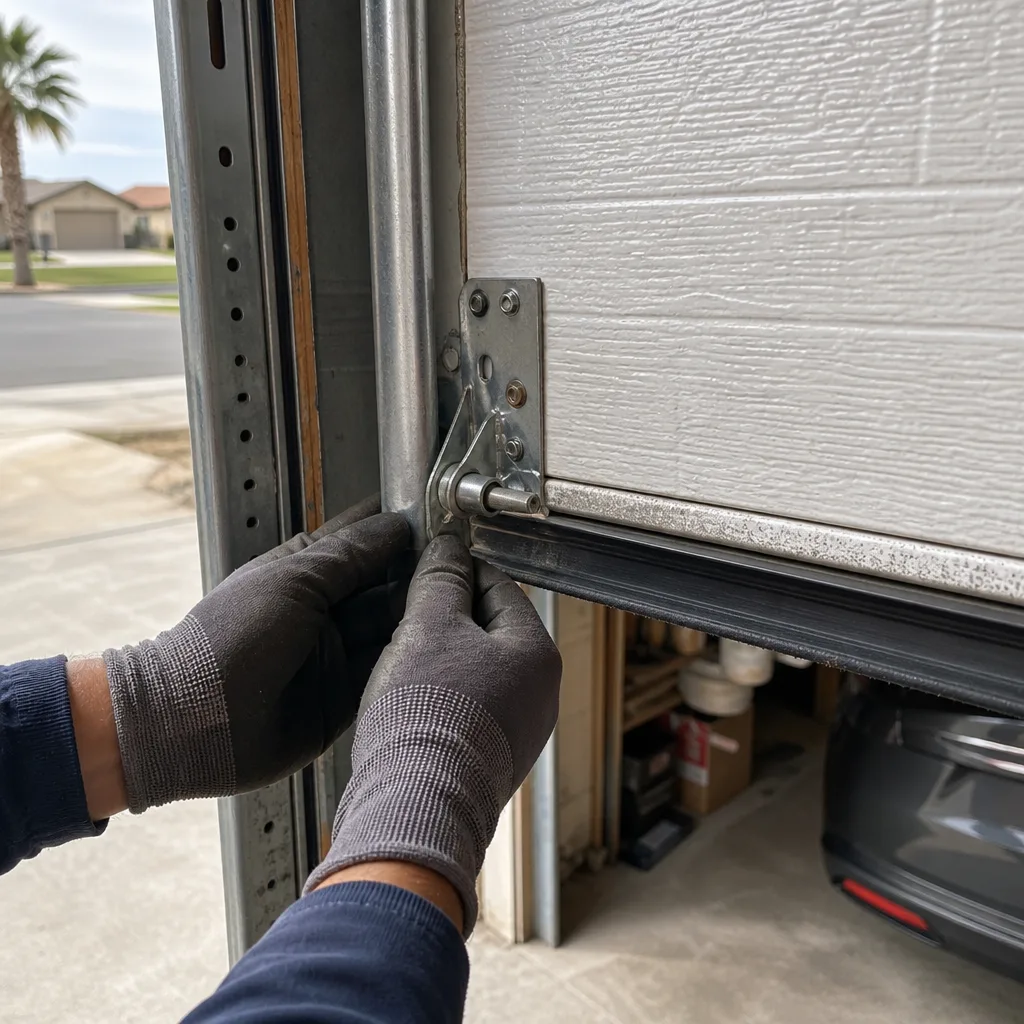
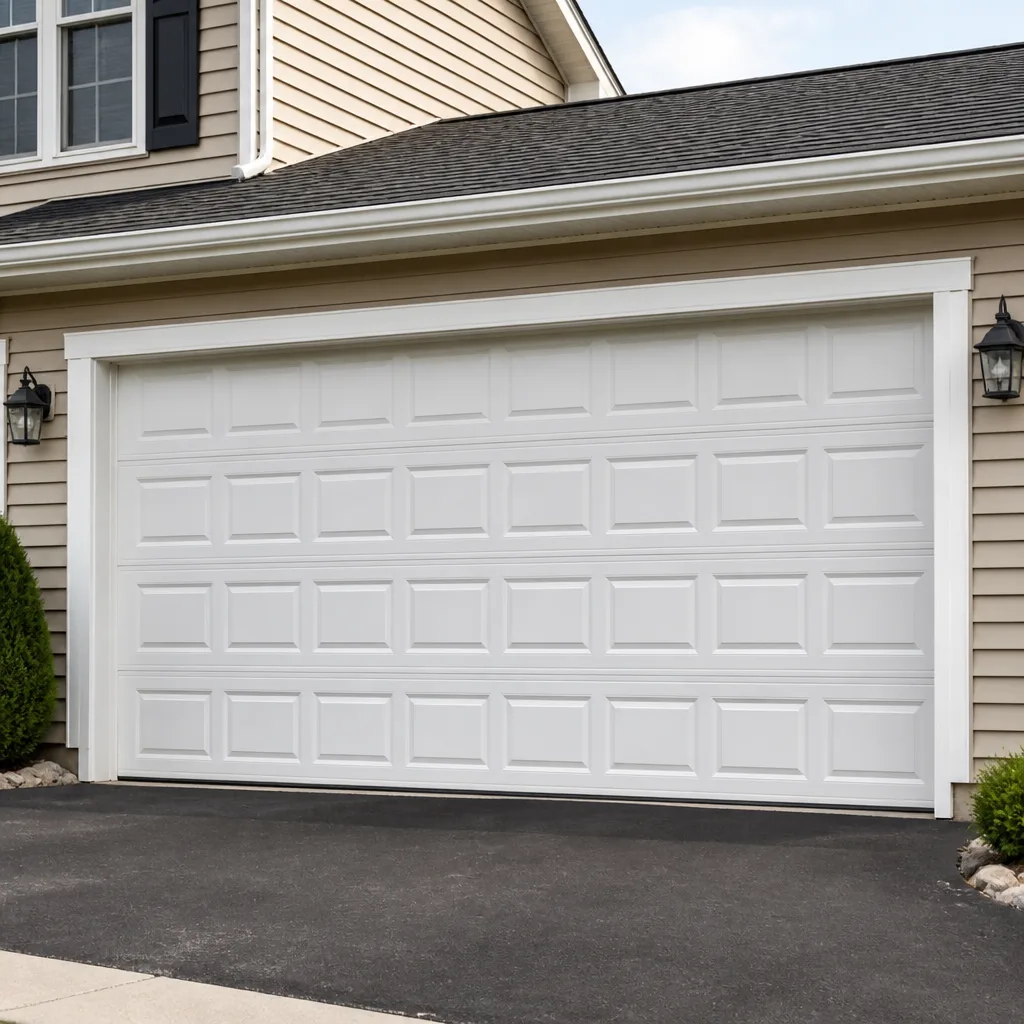
- Raised-panel steel
- Carriage house
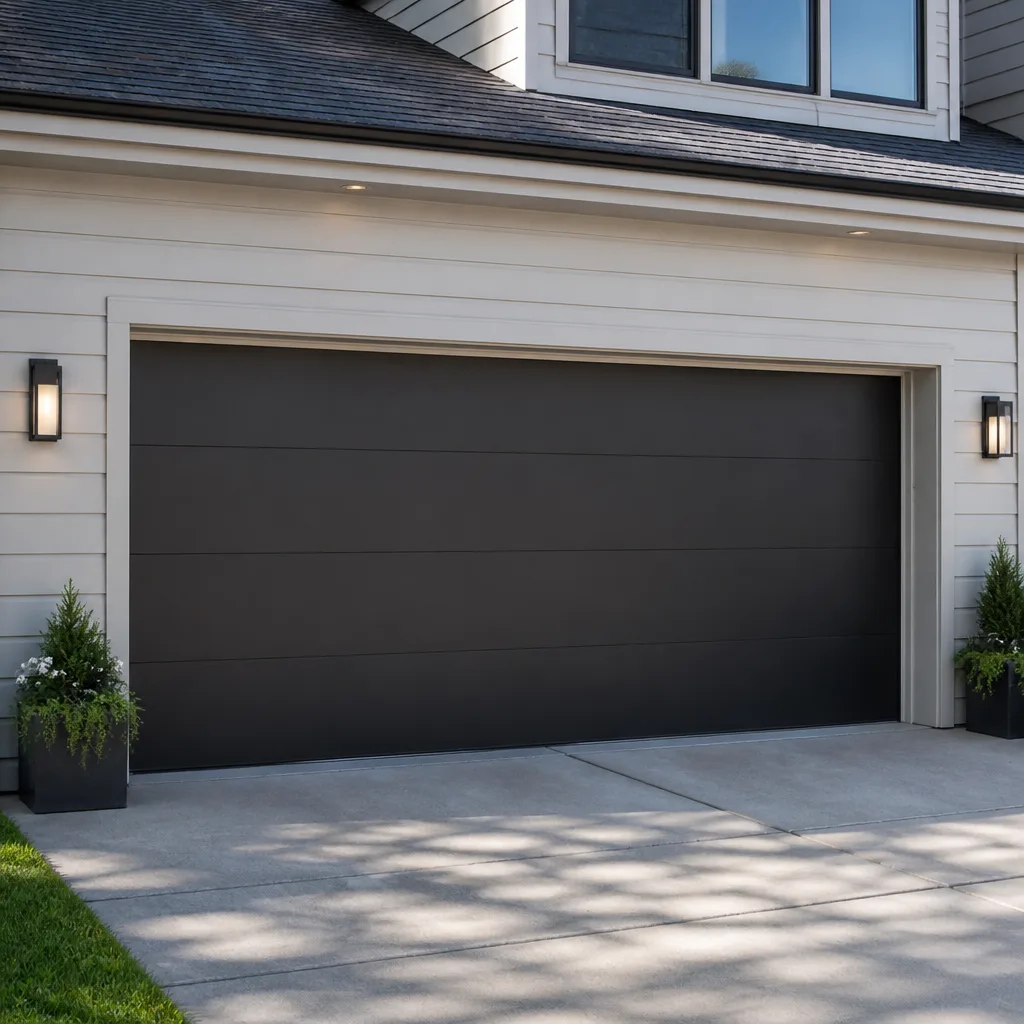
- Modern flush
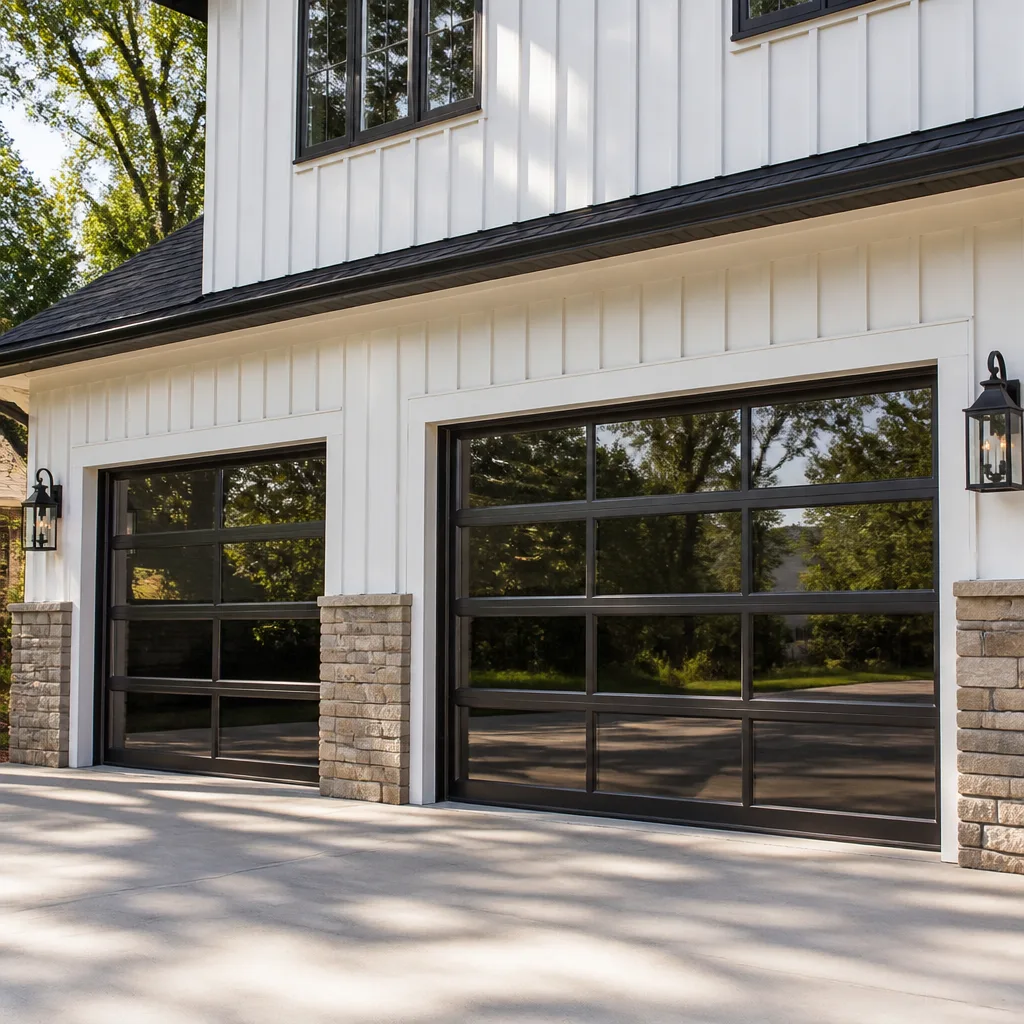
- Full-view glass
- LiftMaster openers
- Chamberlain openers
Table of Contents
- The Heat-Triggered Maintenance Window
- Lubrication That Survives 110-Degree Summers
- The Five-Point Balance Test You Can Run in Ten Minutes
- Bottom Weatherstrip: Why It Fails Faster Here
- Keep a Door Log: Catch the Pattern, Not the Guess
- Monthly Checks That Take Five Minutes
- Common Mistakes to Avoid
- When to Call a Professional
The Heat-Triggered Maintenance Window
Forget the calendar. In North Las Vegas, the milestones that matter are temperature-based. By mid-May we’re routinely above 95°F, and by July the metal on your door is hot enough to burn a hand. That’s the window where a torsion spring that was “probably fine” in March turns into a snapped spring on a Tuesday morning with your truck sealed inside.
Here’s how we time it around here.
- Before the first 100°F day (usually early-to-mid May): Full inspection. Test the balance, check the cables for fraying, look at the spring wind on both sides, tighten every hinge bolt, and re-set the opener’s travel and force limits. This is the check that matters most.
- Through the summer (June-August): Monthly five-minute visual. Listen for a change in the door’s sound. A door that starts groaning in July is telling you something is loading up.
- After the first sustained cool spell (typically mid-October): Second full inspection. Metal contracts as it cools, and a door that was tolerable in August will suddenly bind in October. This is also when we find cables that stretched through the summer and weatherstripping that turned brittle and cracked.
- Winter solstice through March: Lubrication refresh and a balance re-test. Cooler air means quieter operation, but it also masks problems that will show up again the second summer arrives.
That rhythm is built around how a North Las Vegas door actually lives. A door in Summerlin or Centennial still sees heat, but the deeper eastern valley and the tract homes out toward Nellis take more afternoon sun because there’s less shade and less mature landscape. Same temperature, more cycles on your door.
Lubrication That Survives 110-Degree Summers
This is where a lot of well-meaning homeowners go wrong, and it costs them a set of rollers every couple of years. WD-40 is not a lubricant for this job. It’s a light solvent and water displacer that evaporates fast, and in desert heat it’s gone within a week or two. It also attracts dust, and in North Las Vegas, dust is the enemy.
White lithium grease is the right product for hinges, rollers, and the torsion spring coils, and we recommend it for a specific reason: it holds up at high temperature and stays put under load. In a mild climate a general-purpose spray is fine. Here, you want the thicker grease because it stays on the metal after the summer’s first 20 days of 105°F.
What to use and where:
- Hinges and rollers: White lithium grease, applied with a small brush or the tube nozzle. A light smear is enough. Don’t overdo it; excess collects dust and grit.
- Torsion spring coils: A thin coating of lithium grease, applied once per season. Don’t spray; the springs are wound under tension.
- Tracks: Never lubricate the tracks. Clean them dry with a rag and leave them alone. Grease in the tracks mixed with desert dust turns into a paste that stops the rollers cold.
- Opener chain or belt: Follow the manufacturer’s spec. Genie and LiftMaster both publish specific guidance for their units; the belt-drive openers are usually low-maintenance, but the chain-drive units want a light grease on the chain.
- Weatherstripping: A silicone-based protectant (not grease) keeps the rubber from drying out. More on that below.
If you’re not sure what’s on your door now, or your opener is a brand we don’t see as often out here (Raynor and Amarr are common enough that we keep spec sheets for both), a quick look from a trained eye saves you a DIY guess. Our Garage Door Repair in North Las Vegas page covers what a professional tune-up includes in detail.
The Five-Point Balance Test You Can Run in Ten Minutes
This is the single most useful thing a homeowner can do. A door out of balance is the number one sign of spring or cable wear, and catching it here is how you avoid the 7 a.m. phone call. The test is simple and safe if you follow the steps in order. Don’t skip a step.
A door is 200 pounds riding on two springs. Respect it. If the door feels heavy the moment you lift it, or if it won’t stay put where you stop it, stop. That’s a spring or cable problem and it’s time to call, not a time to keep pulling.
- Disconnect the opener. Pull the manual release cord (usually the red T-handle) while the door is closed, so the door is free from the opener.
- Lift the door to halfway by hand and let go. A balanced door holds its position. It doesn’t fall, and it doesn’t climb.
- Lift to three-quarter height and let go. Same test. The door should stay put with maybe a little settle at the very top.
- Lower it all the way down and lift it just a foot. Does it feel the same on both sides? A door that pulls harder on the left or the right than the other side has a spring or cable that’s out of sync.
- Listen. Lift the last few inches slowly and stop. Squeaks, pops, or a grinding sound at the top of travel are tracking or bearing problems. Write them down for the log sheet.
In North Las Vegas, we recommend running this test before the heat and again after it. The thermal cycling alone can put a fresh set of stresses on a spring that passed clean in May.
Bottom Weatherstrip: Why It Fails Faster Here
The bottom weatherstrip takes more punishment in North Las Vegas than most homeowners realize. We get measurable dust storm events through the valley most springs and early summers, and that grit gets driven under the door with the pressure changes. The rubber or vinyl bottom seal gets sandblasted, then dried out by the heat, then cracked. Once it cracks, you’re not just losing the seal against dust and insects; you’re letting cool air out all summer and letting hot air in all winter.
How often to check and re-seal:
- Check every spring (May): Run your hand along the bottom seal with the door closed. It should feel soft and continuous. Cracks, hard spots, or a gap at either corner means replace it before the heat sets in.
- Check after any significant dust event: If the sky goes orange and you’re in the east valley, take a look under the door once it clears.
- Re-seal the door-to-floor contact every 2-3 years: This is the rubber weatherstrip itself. A worn seal is a two-minute replacement.
- Re-caulk the door frame (the stop molding and header) every 5-7 years: The sun-facing side of the frame takes the worst UV and dries the caulk out faster than the shaded side. Most garages here have one sun-exposed wall and one shaded wall; check the sun side first.
Clopay doors in particular come with a specific bottom seal profile, and the wrong replacement seal will not sit flush. If you’re not sure which seal your door takes, call and we’ll tell you – we’ve replaced enough of them in this valley to know the fit from the profile alone.
Keep a Door Log: Catch the Pattern, Not the Guess
This is the habit that separates the door that lasts fifteen years from the one that dies at year four, and almost nobody does it. Keep a simple log sheet in the garage or on the fridge. When something squeaks, when the opener sounds slower than usual, when the door hesitates at the top of travel, write the date and one sentence about what you noticed.
Why a log matters to us: when a technician shows up, a log sheet turns an educated guess into a fast diagnosis. If we can see that the door has been getting slower since March, we know to look at the opener’s capacitors and the roller bearings first. If it squeaked all winter and then quieted down in May, we know the noise is temperature-driven and probably a track alignment issue. That pattern is exactly what our best technicians look for when we get out of the truck. It’s how they spot a problem instead of guessing at it.
What to log:
- Squeaks, pops, grinding, and where on the door they happen.
- Any time the opener runs slower, runs longer, or reverses on its own.
- Every time you have to hold the button longer than usual to get the door moving.
- Any time you bumped or hit the door with the car, even lightly.
- Any adjustment you made (you tightened a hinge bolt, you cleaned the tracks).
- When you last lubricated.
Nobody expects you to log every lift. A couple of entries a month is enough. When we show up, we can read it in a minute and often skip the diagnostic guesswork entirely. Our technicians have up to 22 years of experience each, and even so, they’ll tell you: what the homeowner noticed last Tuesday is worth more than a half hour of poking around.
Monthly Checks That Take Five Minutes
Between the season-driven full checks, a monthly once-over catches most of the small stuff before it gets expensive. The whole list takes under five minutes.
- Tracks: Look for debris, spiderwebs, and grit. In North Las Vegas dust season (roughly March into June), you’ll find more in the tracks in a week than most of the country sees in a year. Wipe them dry with a rag.
- Rollers: Look at each roller with the door closed. A roller that’s visibly cracked or looks flat on one side is done. Replace it before it binds.
- Hinges: Wiggle each hinge with your fingers. A hinge that moves when the door is at rest needs a bolt tightened. Loose hinges are the number one cause of the “squeak that comes back every summer” complaint we get.
- Cables (visual only): Look at the cables at the bottom corners and along the lift. Frayed wire or a cable hanging slack is a call-us-now, not a DIY. Cables are under hundreds of pounds of tension and they will seriously hurt you if you touch them.
- Opener: Run the door up and down once and listen. Any new grinding, clicking, or hesitation gets written in the log. If the opener is straining, the problem is almost never the opener – it’s the door.
If something in this list looks off and you’re not sure what “off” looks like, that’s exactly the sort of thing we’ll look at for free. Otto’s home page has the count of what we do – but the important part is that it’s a live person who answers, not a call center. Call (866) 347-9495 and you’ll get a straight answer.
Common Mistakes to Avoid
- Oiling the tracks. This is the biggest single mistake we see. Grease in the tracks turns desert dust into a paste that stops the rollers. Clean them dry. Never grease them.
- Using WD-40 as a lubricant. It’s a solvent, not a lubricant. It flashes off within a couple of weeks in the summer heat and leaves the metal dry.
- Replacing a heavy-duty spring with the wrong gauge. A homeowner orders a spring that “matches” the old one by length, but it’s a lighter gauge, and it snaps by the second summer. Springs are rated by wire gauge and cycle count, not just size.
- Skipping the post-summer check. Lots of homeowners check in the spring, get through summer, and never do the October pass. That October inspection is the one that catches summer damage before winter.
- Ignoring the weatherstrip because “it still keeps the dust out.” A cracked bottom seal is the number one reason homes in North Las Vegas see dust infiltration in the spring. It’s also the cheapest thing on this whole list to replace.
- Not keeping a log. Without a log, “the door was squeaking last spring” turns into a 45-minute diagnostic when a five-second glance would have found it.
- DIY-ing a spring or cable. This is not a mistake you get to make twice. Cables and springs are under dangerous tension; a snapped spring or an improperly released cable can take a finger or worse. If the balance test or a visual check tells you it’s a spring or cable problem, that’s a call, not a project.
When to Call a Professional
Some problems are a tune-up; some are a service call. Call a professional immediately if you see a broken spring (the door will not lift, or it lifts only by hand and feels heavy), a visibly frayed cable, an opener that reverses on its own while closing, or a door that comes off one of the tracks. Also call if the balance test fails at any point, or if the door shakes, shudders, or binds during operation. Those aren’t tune-up items, they’re safety items, and a door in that condition can drop. A door is 200 pounds riding on two springs; respect it. Our Garage Door Opener Repair & Installation in North Las Vegas page covers the opener-specific symptoms, and our Garage Door Installation in North Las Vegas page covers what to do when a door is past the point of repair. Otto’s Garage Door North Las Vegas offers free estimates in North Las Vegas – call (866) 347-9495.
See the difference
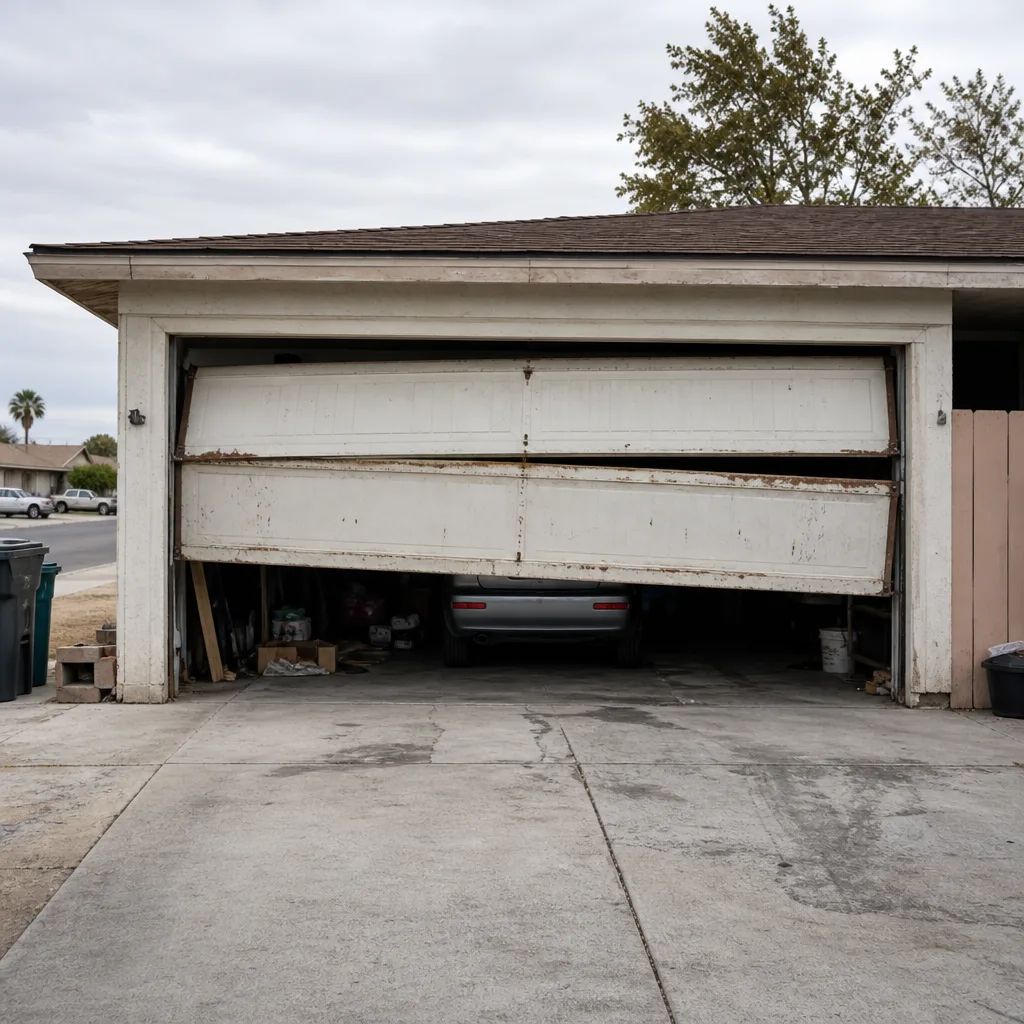 Before
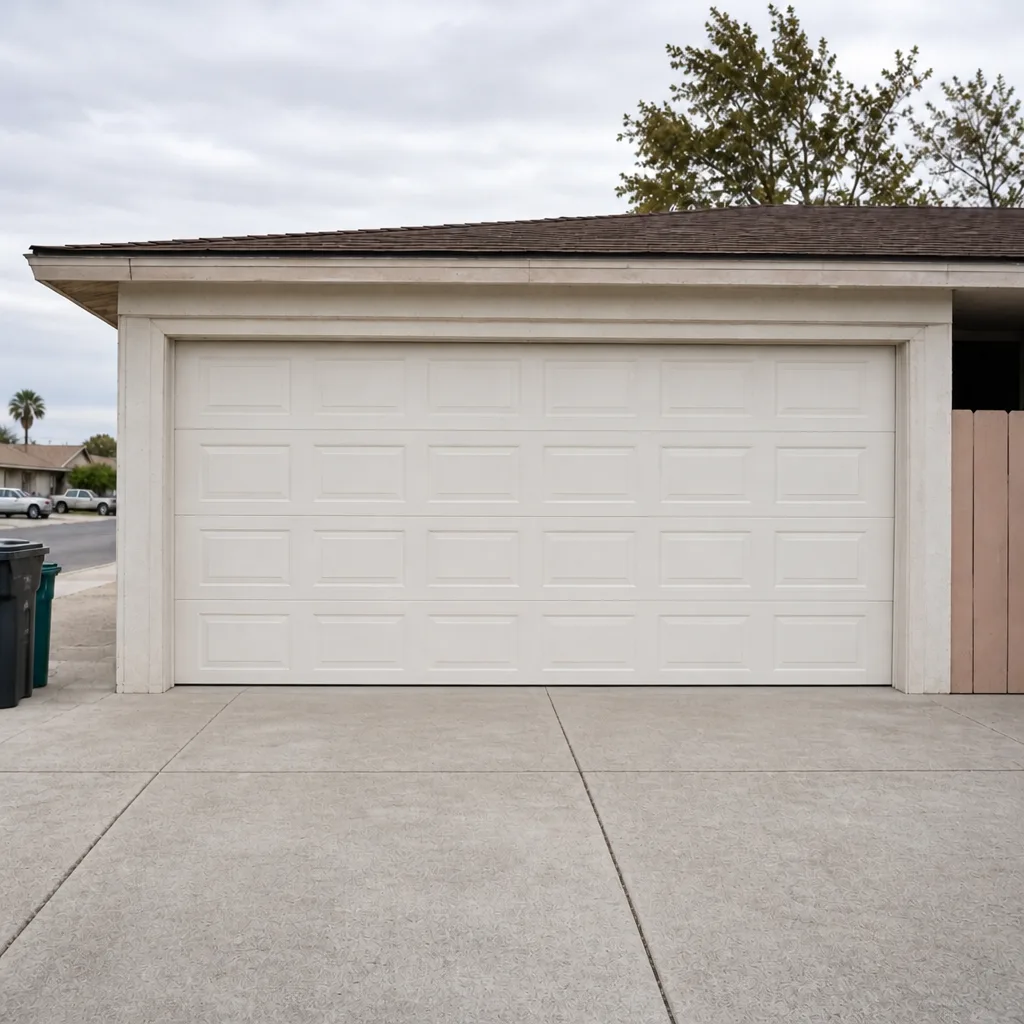 After
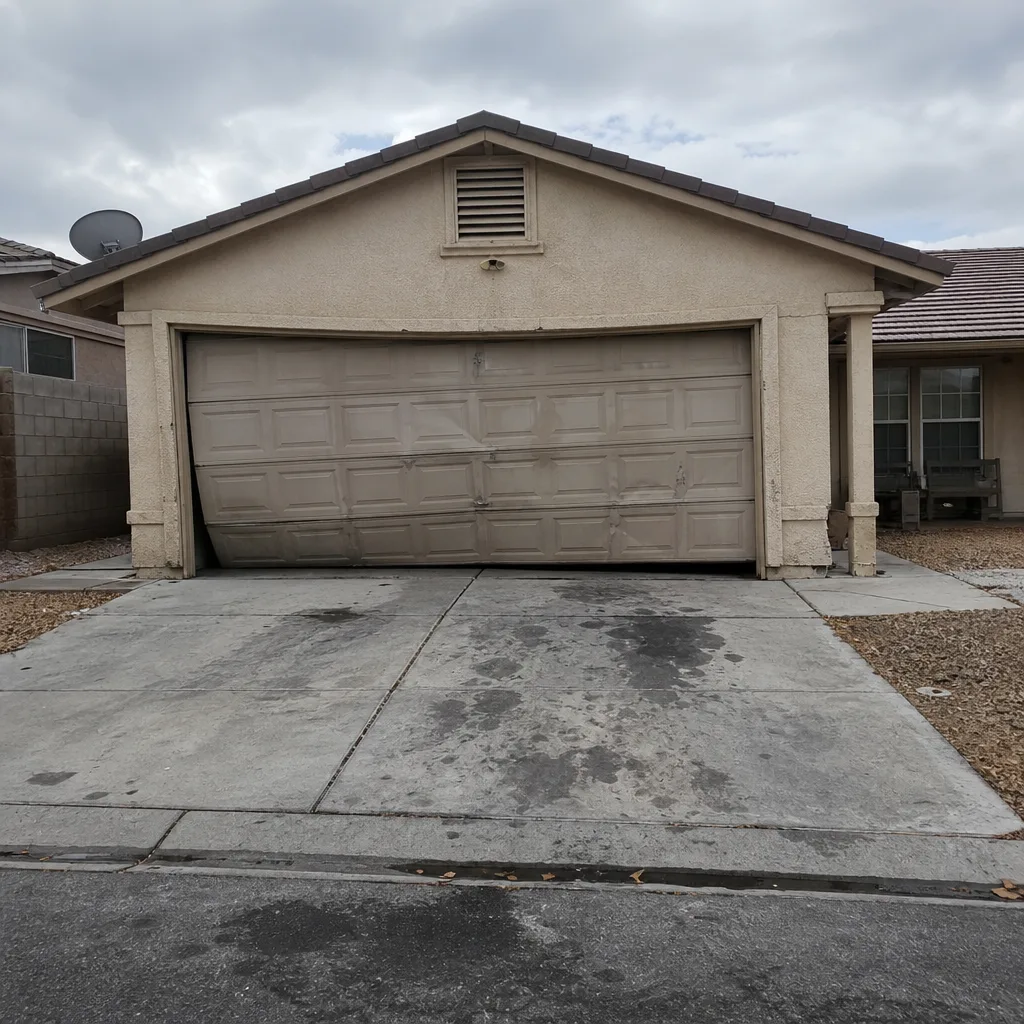 Before
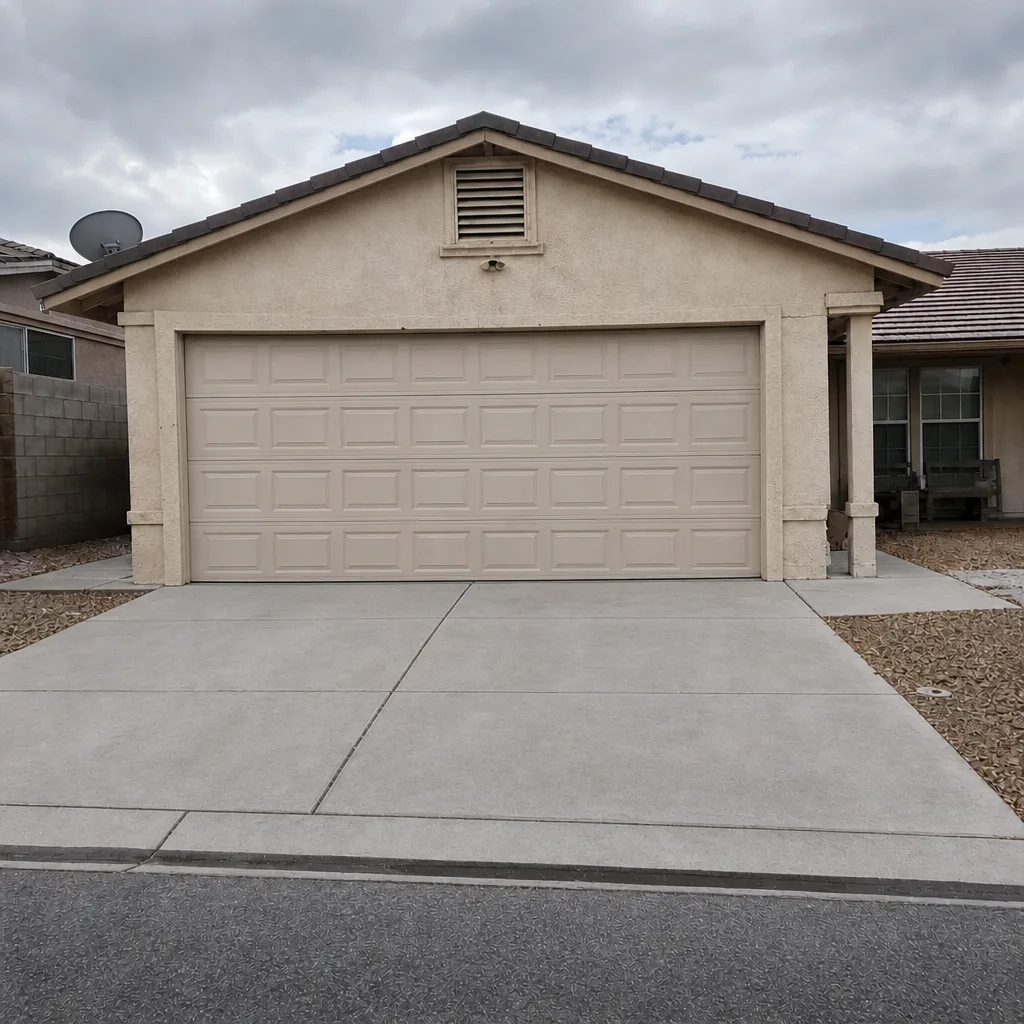 After
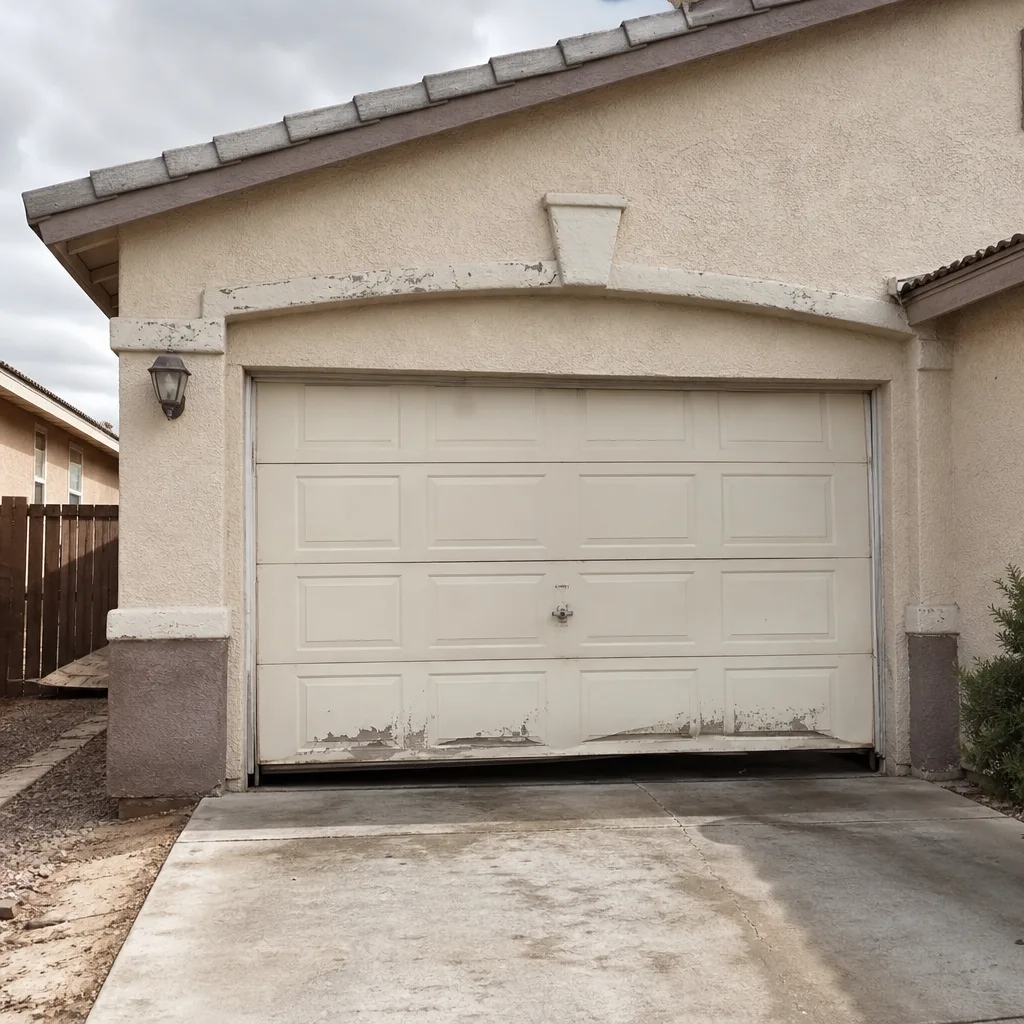 Before
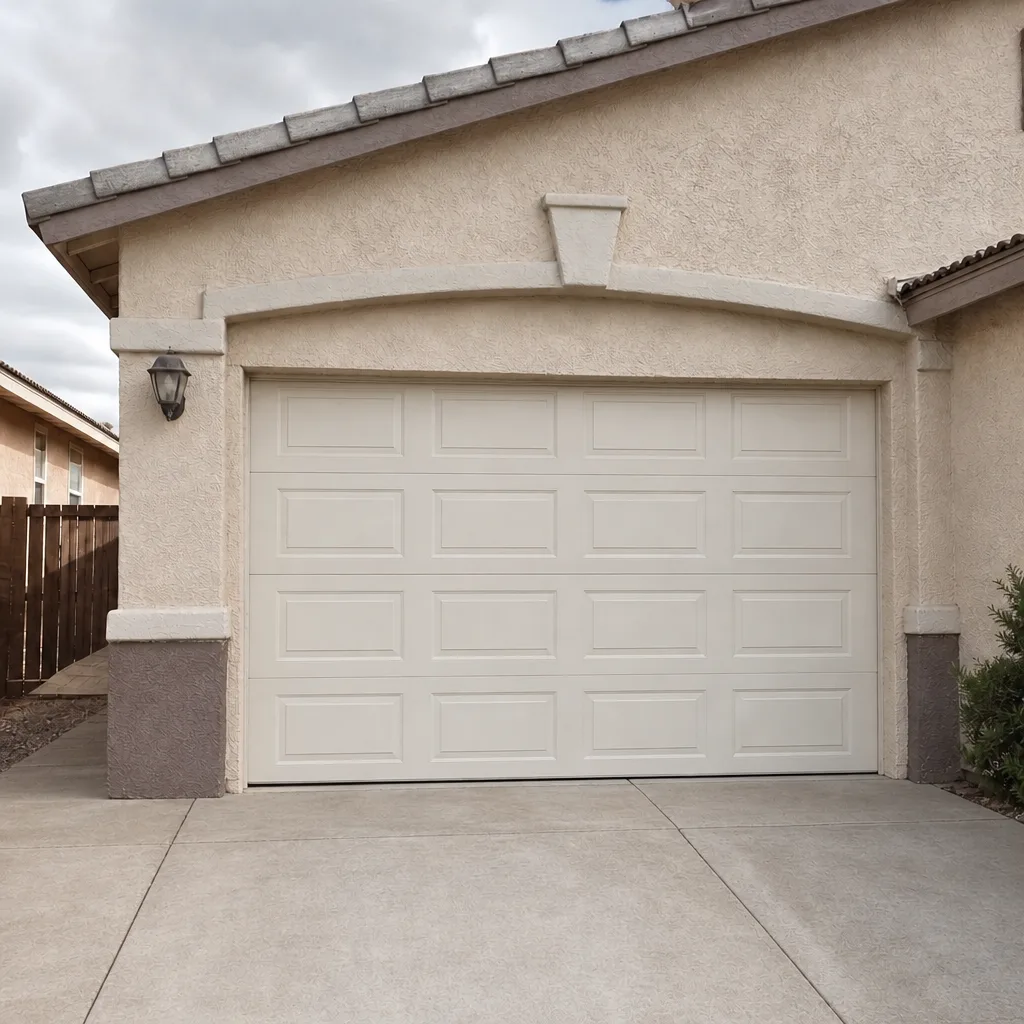 After
Frequently Asked Questions
Every three months is the right cadence in North Las Vegas. Use white lithium grease on hinges, rollers, and spring coils. In a mild climate twice a year would be fine; here the heat dries spray lubricants out fast, so four times a year keeps the moving parts protected through summer. Call (866) 347-9495 if you want a walk-through of your specific door.
Heat expands the metal, which changes the fit on roughly every moving part. Hinges that were snug in April loosen slightly in July, tracks that were true in March can shift, and rollers bind more. A door that’s noticeably louder in summer than in spring is a sign it needs a seasonal tune-up. Most of it is a twenty-minute adjustment, not a repair.
Yes. North Las Vegas summers put a full six months of heat on top of everything you checked in May. The October pass is when we find the cables that stretched through summer and the weatherstripping that dried out. Skipping October is how a “maintained” door fails by year four. Call (866) 347-9495 to schedule the fall tune-up before the cool weather locks in.
No. WD-40 is a solvent and water displacer, not a lubricant for high-heat environments. It evaporates within a week or two in the summer and leaves the metal dry, and it attracts dust. White lithium grease is the right product for hinges, rollers, and springs in this climate.
Run the five-point balance test in this guide. A door that won’t hold at halfway, that pulls unevenly, or that suddenly feels heavier than it did last season has a spring or cable problem. Get a professional to look at it – do not try to loosen or adjust the springs yourself; they’re under hundreds of pounds of tension. Call (866) 347-9495 and we’ll tell you what to check over the phone.
Yes. Springs are rated in cycles (one up-and-down is one cycle), and North Las Vegas daily use of 4-6 cycles a day adds up fast. A door with typical residential springs is rated around 10,000 cycles; at 5 lifts a day that’s about five years. If your family comes and goes a lot, or you have a teen driver, you’ll hit that sooner. A high-cycle spring upgrade at replacement is worth asking about.
The Bottom Line
Timing beats habit every time. In North Las Vegas, the maintenance window that matters is heat-driven: a full check before 100°F, a fast visual through summer, a hard second look in October, and a lubrication refresh in the cool months. Lubricate with white lithium grease, never WD-40. Run the five-point balance test twice a year to catch spring wear before it snaps. Check the bottom weatherstrip every spring and after any dust event. Keep a log so a technician can read the history instead of guessing. And if the balance test fails or you see a broken spring, a frayed cable, or a door coming off its tracks, stop and call a professional.
When you’re ready to schedule a tune-up or talk through what your door needs, call Otto’s Garage Door North Las Vegas at (866) 347-9495 for a free estimate. A live person answers, every time, and if it’s a tune-up call you’ll likely get Otto himself. If you want to check us out first, our installation page shows what a full door replacement looks like, and the opener page covers the most common opener-side repairs we see in the valley.
Written by the team at Otto’s Garage Door North Las Vegas.