
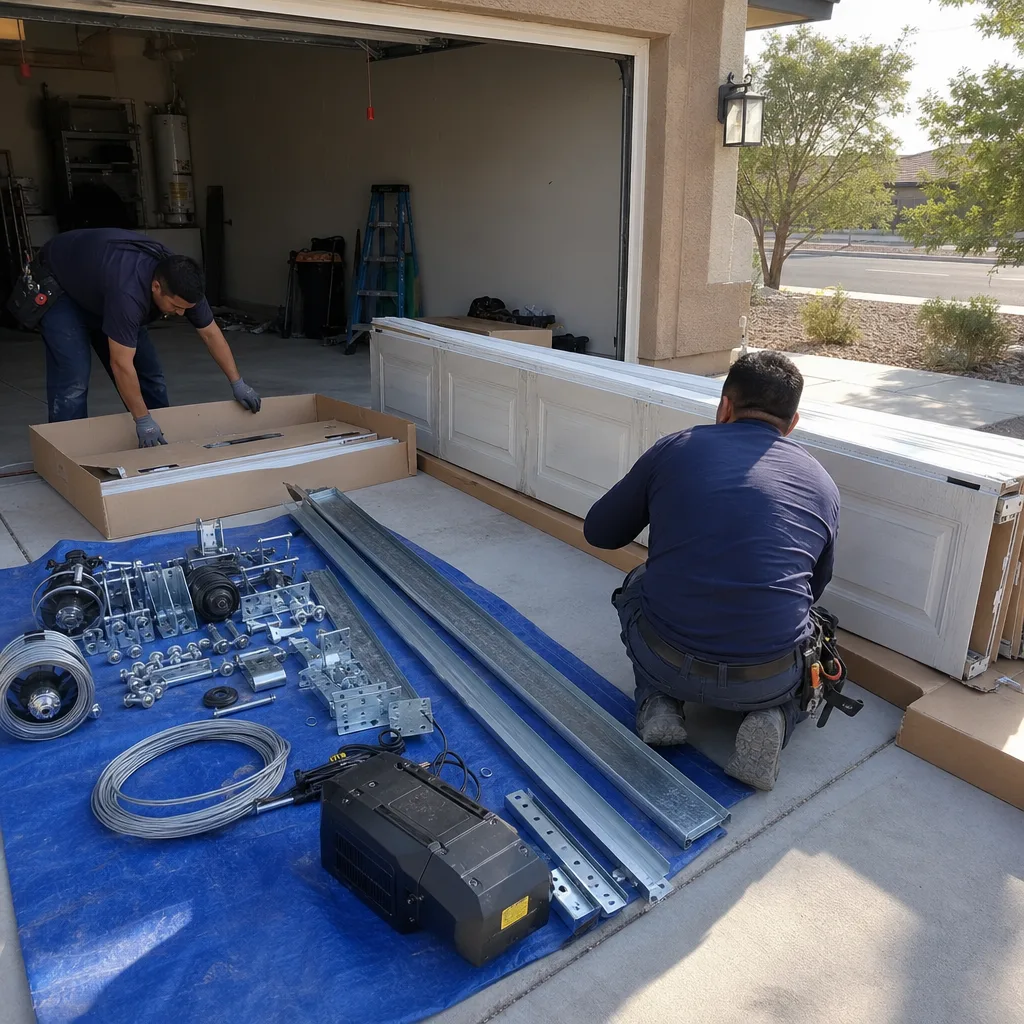
Last updated November 18, 2026
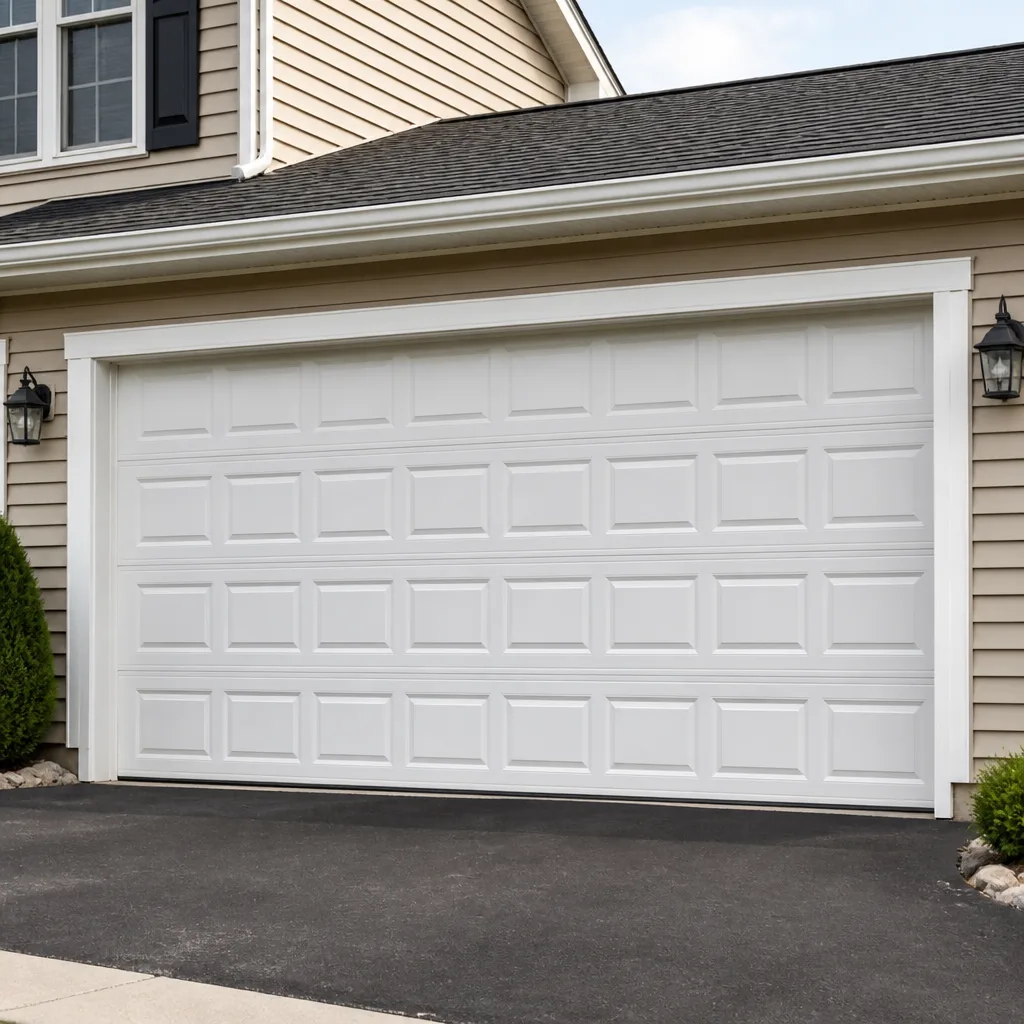 Raised-panel steel
 Carriage house
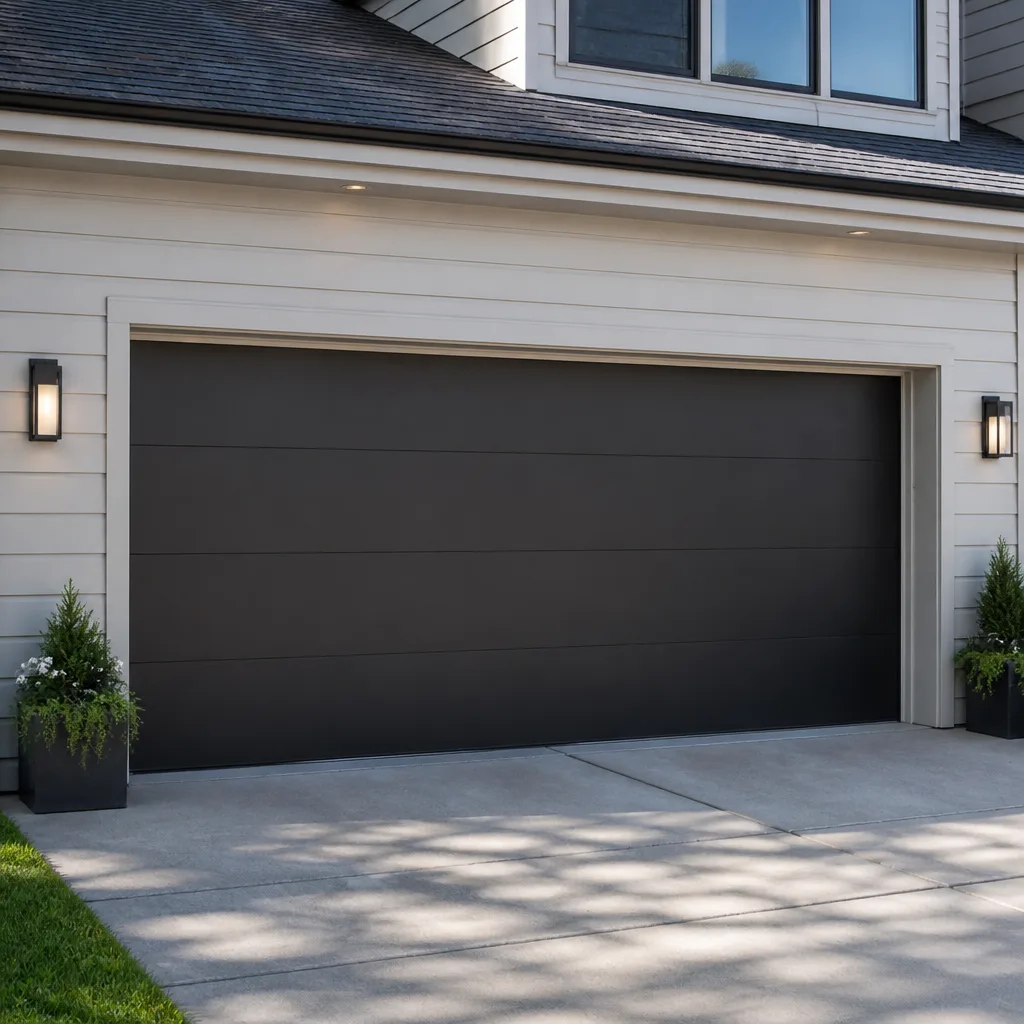 Modern flush
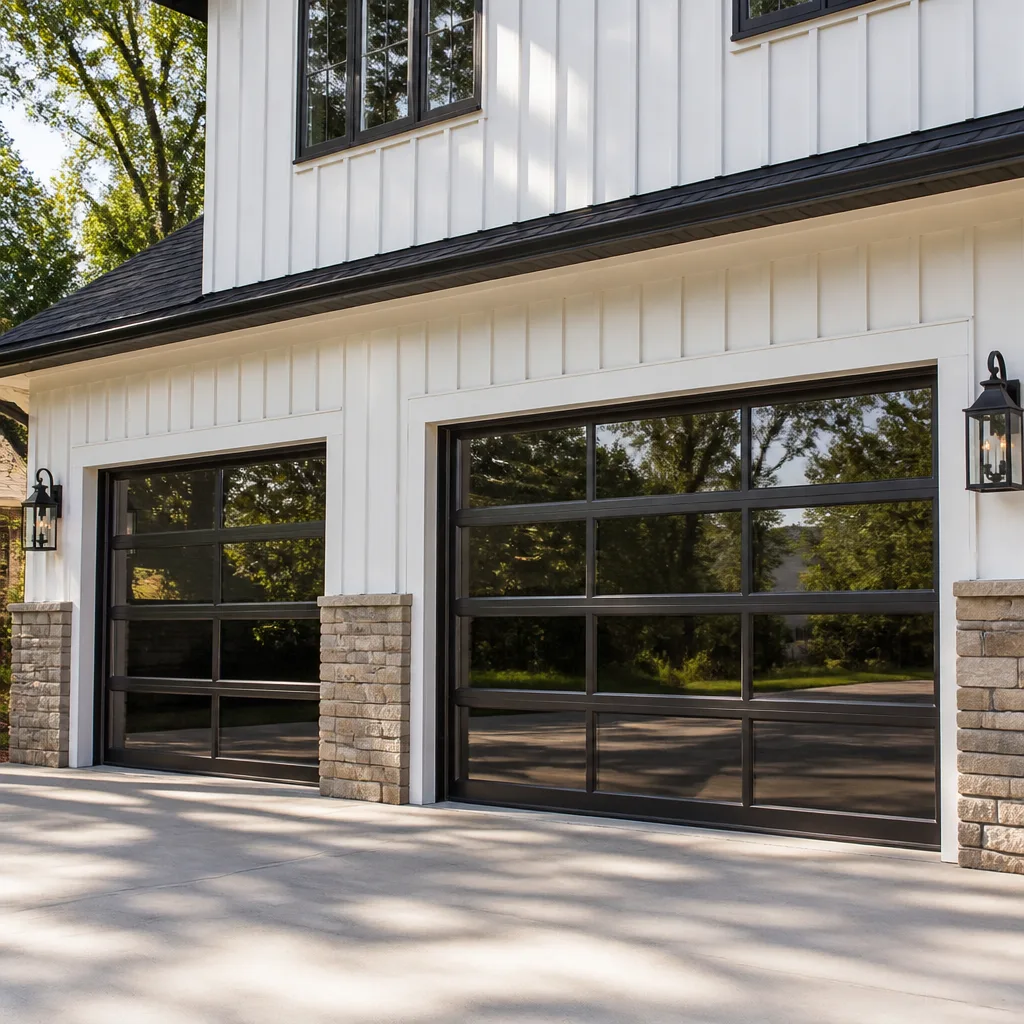 Full-view glass
 LiftMaster openers
 Chamberlain openers
Full 25-point door and opener safety check with every visit - springs, cables, rollers, tracks, and your LiftMaster or Chamberlain opener included
You get a price before we start. It does not change when the pro arrives.
Get your free estimateEmergency Garage Door Maintenance Schedule: What to Do and When
Every broken spring we replace in January could have been caught in October. The coils show fatigue before they snap – you just have to know what you’re looking at. In North Las Vegas, the pattern is almost clockwork: a summer of 110-degree afternoons cooks the steel, the door gets heavier, the opener strains, and the first cold snap in December finishes the job. One hour of inspection work in October prevents most of the winter emergency calls we run. This guide lays out a full maintenance calendar, the three tasks that cut failure rates the most, the 90-second monthly check any homeowner can do without tools, and how to document all of it for resale.
Quick Answer
Inspect and service your garage door every October in North Las Vegas – after summer heat stress and before heavier winter use – and run a 90-second visual check once a month. The three highest-value tasks are a spring tension check, a cable fraying inspection, and replacing steel rollers on schedule. Done consistently, this schedule prevents the majority of emergency failures.
Styles & brands we work with
- Raised-panel steel
- Carriage house
- Modern flush
- Full-view glass
- LiftMaster openers
- Chamberlain openers
Table of Contents
- The October Inspection: Why Fall Is Your Maintenance Window
- The Three Tasks That Cut Emergency Failures Most
- The 90-Second Monthly Visual Inspection
- Why Bad Lubrication Causes More Emergencies Than None
- The Full Year-Round Calendar for North Las Vegas
- How to Document Maintenance for Resale
- Common Mistakes to Avoid
- When to Call a Professional
The October Inspection: Why Fall Is Your Maintenance Window
North Las Vegas is not a mild climate, and that shapes the whole schedule. Through June, July, and August, your door’s steel track, springs, and cables sit in an attic-space oven. Metal expands, lubricant cooked onto the tracks turns gummy, and torsion springs – the two coils above the door that carry the full weight – lose tension in tiny increments. That’s the slow wearing-out phase nobody notices, because the door still opens.
October is when we want eyes on every moving part. Cooler weather arrives, families spend more evenings at home, and the door gets used more, not less. The failure that would have stranded you in July now strands you on a school night with a car sealed inside. A fall inspection catches the fatigued spring before it snaps.
Our October checklist runs like this:
- Measure spring tension against the door’s weight and note remaining cycles
- Inspect both cables for fraying along their full length, especially at the drum
- Check roller wear and test each roller for flat spots
- Examine hinges and the bottom bracket for looseness
- Test the auto-reverse safety feature with a roll of paper towels
- Look at the opener’s force settings and rail alignment
- Confirm the photo-eye sensors are aligned and unobstructed
If you live in an older home where the door has logged years of desert summers, this inspection matters that much more. The heat cycling doesn’t stop, and neither does the wear. We’d rather spend an hour in October than an emergency call in January; if you want the full repair side of this, our page on Garage Door Repair in North Las Vegas covers what we handle when something has already given out.
The Three Tasks That Cut Emergency Failures Most
Not every maintenance item is equal. Three tasks account for the largest share of prevented emergency calls, and each has clear “do it now” versus “you have another season” indicators.
1. The Spring Tension Check
Torsion and extension springs hold the entire weight of the door – a two-car door can run 150 to 250 pounds, and the springs carry all of it. We count spring cycles the way you count tire miles. A standard spring is rated for a set number of open-close cycles, and every day of use eats into it. The door feeling suddenly heavy, or the opener straining to lift it, is a spring telling you its number is almost up. Do it now if the door feels heavy by hand or won’t stay open at the halfway point. You have time only if the door balances smoothly and the coils look even with no gaps.
2. The Cable Fraying Inspection
Cables run along the sides and wind onto drums at the top corners. Heat, friction, and age fray them. Run a gloved hand along each cable (never put your hand near a moving or tensioned cable) and look for broken strands, kinks, or rust bleeding through. Do it now if you see even a few broken wires or a cable hanging slack. A snapped cable on a loaded door is a genuine hazard, not a nuisance.
3. Roller Replacement Interval
Steel rollers with bearings are the workhorses on most doors, and the plastic or nylon ones wear faster, especially in desert heat. Test each roller by wiggling it – play, flat spots, or a grinding sound all mean replacement. Do it now if a roller is cracked or jammed. You have time if they spin free and quiet. On a door with heavy daily use, plan on replacing rollers on a set interval rather than waiting for a symptom.
On a Clopay or Amarr door, these three tasks cover most of what would otherwise become a January emergency. Springs and cables are genuinely dangerous – a door is 200 pounds riding on two springs, and a tensioned torsion spring can injure or kill someone who tries to adjust it without the right tools. Treat the inspection as information gathering, and leave the adjustment to a trained professional.
The 90-Second Monthly Visual Inspection
You don’t need tools for this, and you don’t need a ladder. Once a month, stand back and watch your door through one full open-close cycle. Here’s the exact sequence:
- Watch the door travel up. It should move smoothly and evenly, not jerk or pause.
- Listen. A door that rattles, squeals, or grinds is telling you something is wearing.
- Look at the gap under the door when it’s down. Uneven gaps mean the door is out of balance.
- Check the two small photo-eye sensors near the floor. They should be clean, aligned, and unobstructed.
- Press the wall button to bring it down, then wave an object through the beam. The door must reverse instantly.
- Glance at the springs above the door for visible gaps, rust streaks, or coils that look stretched.
- Look along both side tracks for anything bent, loose, or shiny where metal is rubbing.
That’s it. Two minutes tops. In our experience, homeowners who do this every month catch small problems – a loose hinge, a misaligned sensor, a roller going bad – while they’re cheap to fix. If your opener is straining, the problem is almost never the opener; the monthly check is how you catch the real culprit early. Our team can look at any of this during a routine visit.
Why Bad Lubrication Causes More Emergencies Than None
This surprises people: over-lubricating your door, or using the wrong product in the wrong place, generates more emergency calls than skipping lubrication entirely. Here’s why. The side tracks are meant to be dry. Rollers roll through them. When you spray the track with oil or grease, you trap dust and grit, then the rollers slide instead of rolling, and you get flat spots and jams. It feels like you’re helping. You’re not.
The second trap is plastic or nylon rollers. Standard petroleum lubricants degrade plastic and nylon over time, and in desert heat they bake onto the surface. Use a silicone or lithium-based lubricant on the metal pivot points – hinges, the torsion spring coil, the bearing plates – and keep the tracks clean and dry. Two or three times a year is plenty.
The right places to lubricate:
- Hinge pivot points
- The torsion spring coil (a light coat, not a soak)
- Bearing plates and the center bracket
- Metal rollers’ bearings, if they’re metal
Leave the tracks, the plastic rollers, and the opener rail alone unless you’ve been told otherwise. Done right, lubrication is a maintenance task. Done wrong, it’s a slow-motion emergency call. When we show up for a service visit, we’ll tell you honestly whether your door is over- or under-lubricated – it’s one of the easiest things to get wrong, and one of the easiest to fix.
The Full Year-Round Calendar for North Las Vegas
Here’s the calendar we recommend to customers, mapped to the desert climate. The October inspection is the anchor; the rest supports it.
January – February: Monthly visual checks. This is peak emergency season (cold snaps stress weakened springs). Watch for heavy operation and strange noises. If a door has been complaining since October and you skipped the inspection, this is when it fails.
March – April: Pre-summer lubrication. Clean the tracks and apply the right lubricant to the pivot points before the heat arrives. This is also the best time to book a new door installation if you’re planning one – cooler months mean you’re not clearing a hot garage. Our Garage Door Installation in North Las Vegas page walks through what installation involves; that work is measured and scheduled, not rushed.
May – September: Monthly visual checks. The heat does its quiet damage. Springs lose tension incrementally. If the opener starts straining or the door feels heavier, that’s the spring, not the opener – and it’s the number one thing we see in July calls.
October: The full inspection. This is your most important maintenance window. Get the spring tension measured, cables inspected, and rollers checked.
November – December: Monthly visual checks. Heavier use returns. If your October inspection flagged anything as “you have another season,” this is where you watch it closely.
The pattern keeps you one step ahead of the calendar instead of one step behind it.
How to Document Maintenance for Resale
North Las Vegas has a lot of older homes, and buyers and inspectors have gotten pickier. If you’re planning to sell, a simple maintenance log matters more than you might think. Keep a folder – digital or paper – with dates of inspections, what was found, what was repaired, and the receipts. If we’ve serviced your door, the invoice is your record, and it includes our 90-Day Done Right Promise in writing.
What to log:
- Date of each monthly visual check (a calendar note is enough)
- Date and findings of the annual October inspection
- Every part replaced – springs, rollers, cables, hinges – with model and date
- Every opener repair or replacement
- Any professional inspection report
When a buyer’s inspector looks at the door, a log that shows regular care says something a shiny door can’t. It tells them this person took care of the home. On a Wayne Dalton or Craftsman door that’s a dozen years old, that log is your proof the door hasn’t been neglected.
Common Mistakes to Avoid
- Spraying lubricant on the tracks. It attracts grit, the rollers slide instead of roll, and you end up with flat spots. Keep the tracks clean and dry.
- Using petroleum lubricant on plastic rollers. In North Las Vegas heat it degrades the plastic and can jam the door. Use the right product on the right material.
- Assuming the opener is the problem. A straining opener is almost always responding to a heavy door with tired springs. Replacing the opener just buys you a bigger bill and a bent rail.
- Skipping the October inspection because the door “still works.” Working and safe are different things. A fatigued spring works right up until the second it doesn’t.
- Trying to adjust a torsion spring yourself. A door is 200 pounds on two springs, and an untrained hand on a tensioned spring is how people get seriously hurt. This is not a DIY job.
- Never testing the auto-reverse. It’s the door’s most important safety feature, and it takes ten seconds with a roll of paper towels. A door that doesn’t reverse needs service before someone gets injured.
- Ignoring the monthly visual check. Two minutes a month catches the cheap fixes before they become the expensive ones – and the emergency calls.
See the difference
 Before
 After
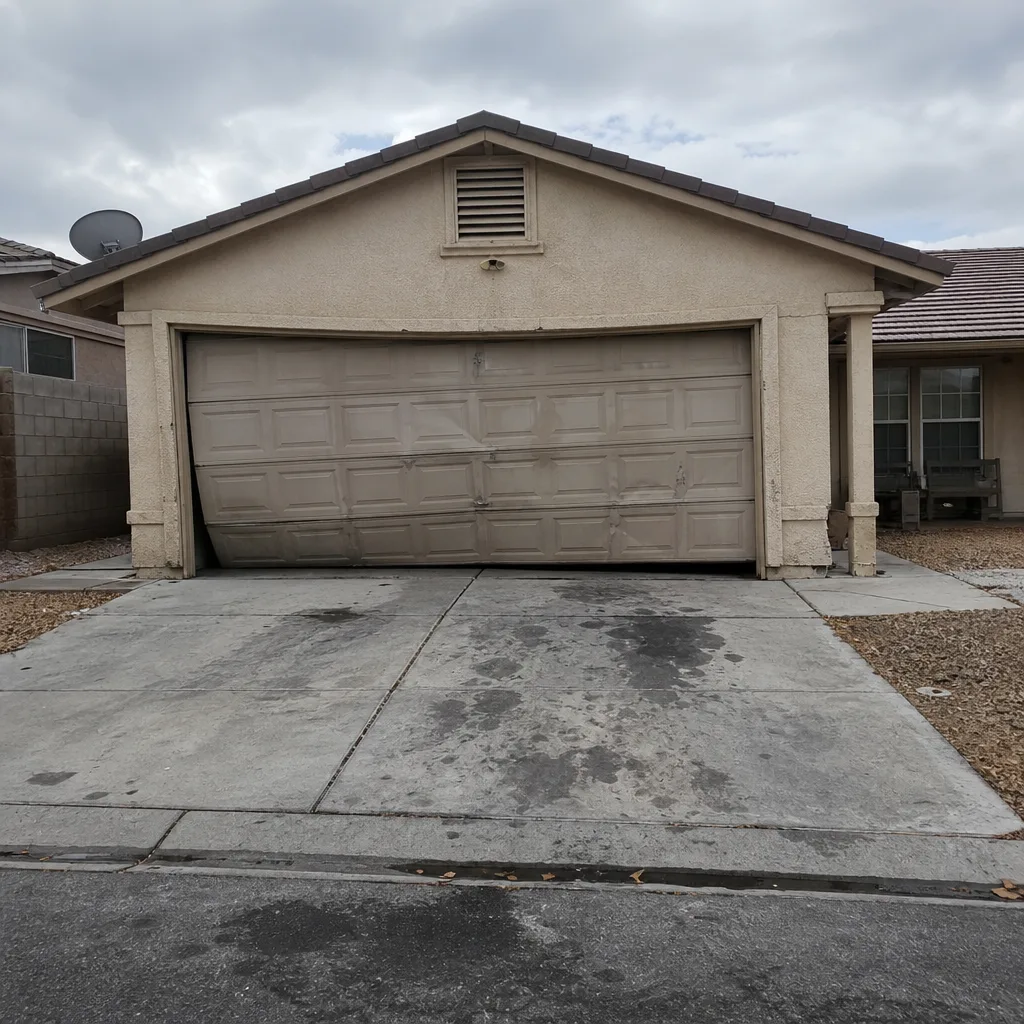 Before
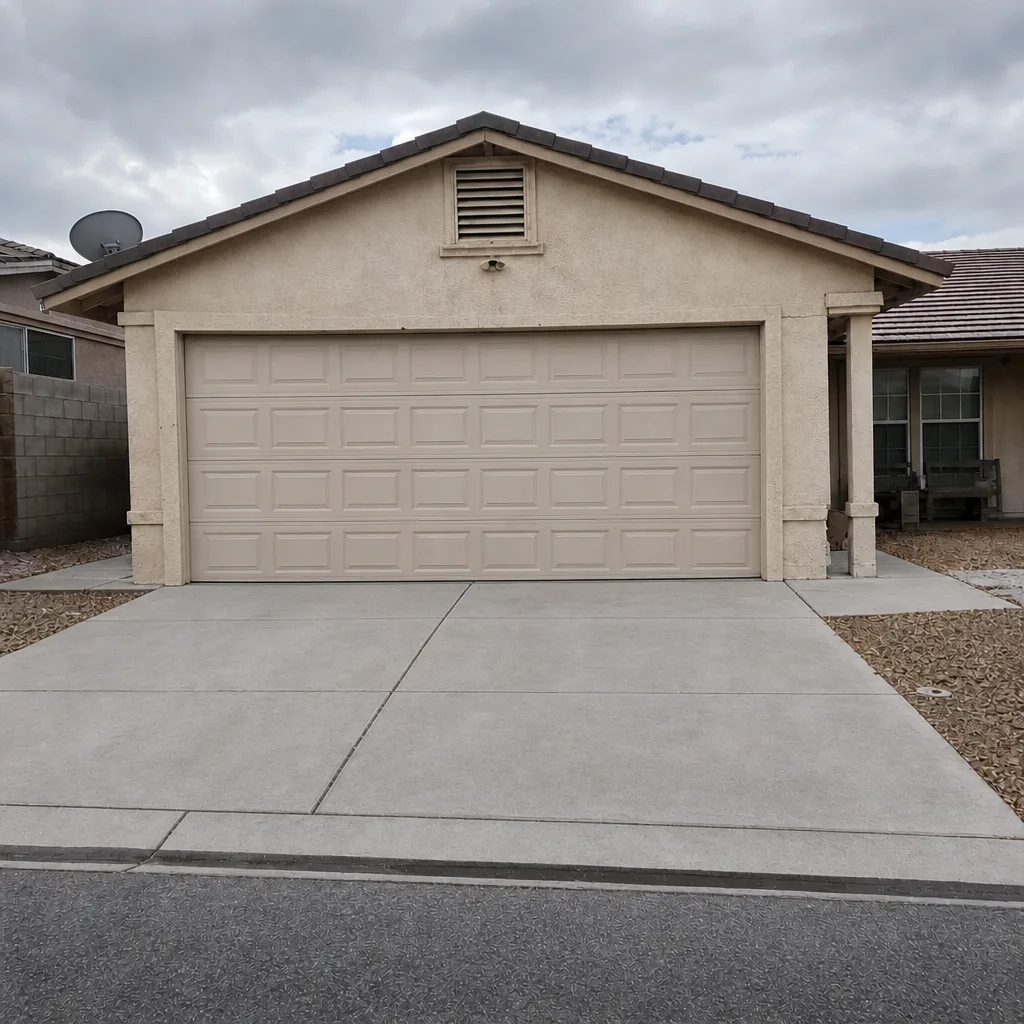 After
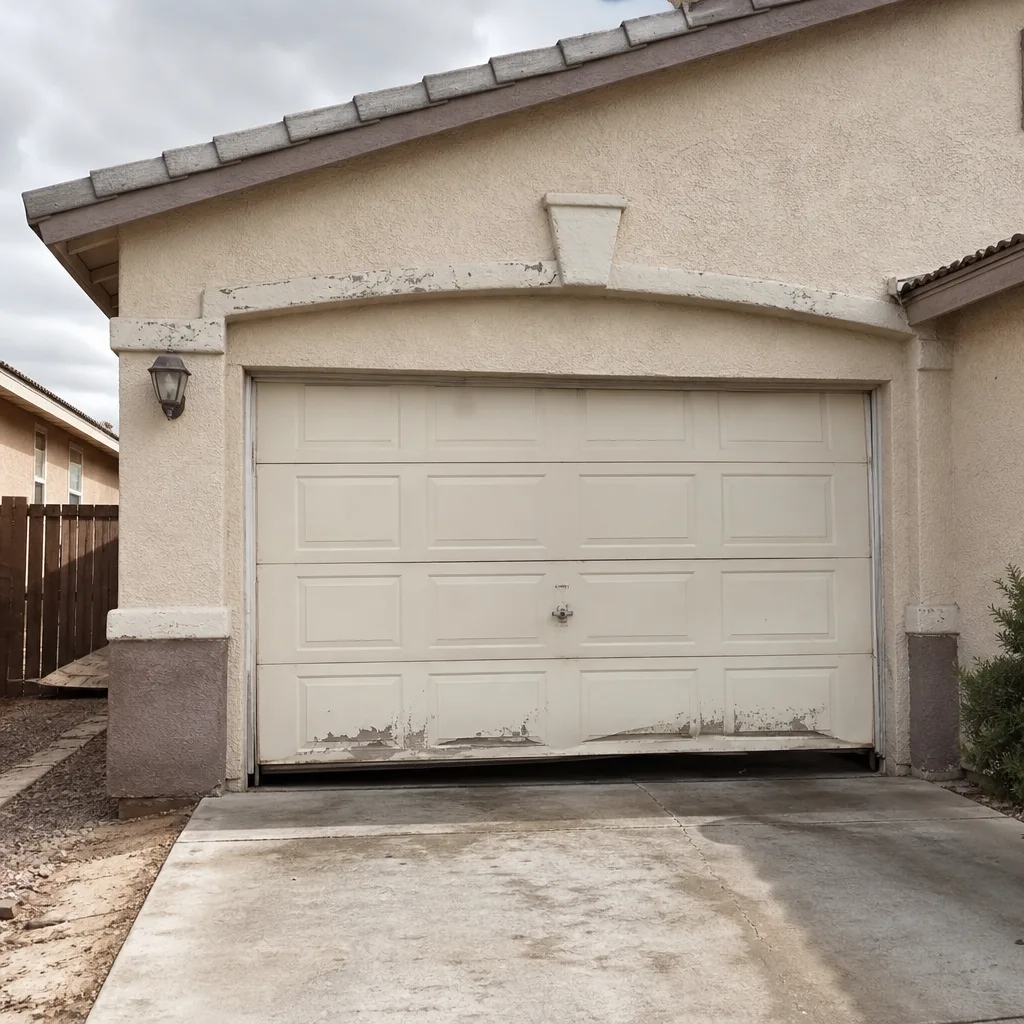 Before
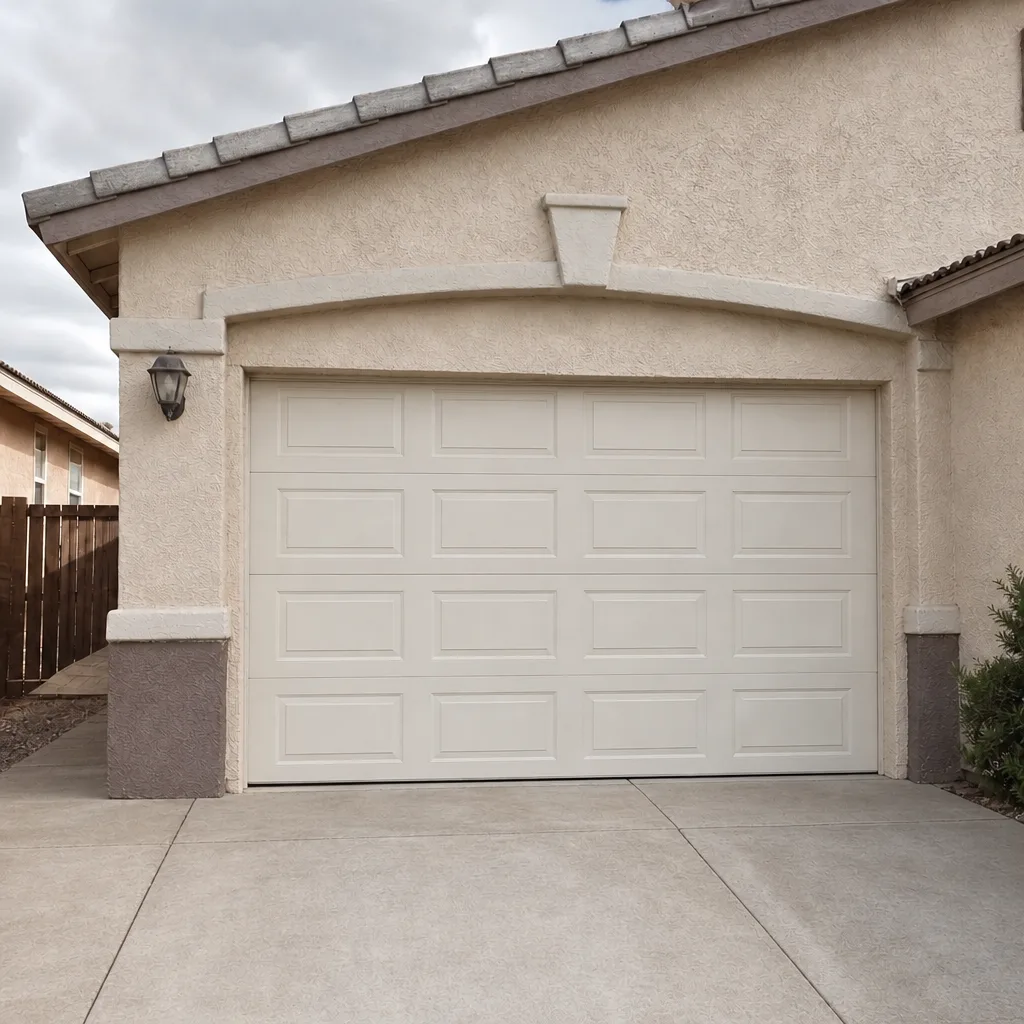 After
When to Call a Professional
Some things you can inspect yourself. Others need a trained hand on the tools. Call a professional if you see a visibly stretched or gapped spring, any frayed or slack cable, a door that slams, jerks, or reverses on its own, a door you can’t lift by hand, or a photo-eye system that won’t respond. Call immediately if a spring has already snapped, a cable is loose, or the door is stuck open in the middle of the night.
If you’re in North Las Vegas and any of those apply at any hour, Otto’s Garage Door North Las Vegas is a local call with a live person at the other end. We answer around the clock, quote on that call, and hold the number when we arrive. The name on the van is the name on the invoice and the name on the license, and we have a published address and license number any homeowner can verify. Best of all, if you’re not sure whether it’s an emergency, call us – we’ll tell you straight. For opener-specific concerns, our Garage Door Opener Repair & Installation in North Las Vegas page explains what’s worth fixing versus replacing. Every job carries the 90-Day Done Right Promise in writing.
Frequently Asked Questions
Once a year for a full inspection, with a 90-second visual check every month. In North Las Vegas, the annual inspection should land in October – after the summer heat stress and before the heavier winter use. That timing catches worn springs before they fail.
Yes. A spring tension check, a cable inspection, and on-schedule roller replacement catch the three most common causes of emergency failures before they happen. Done consistently, this schedule prevents the majority of the calls we run in the winter. Skip it and you’re rolling the dice on a January morning.
The spring tension check. Springs carry the full weight of the door and fail from fatigue – they don’t fail with warning you can’t see. A spring that’s lost tension shows up as a heavy door or a straining opener. That’s the number one thing we want eyes on every October.
A visual inspection from the ground is safe. Adjusting a spring or cable is not. A tensioned torsion spring can injure or kill an untrained person, so treat the inspection as information gathering and hand the adjustment to a trained professional. If what you see worries you, call – we’d rather look at it than have you take the risk.
Because lubricant on the tracks traps grit and makes rollers slide instead of roll, which causes flat spots and jams. Lubricating plastic or nylon rollers with the wrong product degrades them, especially in desert heat. Keep the tracks dry, use the right lubricant on the metal pivot points, and you avoid the problem.
Yes, especially if you may sell. North Las Vegas has a lot of older homes, and a log showing regular care tells a buyer’s inspector the door has been maintained. Keep the invoices and dates; if we serviced it, the invoice is your written record. Call (866) 347-9495 if you need a starting point – estimates are free.
The Bottom Line
The best emergency garage door repair is the one that never happens. In North Las Vegas, the whole game is October – after summer heat stress, before the door gets heavy winter use. Do the full inspection, watch the three tasks that prevent the most failures (spring tension, cable fraying, roller wear), run the 90-second check every month, lubricate correctly or not at all, and keep a log for resale. That schedule won’t guarantee a door never breaks, but it moves the odds firmly in your favor. And if something does fail, a trained hand should be on it – not yours.
Ready to get ahead of the calendar? If you’re in North Las Vegas and want a straight answer on the shape of your door before winter, Otto’s Garage Door North Las Vegas home is a good place to start, and you can call us at (866) 347-9495 for a free estimate. We answer around the clock, quote on the call, and hold that price when we arrive – with the 90-Day Done Right Promise written on every invoice. Whether it’s a Clopay, an Amarr, a Wayne Dalton, a Craftsman, or anything else on your house, we’ll tell you what’s left on your springs and what to do next.
Written by the team at Otto’s Garage Door North Las Vegas.