
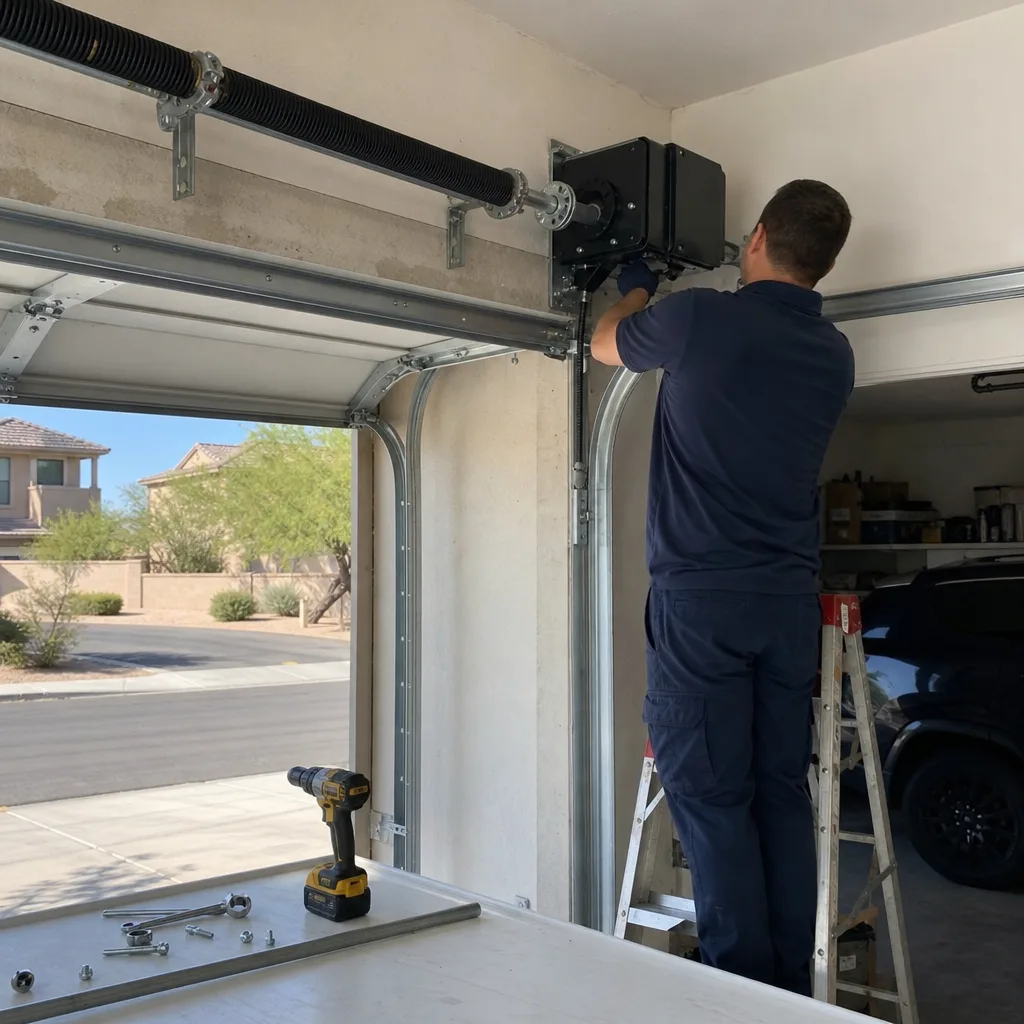
Last updated November 18, 2026
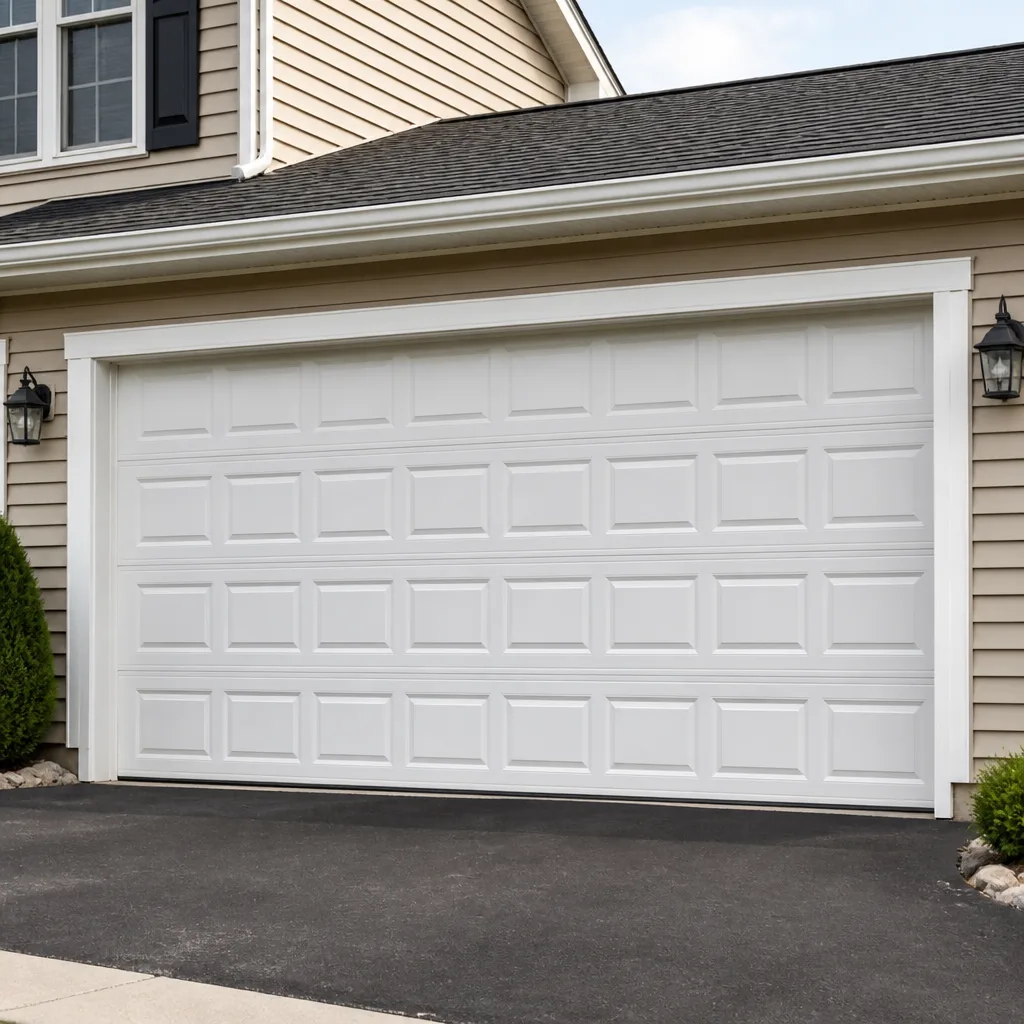 Raised-panel steel
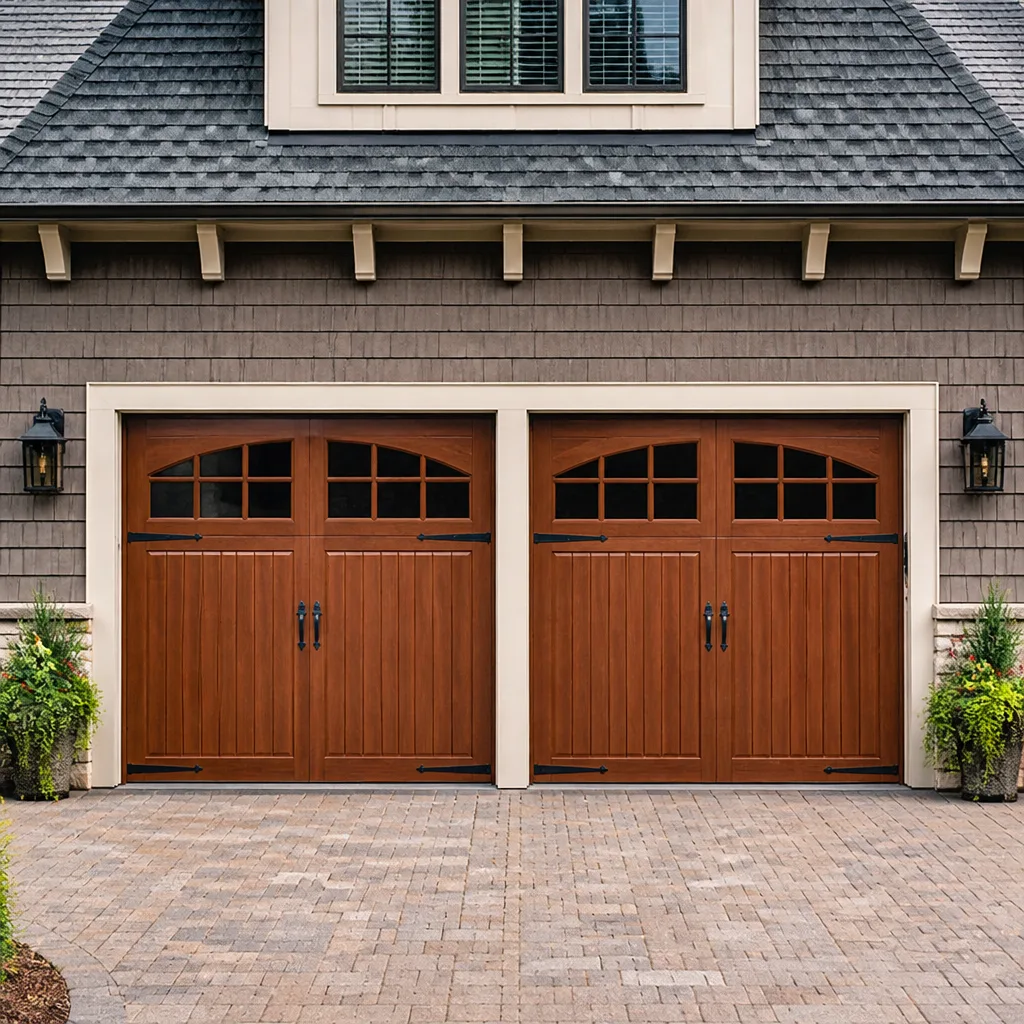 Carriage house
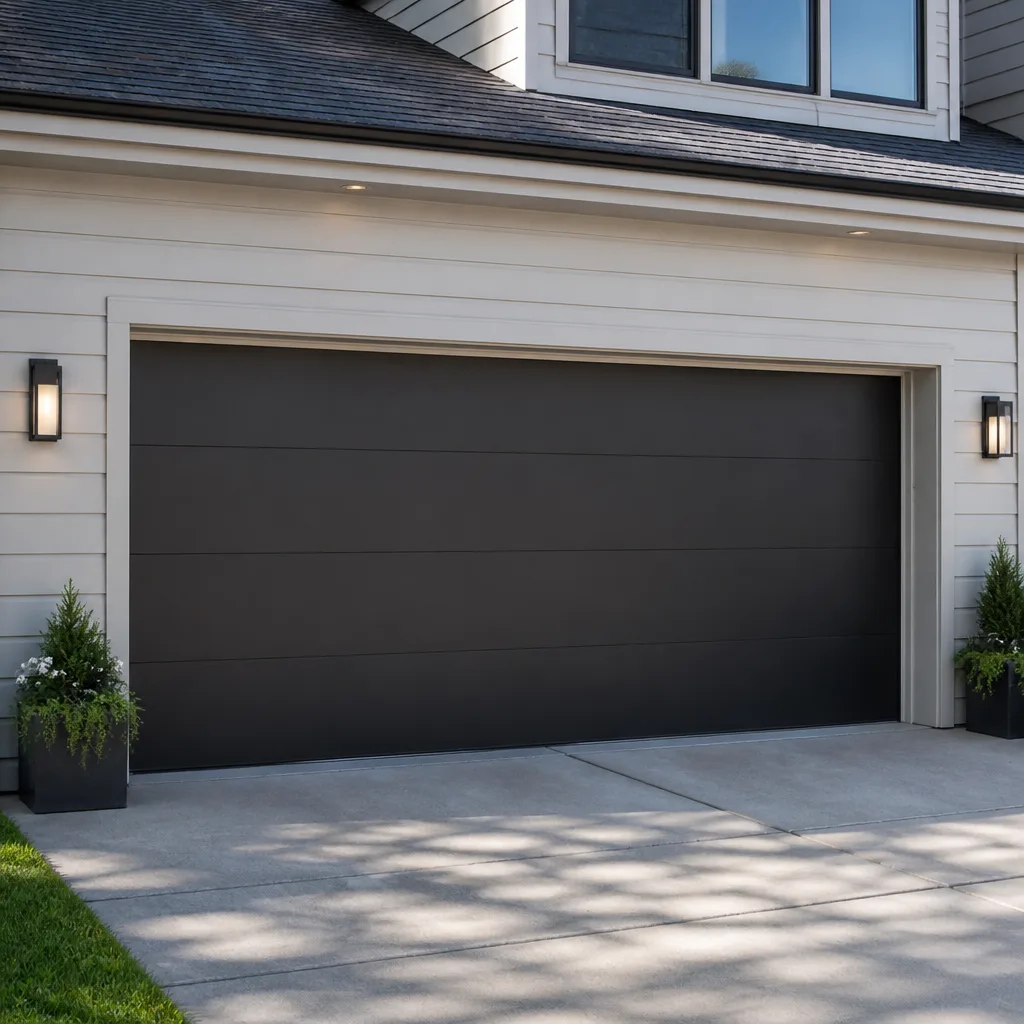 Modern flush
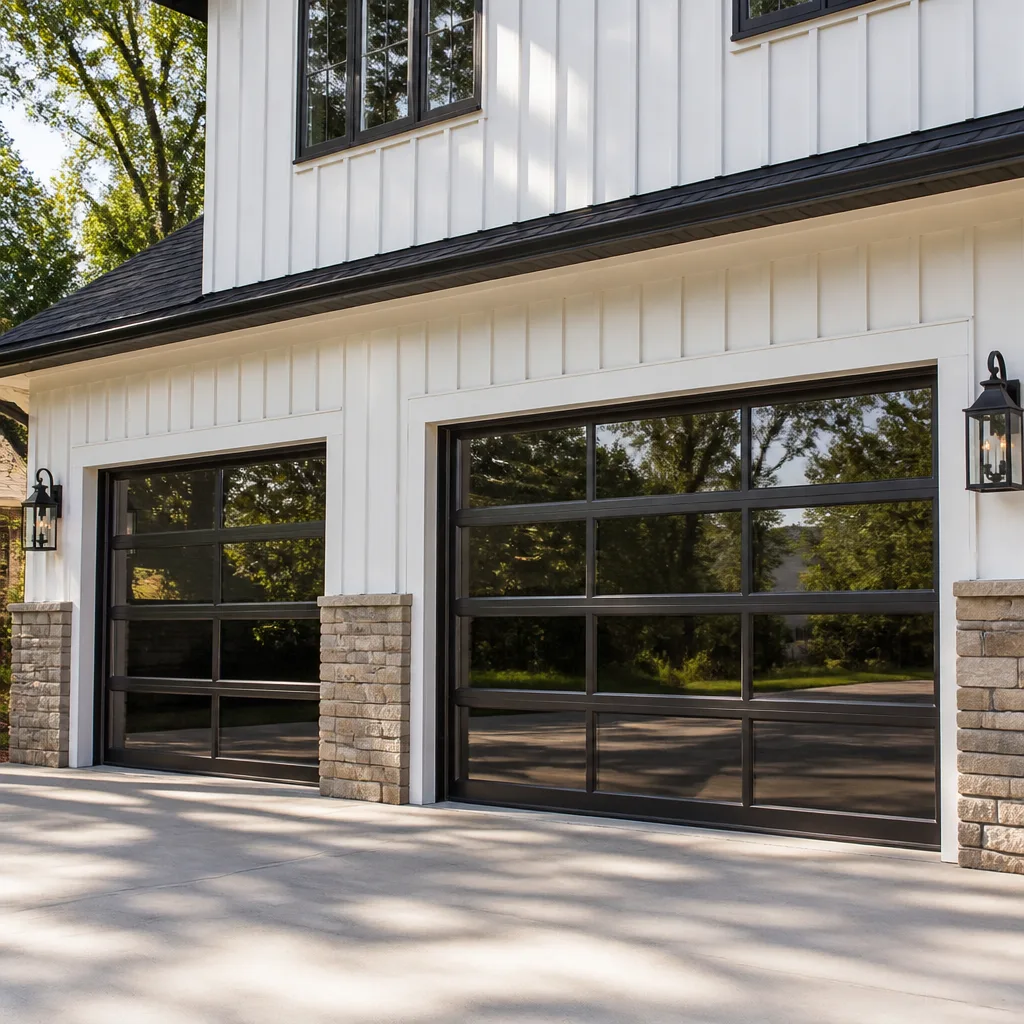 Full-view glass
 LiftMaster openers
 Chamberlain openers
Full 25-point door and opener safety check with every visit - springs, cables, rollers, tracks, and your LiftMaster or Chamberlain opener included
You get a price before we start. It does not change when the pro arrives.
Get your free estimateGarage Door Installation Warning Signs Every Homeowner Should Know
If the installer didn’t run a full balance test before packing up the ladder, you didn’t get a finished installation. You got a door hung in the dark, and it’ll tell you so in about eight months when the springs snap ahead of schedule. That’s the thing about a bad garage door install: it almost never fails on day one. It fails quietly over six to eighteen months, right after the warranty window closes and the crew that did the work has moved on to the next county. This guide is built to catch those failures while the installer is still in your driveway. We’ll show you the three corners cheap crews cut to hit a low bid, the halfway-point test you can run yourself in ninety seconds, the sounds that mean stop and the ones that mean relax, and a ten-minute walkthrough you can run before the truck pulls away. We do this work every week in North Las Vegas, where the summer heat punishes a sloppy install faster than anywhere else.
Quick Answer
The clearest warning signs of a bad garage door installation are a door that won’t stay put at the halfway point, uneven horizontal gap lines between the sections, a missing or glued-on bottom seal, a track that looks bolted to old hardware, and any grinding, popping, or rubbing sound while the door travels. A properly installed door runs quiet, sits balanced at the halfway mark, and closes flush to the floor on both sides. If it does any of the opposite, you have leverage now: it’s still the installer’s problem, not yours.
Styles & brands we work with
- Raised-panel steel
- Carriage house
- Modern flush
- Full-view glass
- LiftMaster openers
- Chamberlain openers
Table of Contents
- The Halfway-Point Balance Test: Do This First
- The Three Corners Cheap Crews Cut
- Sounds and Movements That Should and Shouldn’t Happen
- What Uneven Gap Lines Tell You About the Tracks
- The Ten-Minute Post-Install Walkthrough
- Why North Las Vegas Heat Makes Bad Installs Fail Faster
- The Warranty Clock and How to Protect Yourself
- Common Mistakes to Avoid
The Halfway-Point Balance Test: Do This First
A door is 200 pounds of steel and glass riding on two springs. If those springs were set with the wrong number of turns, the whole system is fighting itself from the first day. The balance test tells you whether the installer matched the springs to the door weight or eyeballed it. Here’s the test, and you can run it yourself in under two minutes.
- Close the door fully and pull the manual release cord hanging from the opener rail. That disconnects the door from the motor so you’re testing the door, not the opener.
- Lift the door by hand to about waist height, right around the halfway point.
- Let go.
- A properly balanced door stays exactly where you let it go. It doesn’t creep up. It doesn’t slide down. It hangs there like it’s on a hinge.
If the door creeps upward, the springs are too strong and the installer cranked on too many turns. It will strain the opener, wear out the operators early, and put the door under stress every cycle. If it slides down, the springs are too weak. The door is too heavy for the springs, the opener works harder than it should, and the springs will fail ahead of their rated cycles. Another clue: a door that’s out of balance has one spring visibly tighter or a completely different stretch between them. We count spring cycles the way you count tire miles, and I’ll tell you plainly when a spring has been over-wound. If the balance test fails, don’t wait. The install isn’t done, and it’s still on the installer.
The Three Corners Cheap Crews Cut
Low bids have to come from somewhere, and cheap garage door installation in North Las Vegas almost always trims the same three corners. Each one gets the crew out of your driveway quicker and costs them almost nothing at the bid table. Each one also takes months off the life of your door. Know them so you can spot them in the mirror and in the driveway.
1. The missing bottom seal
The bottom seal is the rubber astragal that rides along the bottom edge of the door and seals against the concrete. It keeps out wind-driven dust from the desert, water from monsoon storms, and pests. A crew that wants to save five minutes will nail on a cheap seal, glue it instead of sliding it into the retainer, or skip it entirely on a door where the concrete isn’t level. A glued seal pulls loose in the Vegas heat. A missing seal leaves a gap you can see daylight and desert dust through.
2. Old mounting hardware left in place
New door, old brackets. If the hinges, rollers, and center bearing plates look older than the panels, ask why. Reusing hardware saves the crew a trip to the supply house and saves them the cost, and it also transfers the wear of the previous door onto the new one. On a Raynor or Wayne Dalton install, the hardware is matched to the door weight. Reusing mismatched hardware is a shortcut that shows up as noise in month three and a sagging top section in year two.
3. Tracks not leveled before final tighten
Every track has to be plumb and level before the bolts get their final torque. A crew in a hurry will set the tracks, snug the bolts, and roll the door without checking. If the tracks aren’t level, the door binds against one side, the rollers chatter, and the opener fights the door from the first cycle. You can spot it just by looking at whether the vertical track runs straight with a level held against it, and by watching whether the door pulls to one side as it rises.
Sounds and Movements That Should and Shouldn’t Happen
A good installation is boring. That’s exactly what you want. If you stand in the driveway on day one and the door makes you flinch, something was done wrong.
What you should hear
- A steady, low hum from the opener as the trolley moves along the rail.
- A light, even whir from the rollers rolling in the tracks.
- One clean, soft thunk when the door meets the floor or the opener hits its travel limit.
- Silence the rest of the time. No rattling, no hum after it stops.
What you shouldn’t hear
- A grinding or scraping sound. That’s metal-on-metal, and it means the tracks are wrong or a roller is out of its guide.
- Loud banging or popping. The springs may be under-tensioned or hitting the stops, or the tracks may be flexing because they weren’t tightened right.
- A high-pitch squeal. A dry roller, a bearing sitting crooked, or the opener straining against an out-of-balance door.
- A door that hits the floor hard and bounces. That’s a travel-limit setting that was never dialed in, and it shakes the whole door over time.
Watch how the door moves too. A properly installed door rises and falls at a steady, even pace. If it stutters, pulls to one side, or jerks partway down, the balancer is off or the tracks are set wrong. None of that is normal, and it should be fixed before you sign off. If the opener itself is straining or making a noise that doesn’t belong, the problem is almost never the opener. It’s the door it’s trying to lift, and a Garage Door Opener Repair & Installation in North Las Vegas visit will confirm it.
What Uneven Gap Lines Tell You About the Tracks
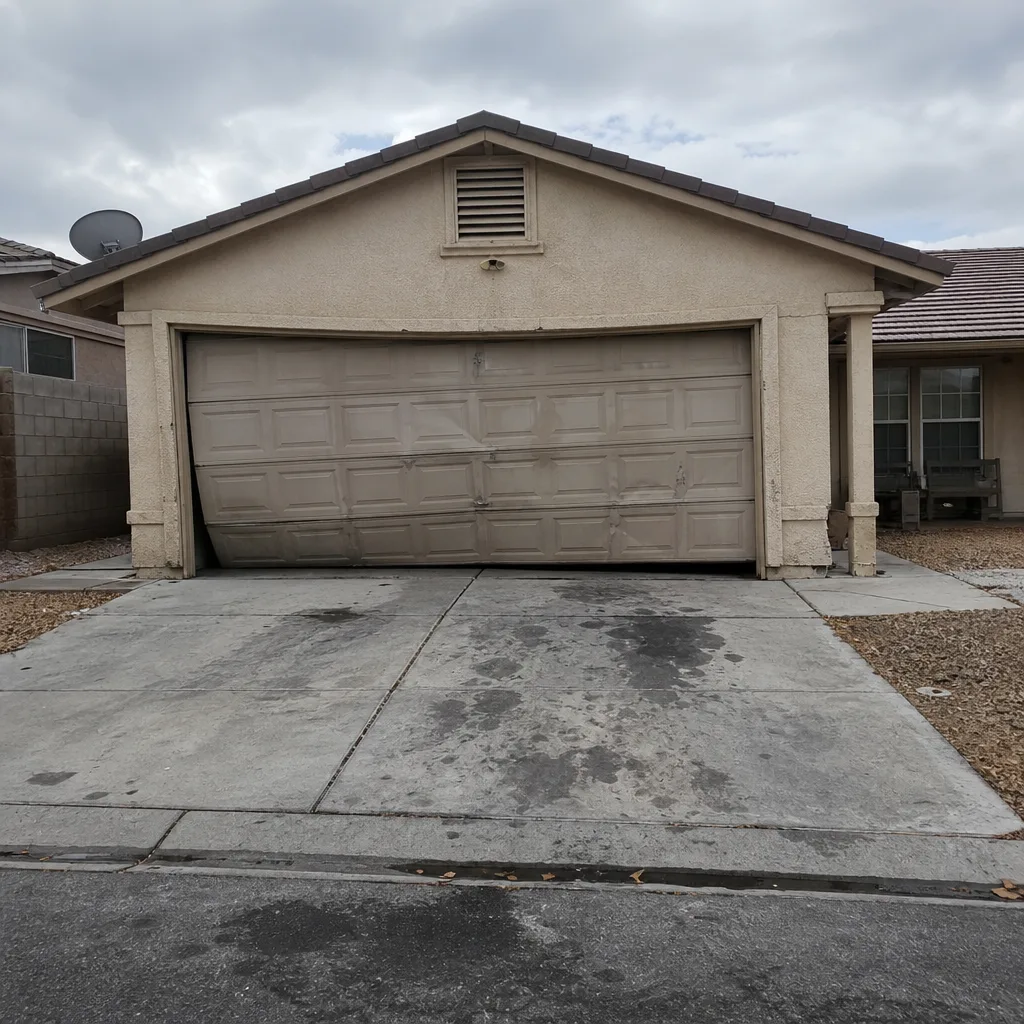
Walk out in front of your newly installed door and look at it straight on. That horizontal line of gaps where each section meets the next is a free diagnostic tool. On a properly set door, every horizontal gap line runs perfectly parallel to the ground. The gaps should be the same width all the way across.
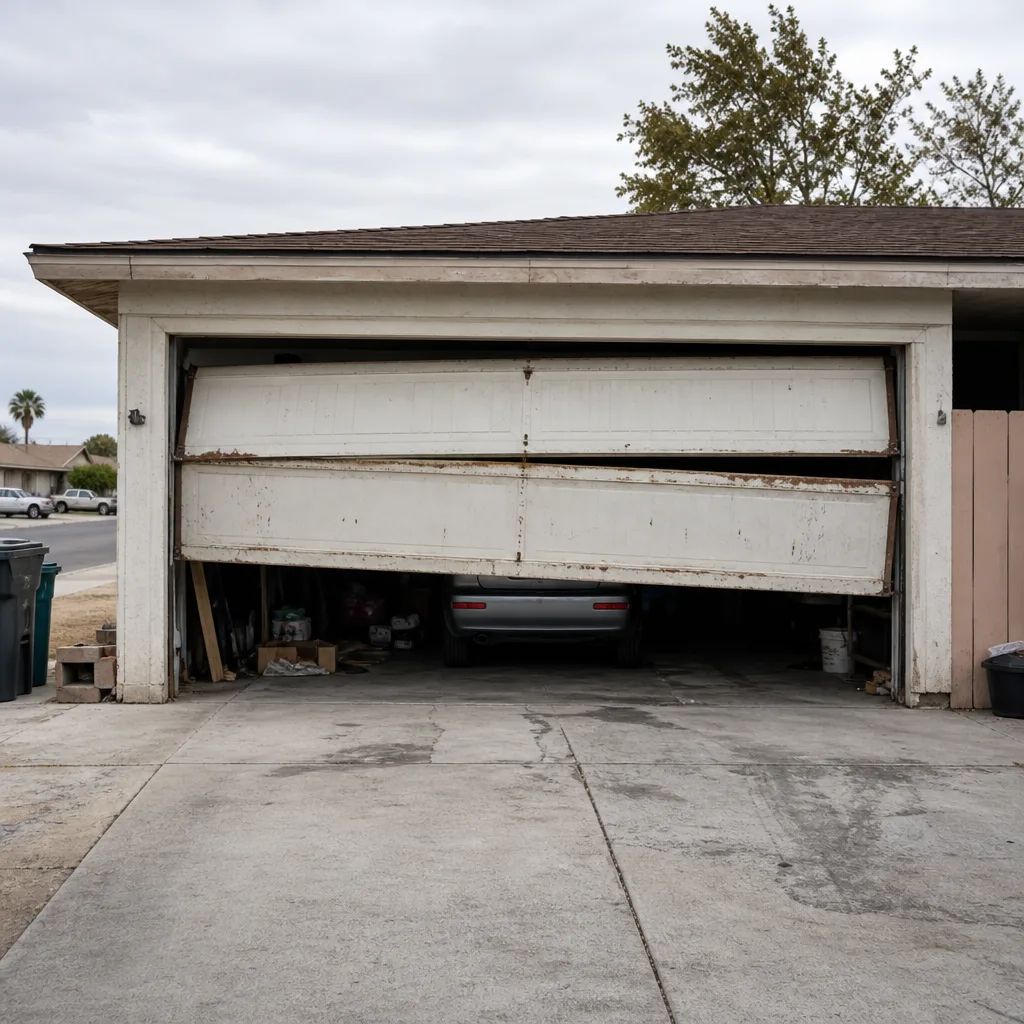
If a gap line rises to one side and dips to the other, the tracks were never brought into plumb before the installer drove off. That’s the classic sign that the door was set against tracks that were bolted onto whatever was already on the wall, without checking level first. It’s the same story with the gap at the floor. A door that closes flush on one side and leaves a sliver of daylight on the other has a track that’s leaning or a bottom panel that’s out of square. Neither one closes itself up over time. Both get worse, because the uneven load wears the rollers fast and puts one side of the spring under more tension than the other. A gap you can see from the street is not cosmetic. It’s structural, and it’s on the installer to fix it.
The Ten-Minute Post-Install Walkthrough
Before the installer packs up and drives out of North Las Vegas, run this checklist. Ten minutes now saves six months of arguing on the phone with a dispatcher who doesn’t know your house. Do it with them standing there.
- Run the balance test above. Door should hold at halfway.
- Watch the door travel up and down three times. Listen for grinding, rattling, popping, or a door pulling to one side.
- Look at the gap lines between sections with the door closed. They should be even and parallel to the ground.
- Hold a flashlight under the door at the floor line. No daylight, no gap wide enough for a pencil on either side.
- Push on the bottom seal on both sides with your foot. It should stay put and spring back.
- Check the manual release cord. It should pull cleanly and reconnect without a fight.
- Ask for the written warranty, the doors’ and openers’ model numbers, and the name of the installer. Write it down.
- Test the reverse trip on the opener: lay a two-by-four flat where the door closes, and the door should hit it and reverse on its own. If it doesn’t reverse, stop and don’t sign anything.
- Make sure the safety sensors are mounted at the correct height on both sides and that the light comes on the sensor when you break the beam with your leg.
If any single item fails, tell them to finish the job. A free second opinion on any written estimate means you never have to guess. Getting a second look at a bad install is the cost of a phone call. Living with it is the cost of your springs.
Why North Las Vegas Heat Makes Bad Installs Fail Faster
In most of the country, a sloppy install limps along for years before it bites. Here, the desert does the damage faster. North Las Vegas regularly pushes past 110 degrees in July and August, and the inside of a garage on a west-facing driveway can run hotter than the outside air. That heat expands metal, softens rubber, and slowly cooks any piece of the install that was done on the cheap.
A glued bottom seal pulls loose in one summer. A spring that was over-tightened on a hot day has already lost tension by the time fall arrives. A door that wasn’t leveled fights its own tracks harder when thermal expansion adds a little extra binding. If you live in one of the newer developments out toward the edge of the valley, you have another factor: the same wind and dust that gets into everything will find a missing or loose seal first. We see it in Sun City Aliante, in the older neighborhoods around Carey and Civic Center, and in the new builds off the 215. A bad install anywhere else is a headache. A bad install in the Las Vegas Valley is a countdown clock. That’s why the post-install walkthrough matters more here than most places. A door installed right in North Las Vegas in July should still be quiet and balanced by December, and every December after that.
The Warranty Clock and How to Protect Yourself
Here’s the part that hurts. A warranty is only as good as the crew that stands behind it. A one-year warranty on a door that fails on month fourteen is no warranty at all, and the installer who quoted you $400 less than everyone else isn’t the one who’ll pick up the phone. That’s why the walkthrough and the written record matter so much. Log the install date, the model numbers, the balance test result, and the installer’s name. Take a few photos of the tracks and the mounting hardware on day one. If something fails in month eight, you have the proof of what installed, when, and how it was set. When you’re ready for a new door, use our Garage Door Installation in North Las Vegas page to see what a right-first-time install looks like from the quote to the invoice.
Common Mistakes to Avoid
- Paying the balance before the walkthrough. Hand over the check only after the balance test passes and the sound check is clean. Once the truck is gone, getting anyone back is a different negotiation.
- Trusting a phone quote with no written scope. A number on the phone means nothing until the door model, the opener model, the hardware, and the seal are in writing. If the price changes at your door, that’s the whole reason to get it on paper first.
- Skipping the second opinion on a low bid. If a quote comes in hundreds less than the others, ask what it left out. The answer is usually the bottom seal, the new hardware, or the leveling work.
- Reusing old hardware on a new door. Mismatched hinges and rollers transfer the old door’s wear onto the new one. It’s invisible on day one and obvious at year two.
- Ignoring a track that isn’t plumb. A track leaning 3/16 of an inch is a door that drags for years. It’ll feel fine for a month and then it won’t.
- Letting the opener do the lifting. An opener is there to guide the door, not haul it. If the door is out of balance, the opener will fail earlier than the springs will.
- Forgetting the free second opinion before you sign. A standing free second opinion on any written estimate, and no trip charge inside our county, means you can have the quote checked before the job starts instead of after.
See the difference
 Before
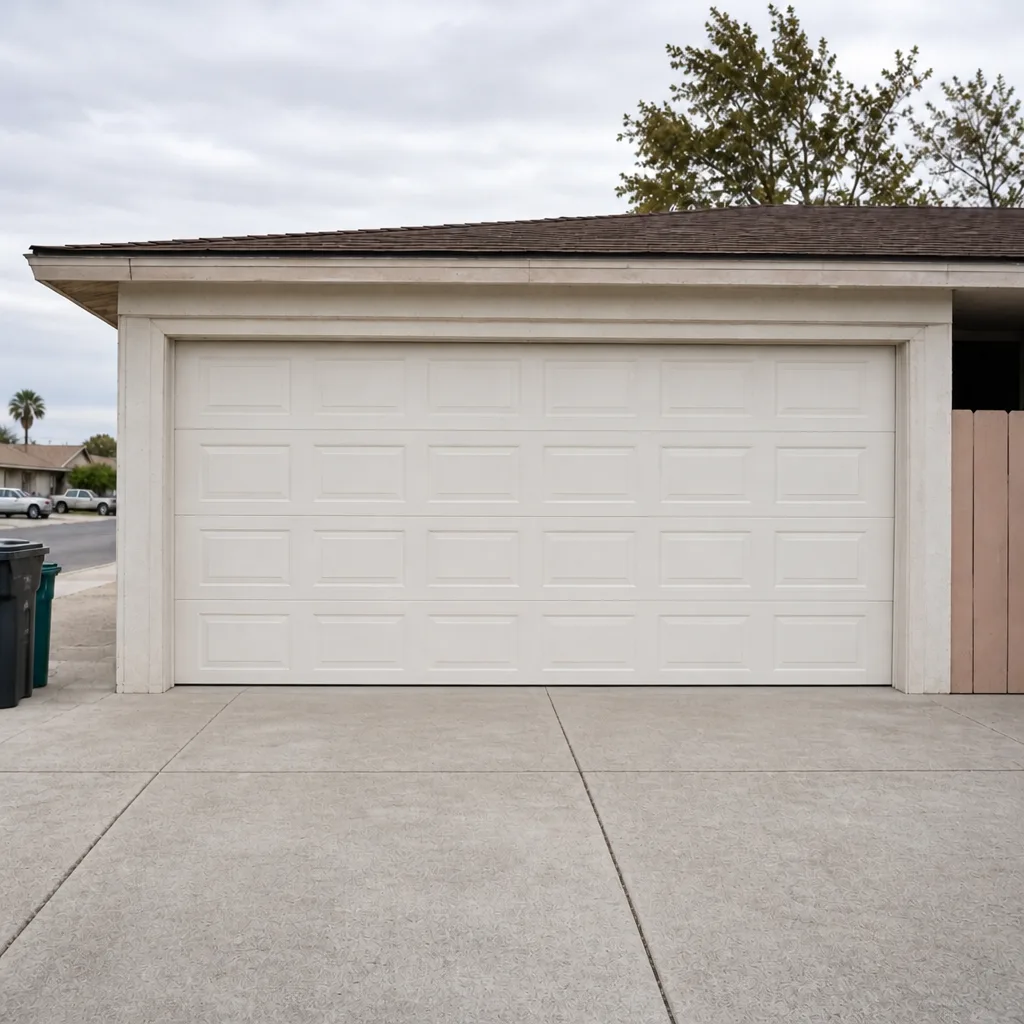 After
 Before
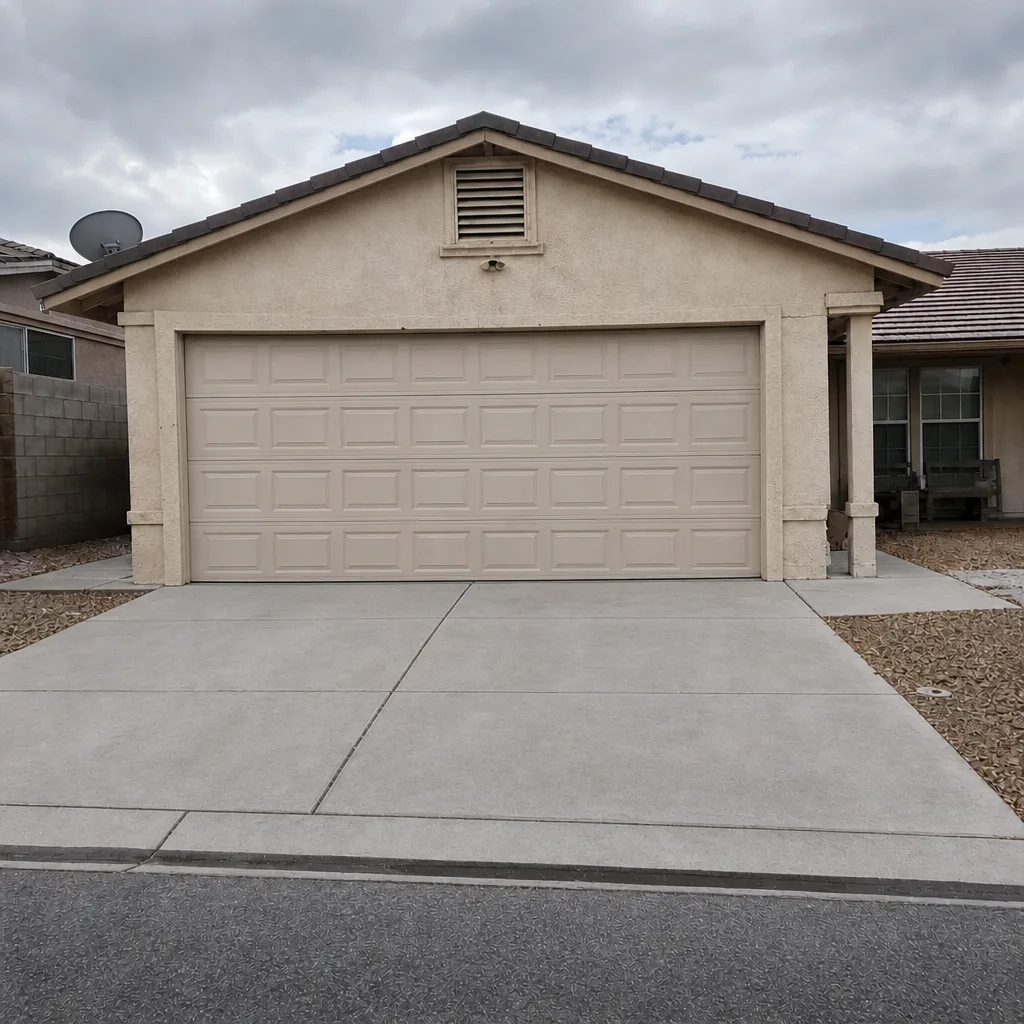 After
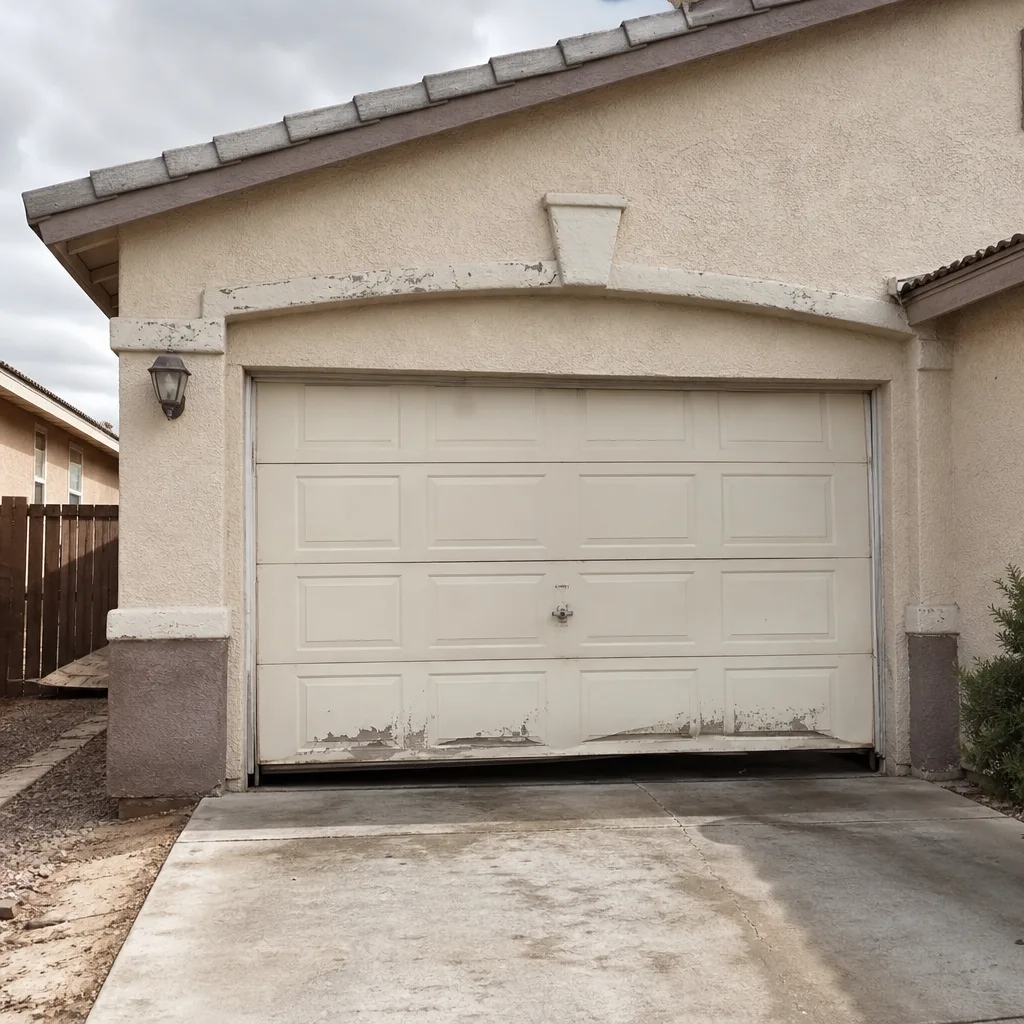 Before
 After
When to Call a Professional
Some problems are a phone call, and some are an emergency. Call a professional the moment you see any of these: a door that drops hard when you release it at halfway, a spring that’s clearly the wrong size or visibly warped, a grinding sound you cannot locate, a track that’s been bumped out of plumb by a vehicle, or an opener that reverses on its own without hitting anything. Springs and cables under significant tension are the one thing a homeowner should never try to adjust by hand. Leave them alone and call. Even if your install was fine, a garage door is a system that needs a tune-up every year or so, and that’s best done by someone who knows the brand. We work with all the major brands, including Amarr and Craftsman, and the crews who show up are background-checked and trained across the boards. Otto’s Garage Door North Las Vegas offers free estimates in North Las Vegas, and we’ll take a look before you commit to anything. Call (866) 347-9495.
Frequently Asked Questions
The quickest test is the halfway-point lift. Disconnect the opener, lift the door to waist height, and let go. If it won’t stay put, the springs aren’t balanced to the door and the install has a problem. Second is visual: check that the horizontal gap lines between the sections are even and parallel to the ground. Third is audio: a properly installed door runs quiet. If you’re getting grinding, popping, or a door that pulls to one side, that’s a bad install, not a break-in period. A walkthrough with a second set of eyes can settle it fast. Call (866) 347-9495 for a free estimate on getting it corrected.
In North Las Vegas, the most common signs are a missing or glued-on bottom seal, uneven gap lines between sections, an unbalanced door that creeps up or slides down at the halfway point, and old mounting hardware left behind on a new door. The desert heat speeds all of these up, and a glued seal often fails in the first summer. If you’re out toward Sun City Aliante or the newer builds off the 215, a missing seal also means dust and wind get in faster. Call (866) 347-9495 for a free estimate if any of these look familiar.
A bad garage door installation usually takes six to eighteen months to fail visibly. Springs that were set with the wrong tension will wear out ahead of their rated cycles, and tracks that weren’t leveled will start to bind as the door settles. The one exception is a missing bottom seal, which can fail in a single summer here. Getting it checked in the first few months, while the installer’s warranty is still open, is the cheapest time to fix it. Call (866) 347-9495 to get a free estimate before the window closes.
Running the halfway-point lift test is safe as long as the door is disconnected from the opener and you’re only lifting and letting go of the door itself. Never try to adjust the springs or cables yourself. Those carry serious stored tension, and a slipped spring can cause real injury. If the balance test fails, the fix belongs to a trained pro, not a Saturday project. Call (866) 347-9495 for a free estimate on getting the springs set right.
Our price is quoted on the call and held at your door, so the number you hear on the phone is the number on the invoice. The price is agreed before any work starts, and it does not go up between the phone and the driveway. If the door turns out to need more than described, we’ll tell you before we start, not after. That’s the whole point of upfront pricing. Call (866) 347-9495 for a free estimate.
Yes. Every job is backed by our 90-Day Done Right Promise, in writing on the invoice. If something isn’t done right, one call brings us back to make it right. That guarantee comes with a second safety net too: a free second opinion on any written estimate, no trip charge inside our county, and a Senior & Veteran 10% discount every time. Call (866) 347-9495 for a free estimate and see what a right-first-time install looks like.
The Bottom Line
A bad garage door installation doesn’t announce itself. It waits six to eighteen months, fails quietly, and then it’s your bill instead of the installer’s. The halfway-point balance test, the three corners cheap crews cut, the sound check, the gap-line inspection, and the ten-minute walkthrough all give you the same thing: a way to catch a bad install while the truck is still in the driveway. Do the walkthrough. Get the second opinion. And in the desert, get the seal and the springs checked in the first summer, because North Las Vegas heat does not give a sloppy install a second chance. If something doesn’t feel right about your door, have it looked at now, not after a panel or a spring gives out.
Call Otto’s Garage Door at (866) 347-9495 for a free estimate. We’re locally owned and owner-operated, we answer the phone, and we’ll quote the job on the call and hold that number at the door. Start at our Otto’s Garage Door North Las Vegas home page, or look at Garage Door Repair in North Las Vegas if the install is already in and something’s off. If you want the job done right the first time, our Garage Door Installation in North Las Vegas page shows how we approach the measure, the quote, and the install, and the Garage Door Opener Repair & Installation in North Las Vegas page covers the opener side of the same system. Call (866) 347-9495 and let’s talk it through.
Written by the team at Otto’s Garage Door North Las Vegas.