
Last updated November 18, 2026
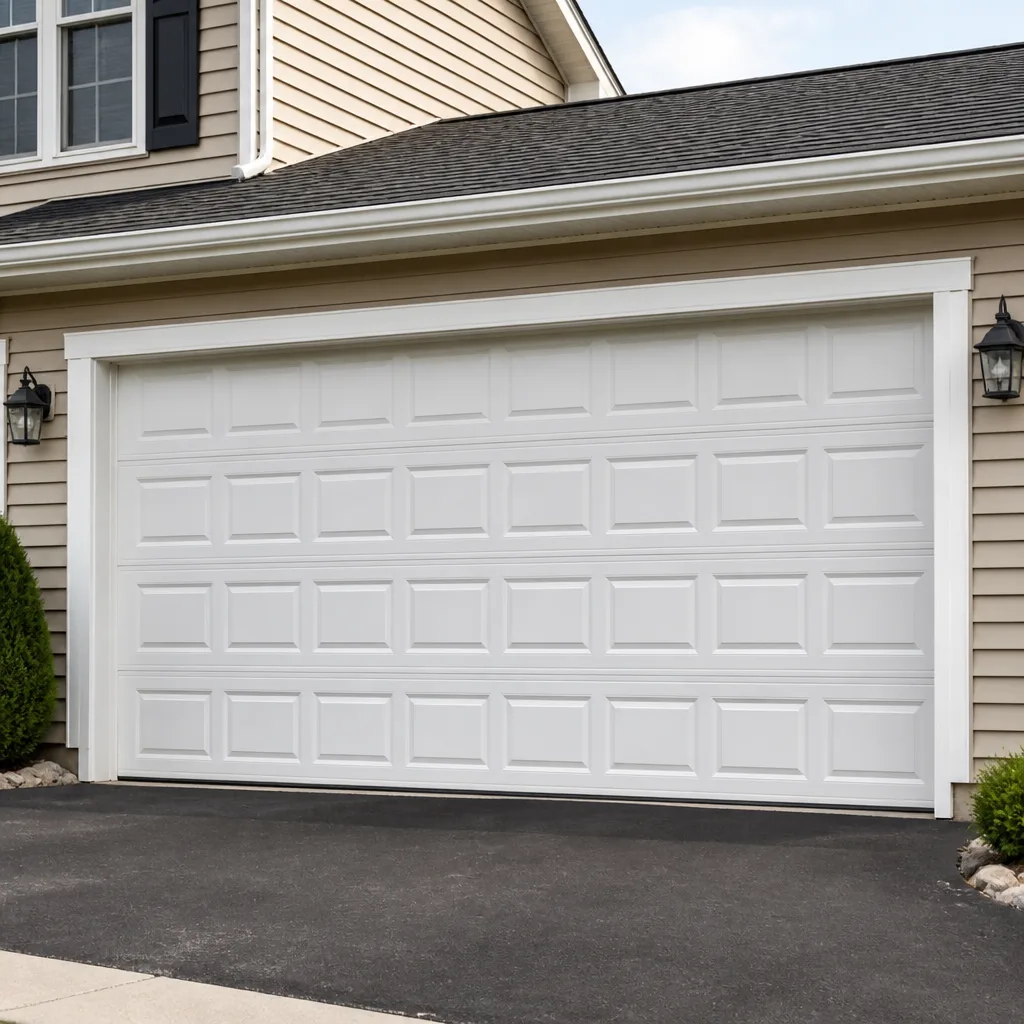 Raised-panel steel
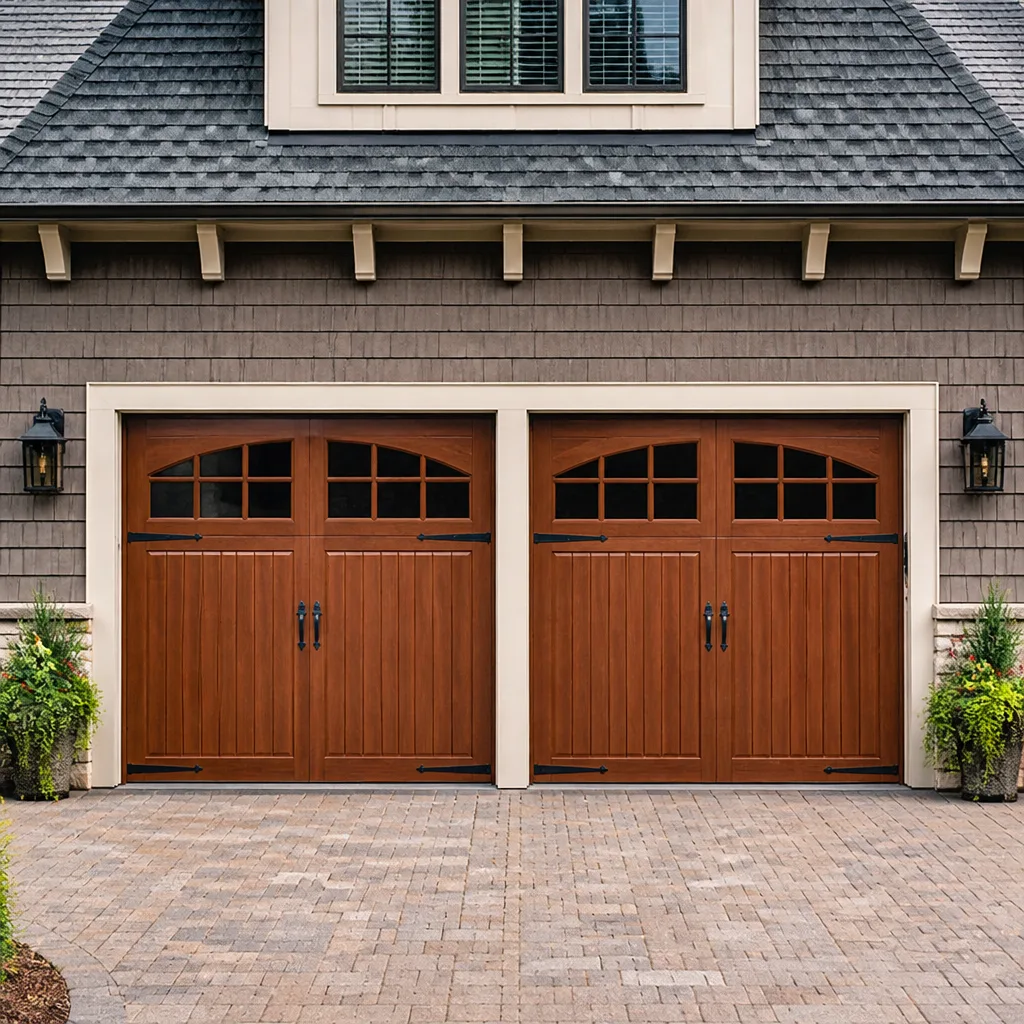 Carriage house
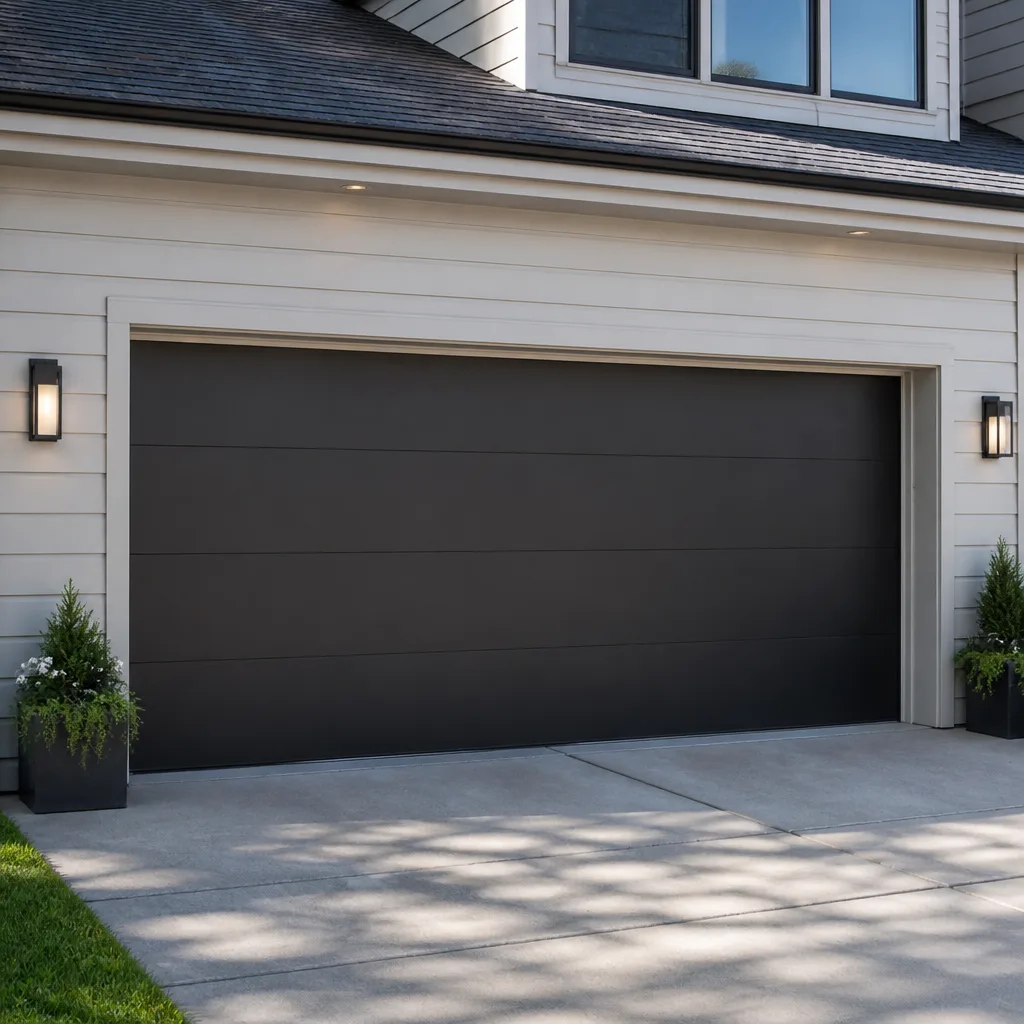 Modern flush
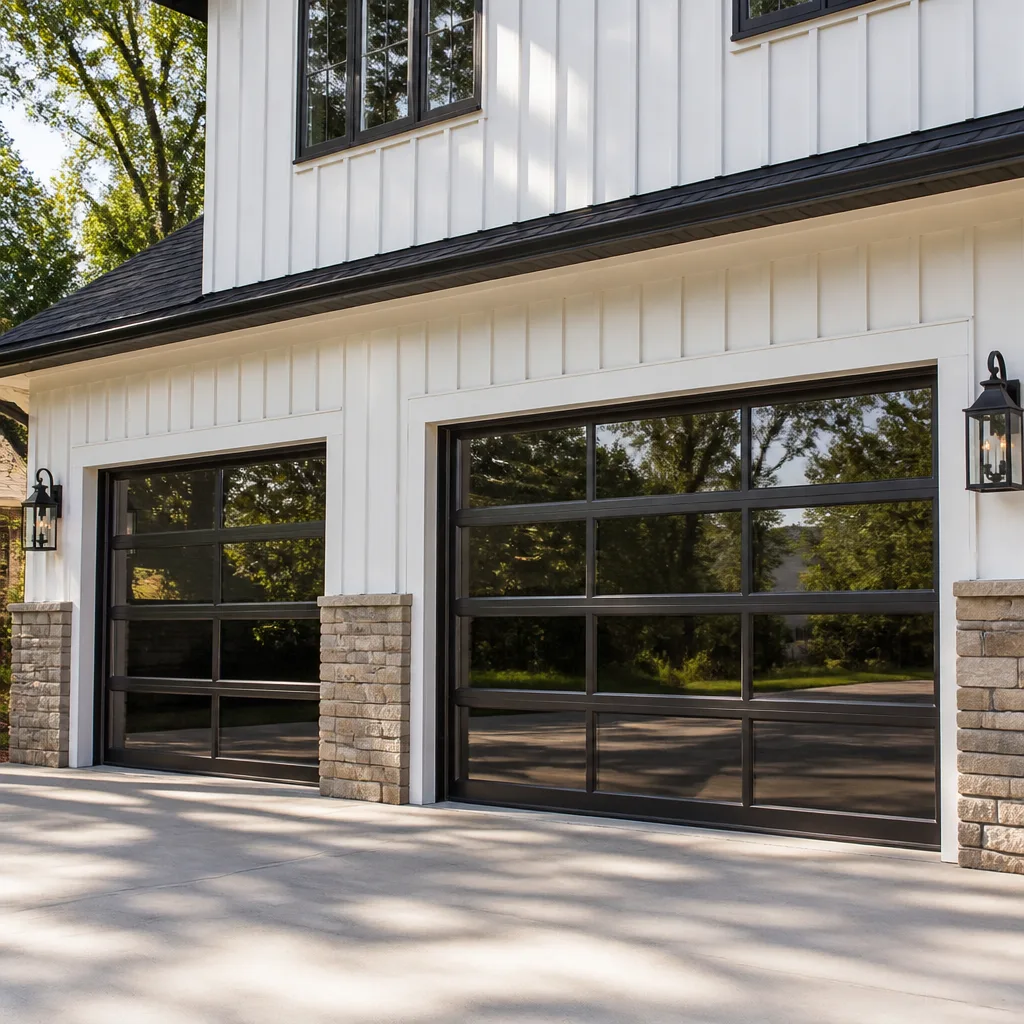 Full-view glass
 LiftMaster openers
 Chamberlain openers
Full 25-point door and opener safety check with every visit - springs, cables, rollers, tracks, and your LiftMaster or Chamberlain opener included
You get a price before we start. It does not change when the pro arrives.
Get your free estimateGarage Door Parts Troubleshooting: Common Problems and How to Fix Them
Here’s a pattern we see constantly in North Las Vegas: a door that slams down hard enough to rattle the whole garage, but we can’t find anything wrong on the way up. Homeowners try to describe the noise, the jerk, the off-kilter motion, and they end up guessing at the problem. The door isn’t just being difficult. It’s a machine that’s talking to you. Every symptom points to a specific part, and once you learn to read it, you can name the component before you pick up the phone.
We’ve diagnosed doors across North Las Vegas for years, and the same handful of parts fail in the same predictable ways. This guide teaches you to work backwards from what the door is doing to the part responsible. You’ll learn the symptom-to-part map, how to inspect cables and rollers without putting your hands where they don’t belong, and why one broken part so often takes a second one with it.
Quick Answer
Garage door parts troubleshooting starts with matching the symptom to the part: a shaking door usually means a bent track or worn rollers, a door that falls too fast points to spring or cable trouble, and a door that binds at the same spot every time is usually a dented track or failing hinge. You can identify most problems from the door’s behavior without touching the dangerous parts, which helps you describe the issue accurately when you call a pro.
Styles & brands we work with
- Raised-panel steel
- Carriage house
- Modern flush
- Full-view glass
- LiftMaster openers
- Chamberlain openers
Table of Contents
- The Symptom-to-Part Map
- Why Does My Door Shake or Jerk?
- Door Falls Too Fast or Won’t Stay Up
- Door Binds at the Same Spot Every Time
- Reading a Failing Cable
- Spring Diagnosis Without Touching the Spring
- Roller Inspection and the Damage Worn Rollers Do
- Why One Broken Part Takes Another With It
The Symptom-to-Part Map
Most garage door problems announce themselves before they fail. The door shakes, binds, drops too fast, or gets loud on one side. Each behavior points to a part. Learning to read those signals is the core of good troubleshooting, and it’s something we walk North Las Vegas homeowners through on nearly every service call.
Here’s the map. Start with what you’re seeing or hearing, then look across to the likely culprit.
| Symptom | Most Likely Part | Why It Happens |
|---|---|---|
| Door shakes violently on the way down | Bent track on the descent side, or worn rollers | The track guides the door; a dent or twist forces the rollers off their path and the door jerks to correct |
| Door falls too fast or won’t stay up | Spring tension loss, or a broken cable | Springs and cables hold the door’s weight; if either gives, the door becomes a falling slab |
| Door binds at the same spot every time | Track dent, or a failed hinge | The door hits the same obstruction or misaligned hinge at that exact point in the travel |
| Door gaps at the bottom corner when closed | Bottom bracket, or a twisted rail | The bracket or rail holds the panel square; when it shifts, the corner lifts |
| Door is loud on one side only | A single worn roller or hinge | One side of the door takes more of the load and wears faster, usually the heavier panel side |
Two things to keep in mind. First, these are the most common causes, not the only ones. Second, no matter how confident you feel about the diagnosis, do not put your hands near a spring or a cable under tension. Those parts hold hundreds of pounds of force, and they don’t fail slowly.
Why Does My Door Shake or Jerk?
A door that shakes honestly and violently almost always has a track problem on the side it’s dropping on, not a mysterious balance issue. Think about the direction. The door runs smooth on the way up, then shudders on the way down. That tells you the obstruction or misalignment is on the descent side, and the door is struggling to stay in its track.
In our experience, shaking comes from one of three things:
- Bent track. A dent or low-speed bumper hit is the usual cause. Look at the track edges for visible bends, dings, or a section that’s no longer straight. Even a modest kink makes the rollers fight it.
- Worn rollers. Old rollers develop flat spots or get pushed out of their brackets. Those changes force the door off its intended line and create the shake.
- Loose track fasteners. The bolts holding the track to the jamb can work loose over time. When they do, the track moves when the door loads it.
You can check for a loose track by gently pushing against it (door closed, you’re not reaching into moving parts). It shouldn’t give. If it flexes, that’s your culprit. Here in North Las Vegas, our dry, hot summers aren’t kind to tracks that are already loosening, because the material expands and contracts more than people expect. Call the repair number if a track is bent or loose; those need proper realignment, not driveway guesswork.
Door Falls Too Fast or Won’t Stay Up
A garage door that slams down, bounces at the bottom, or takes all your strength to lift has lost its counterbalance. The counterbalance is the spring system, and when it weakens or fails, the door’s full weight hits the floor. This is the one symptom you should not test by hand. A door that falls too fast is a door that could fall all the way.
Two components control the fall:
- The springs. Torsion springs (the horizontal bar across the top) or extension springs (the springs that run along the sides) carry the door’s weight. A broken or tension-lost spring means the door drops fast.
- The cables. If a cable has broken or jumped its drum, the door loses the lift on one side, and it falls crooked and fast.
If the door falls fast and stays crooked, suspect the cable first. If the door falls fast but stays level, suspect the spring. Either way, leave the door down, keep your hands out of the spring and cable zone, and call a trained pro. In many homes across North Las Vegas, the spring is the part that reaches the end of its life first, and you don’t want to be underneath the door when it gives. For that piece of the work, our Garage Door Repair in North Las Vegas page covers how we handle it.
Door Binds at the Same Spot Every Time
A door that stops or jerks at the exact same point in its travel is giving you useful information: the problem is fixed in space, not in the door’s balance. Something at that spot is catching. The usual suspects are a track dent and a failing hinge.
Here’s how to narrow it down without tools:
- Watch the door travel straight on from the side, with the door moving slowly. Mark the height where it binds.
- Inspect the track at that height. Run your eyes down the rail edges. You may spot a dent, a kink, or a section that’s no longer straight.
- Check the hinges at that location. A hinge with a worn pin or a hinge bracket that’s slipped can be the catch point.
If you find a dent, don’t bend the track back with a hammer. It’s easy to over-bend and create a worse problem, and a bent track can catch a roller and load the spring. In the older parts of North Las Vegas, we see more bent tracks from driveway bumps and stored-items leaning against the door. A track adjustment or replacement is a job for someone with the right measuring tools. You can read more about our approach on the Garage Door Opener Repair & Installation in North Las Vegas page, because the opener is often the part pushing a binding door.
Reading a Failing Cable
Cable problems are tricky because visual checks simply aren’t enough. A cable might look fine on the outside and still be internally fatigued, and that’s where people get hurt. If your cable is more than five years old, or your door has been through a lot of cycles, judge the cable by evidence, not only appearance.
Here’s what to look for:
- Fraying. Broken strands that stick out like a brush or a frayed rope. That’s a failing cable, and you should treat it as urgent.
- Kinks or birdcaging. A section that looks wavy or doubled over. That indicates internal fatigue or mistracking.
- Rust staining at the drum. The onset of rust or dark wear marks at the drum points to internal stress.
- Wear spots that feel rough. A cable that feels rough or uneven along its length is suspect, even if it looks fine.
Why wouldn’t a visual check be enough? Because a cable carries the door’s load in tension, and the failure starts in strands you can’t see. A cable that’s internally fatigued can snap without warning, especially when a door has been used to hold weight, a scenario we see all the time in North Las Vegas when people use the door as a daily commute gate. When a cable snaps, the result is immediate and dramatic: the door drops fast or hangs crooked, and the spring system takes a jolt. That’s the moment to call for emergency service, because the door is now a heavy object suspended by one cable.
Spring Diagnosis Without Touching the Spring
You never learn about springs by touching them. A garage door spring can hold a tremendous amount of force, and a spring that looks innocent can release that force in a heartbeat. The good news is you can tell a broken spring by how the door behaves, then describe it accurately to a pro. We prefer that sequence every time, and it keeps our customers in North Las Vegas safe while we get the right parts on the way.
Torsion springs and extension springs fail differently:
- Broken torsion spring. The door feels weightless and drops like a stone, and the spring itself may show a visible gap or a separated section on the shaft. If it’s a two-spring door and one breaks, the door may drop suddenly on closing.
- Broken extension spring. The door may hang crooked or refuse to lift, and you might see a stretched or separated spring on the side rail. Sometimes a broken extension spring shoots through the cable and causes the door to drop fast on one side.
What should you tell the pro when you call? Name what the door did, not what you think broke. “The door dropped fast on closing and now won’t go up,” or “The door hangs crooked and the opener won’t lift it.” If you can safely see an obvious gap in the spring, mention it, but don’t go reaching in to inspect. In fact, most of the spring calls we get in North Las Vegas are from people who saw or heard a “pop” and then watched the door fall. That report alone is enough for a pro to know what to bring.
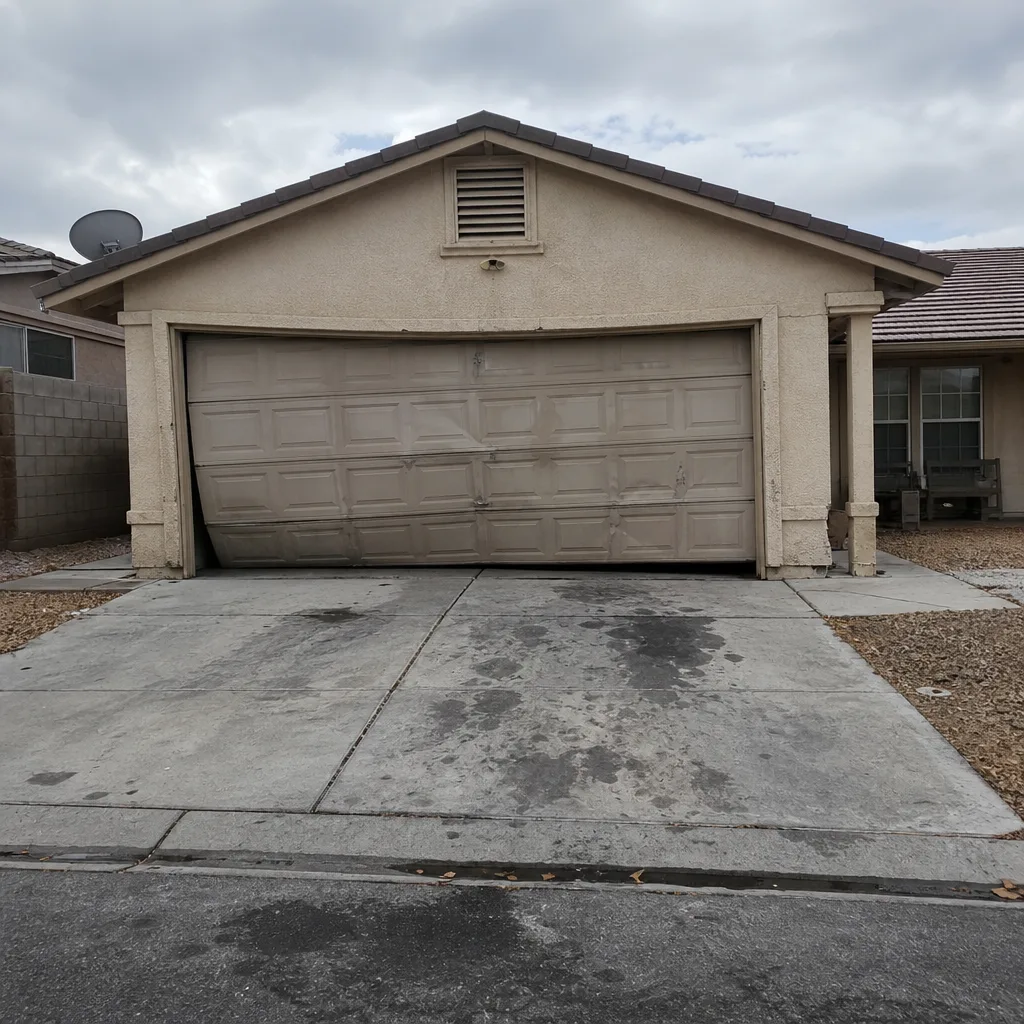
See the difference
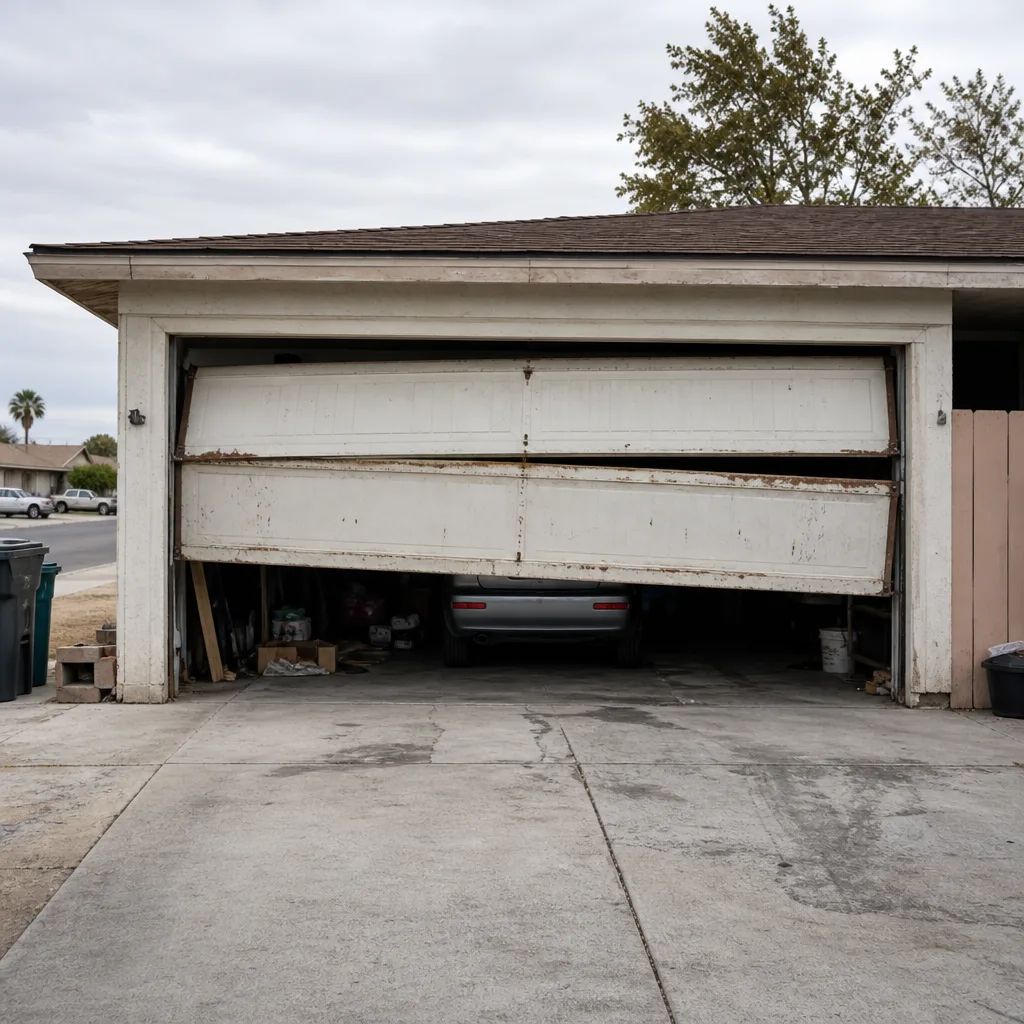 Before
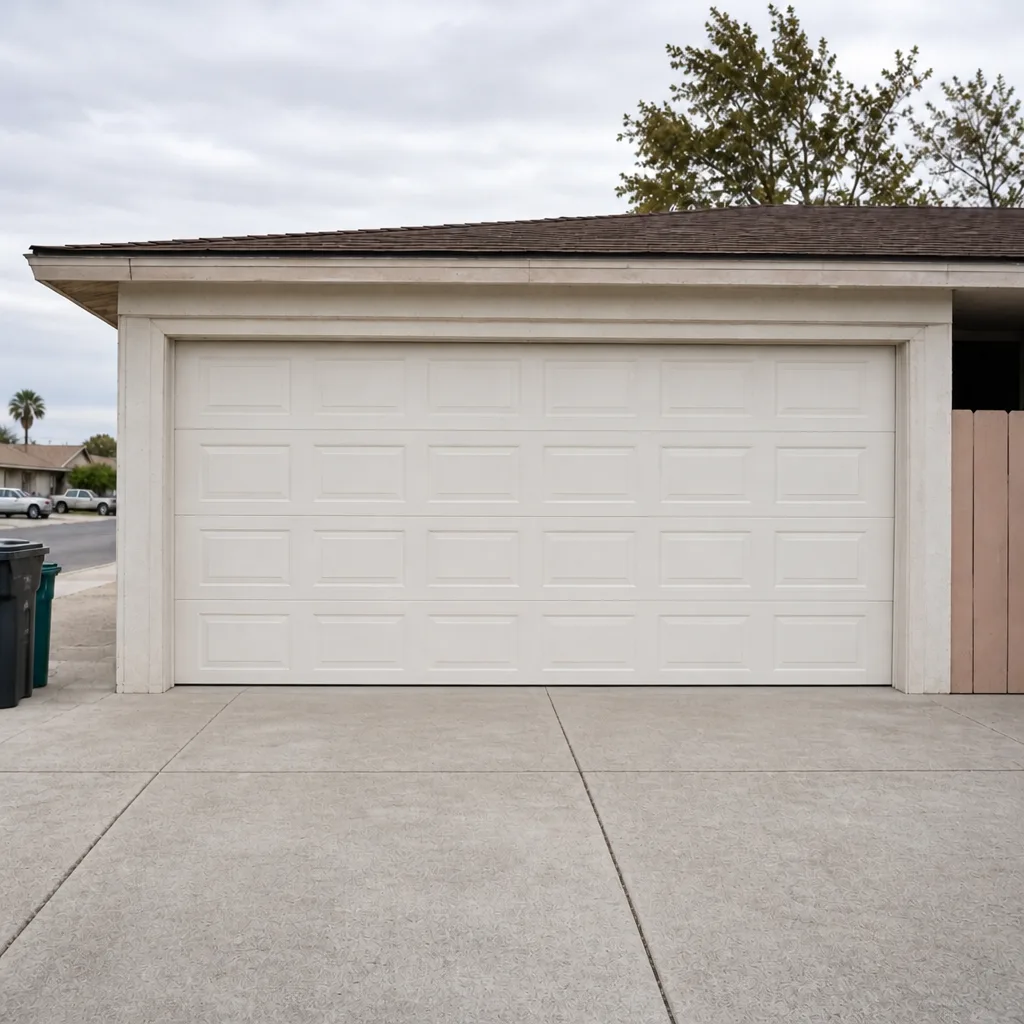 After
 Before
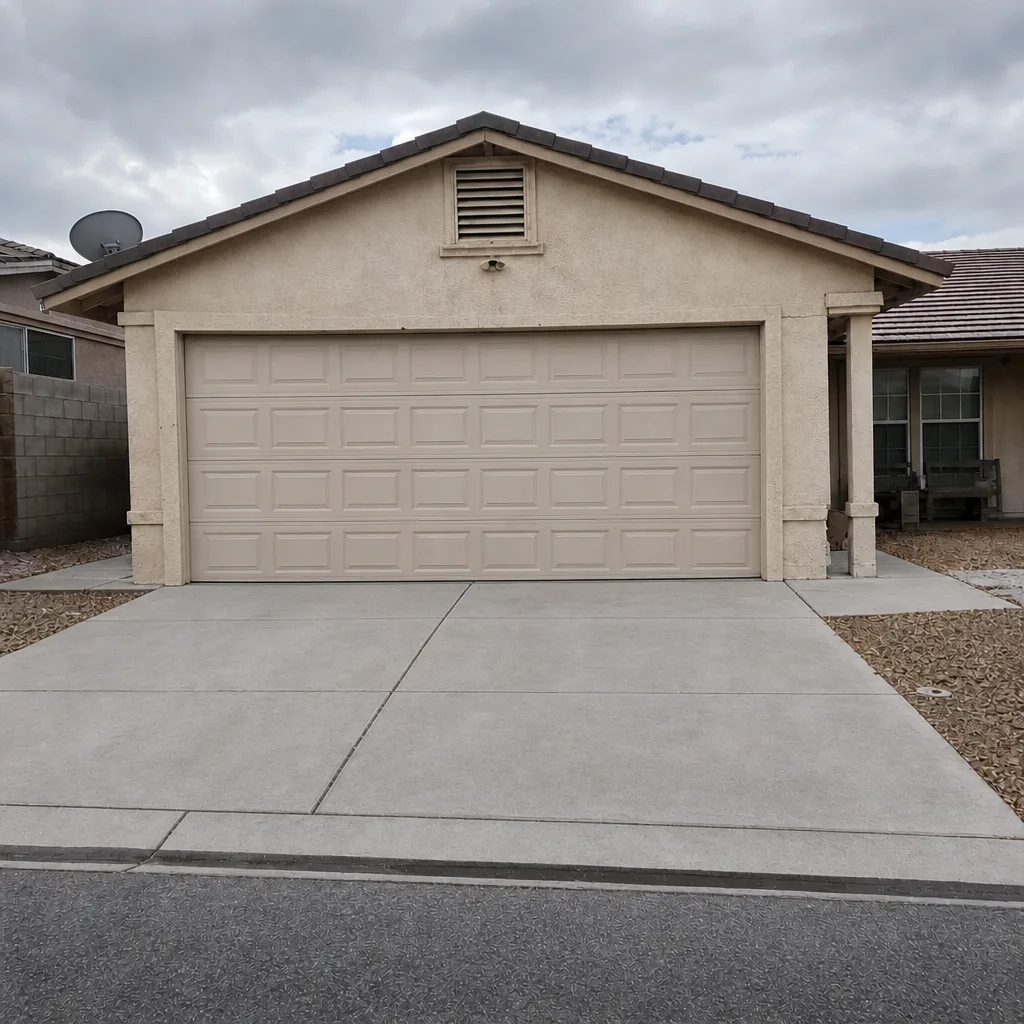 After
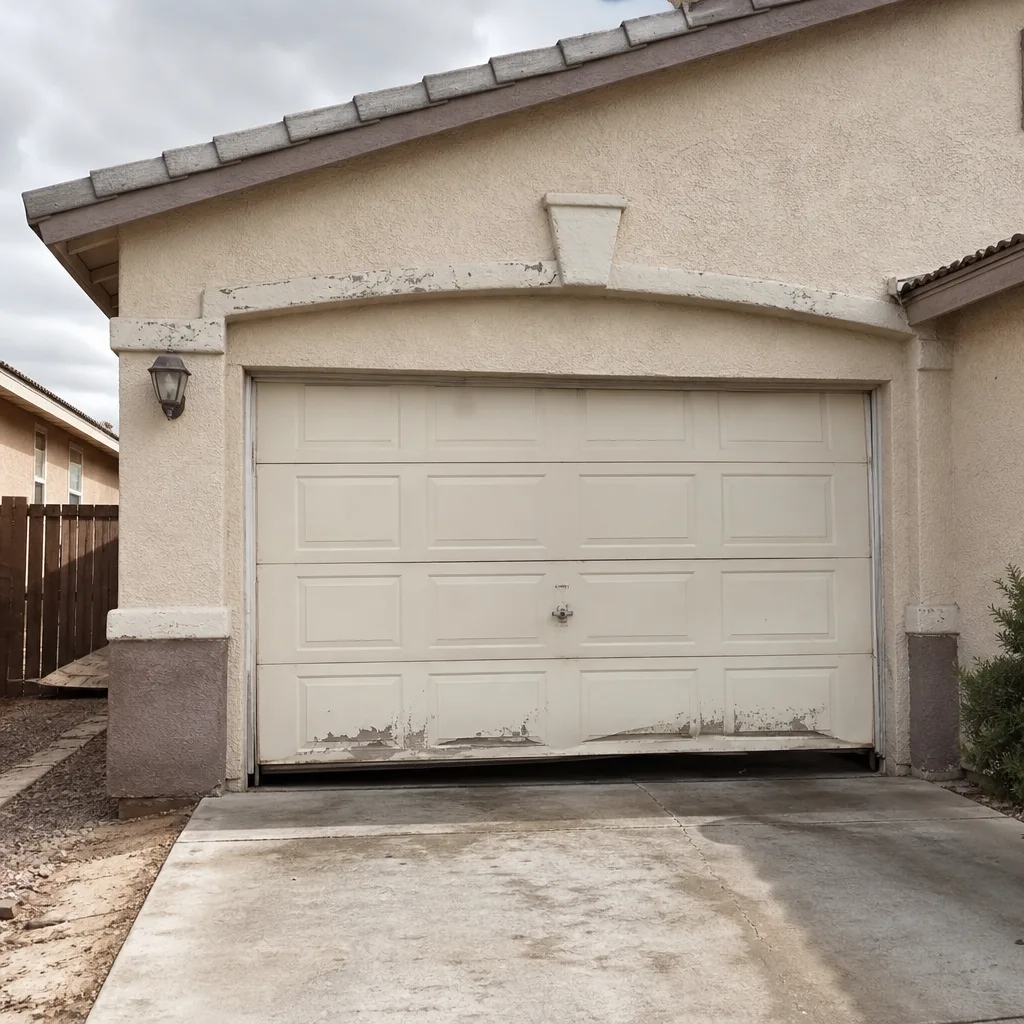 Before
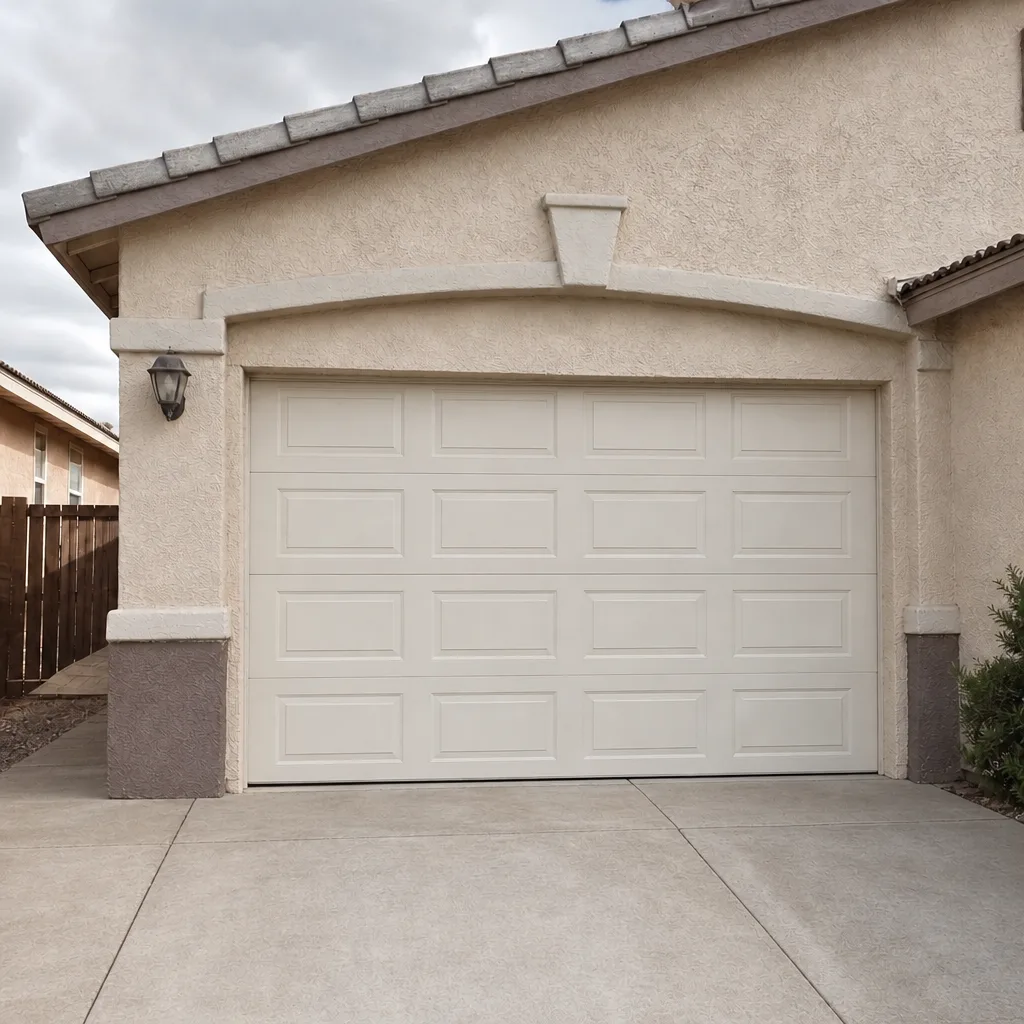 After
Roller Inspection and the Damage Worn Rollers Do
Rollers are the cheapest part in your door’s travel system, and they’re also the part that quietly takes the biggest beating. A worn roller changes the way the door tracks, and every mile it runs out of true, the track pays the price.
Here’s what a worn roller looks like before and after failure.
- Before cracking. A nylon roller typically develops a flat spot or visible scalloping around its edge, where the wheel no longer rolls true. The roller may wobble slightly, or it may look “bruised” or scuffed.
- After failure. A worn roller can crack, split, or leave its bracket, and once that happens the door travels on a broken wheel and gets pulled off its line. The metal housing can grind against the track edge and chew it up.
This is the classic parts chain in action. Catching a worn roller early is a simple, inexpensive replacement. Waiting lets the roller chew the track, and now you need track work, a significantly bigger repair. The math is stark: a roller is one of the least expensive parts on the door, and a damaged track can turn a small fix into a much larger one. That’s why we tell folks in North Las Vegas to look at the rollers during a routine door check. Work with a pro using brand-name parts like Amarr or Wayne Dalton, and you’ll get rollers that hold up. A door should be respected as a two-hundred-pound object riding on two springs, so don’t crawl under a loaded one to check a roller yourself.
Why One Broken Part Takes Another With It
One of the most common surprises in garage door repair is that the estimate comes in bigger than the part a homeowner expected. There’s a simple reason: garage door parts depend on each other, and a failed component can take a neighbor down with it.
Here’s the parts chain in motion:
- A cable breaks. When a cable snaps, the torque on the bottom bracket releases, and the bracket can twist or break.
- The bracket twist transfers the load to the panel. Panels get bent, cracked, or pulled out of their hinges.
- The door falls out of true. A door that’s now crooked loads up the rollers and track unevenly, and one side is now doing most of the work.
- The opener takes the punishment. A heavy door dragging on one side is a strain on your opener and its drive system.
By the time a tech arrives, you’ve got a broken cable, a twisted bracket, a damaged panel, and an opener that’s been running too hard. In North Las Vegas, we see this most often on heavier doors and doors that have had a lot of cycles, like ones serving as a daily entry gate. This is also why the parts supply matters: a repair using compatible parts from brands like Amarr or Wayne Dalton keeps the door’s system matched and balanced. If you’re wondering whether the opener needs help too, our Garage Door Opener Repair & Installation in North Las Vegas page walks through it. When the estimate looks bigger than the one part you saw fail, ask for the walk-through. A straight answer should explain how the chain happened, not just the price tag.
The Bottom Corner Gap: Bracket or Rail Twist
If your door closes with a gap at one bottom corner, you’re looking at a bottom bracket or rail twist. The bottom bracket anchors the panel’s lower edge and connects to the lifting cable, so when it shifts, the corner lifts. A twisted rail can produce the same look. This is a component-level diagnosis, and it’s often the root cause behind a door that also seems to rattle or fall out of line.
The motion tells you where to look. Close the door and watch the bottom edge from the side. If the door is level but one corner lifts, suspect the bottom bracket. If the lower section of the door shifts sideways or the gap changes as the door moves, look at the rail. Since the bottom bracket is where cable tension meets the panel, treat a gap at the corner as a load problem, not a cosmetic one. The fix is a trained repair, because the bracket and cable are under tension and can release suddenly. That’s a job we handle every week in North Las Vegas; the team at Otto’s Garage Door North Las Vegas home can look at a gap like this and tell you what’s behind it within a few minutes.
Common Mistakes to Avoid
- Prying or bending a track back with a hammer. A bent track almost never goes back straight by hand, and over-bending it can load the door unevenly and make a worse problem. Leave realignment to a pro.
- Trying to “test” a broken spring by lifting the door. The door is far heavier than it feels, and a broken spring means the full weight is yours. A door is a two-hundred-pound object riding on two springs. Respect it.
- Putting fingers near cables or brackets to check for looseness. A cable under tension can snap without warning. If a cable is more than five years old, treat it as suspect and have a pro inspect it.
- Ignoring a loud door on one side. One worn roller is a small fix, but the strain it puts on the rest of the system, including the track and the opener, adds up fast. That’s how a repaired part turns into a much bigger repair.
- Washing the problem away with grease. Some people coat the tracks in lubricant. That can hold grit and dirt rather than fix the sticking. Ask a pro what the track actually needs.
- Assuming a new opener fixes the noise. If the opener is straining, the problem is almost never the opener. The door’s moving parts and balance are usually at issue, and a new opener won’t fix a misaligned door.
- Skipping the driveway check in North Las Vegas’ heat. Our dry summers expand and contract the track and fasteners, and a loose track does its worst during the hottest months. A yearly look at the track and rollers catches problems early.
When to Call a Professional
Some parts are safe to examine and describe. Some are not, and those include springs, cables, and anything under tension. Call a professional when a door falls fast, hangs crooked, or won’t stay up. Call when you see or hear a “pop” from the spring area. Call when a track is bent, a cable is frayed, or a door binds at the same spot repeatedly. Call when the bottom bracket looks shifted. And call if the door won’t move at all, because a stuck door can mean a broken spring, a snapped cable, or a failed opener, and all three need proper hands on them. Otto’s Garage Door North Las Vegas offers free estimates in North Las Vegas. Call (866) 347-9495, and a live person answers whenever you call, even late at night. We service all major brands, including Amarr and Raynor, and we’ll walk you through what to expect before we arrive. If you’re due for a new door entirely, our Garage Door Installation in North Las Vegas page is the next stop.
Frequently Asked Questions
Cost depends on the part and the brand, and it’s quoted before the visit so you can count on the number. Small parts like a roller or hinge sit on the low end, while spring and cable work runs higher because of the safety and labor involved. We quote every job upfront and hold that price at the door. Call (866) 347-9495 for an exact quote, and we’ll give you a straight answer.
We do same-day and emergency service for problems like broken springs, snapped cables, and doors that won’t stay up. A live person takes your call whenever you call, and we’ll tell you exactly when we can get there. Give us a call and we’ll get your door back in service.
No. We quote upfront and hold that number when we arrive. If the repair turns out to be something different than we expected, we’ll tell you before we start working. One call brings us back if anything isn’t right, and the 90-Day Done Right Promise is written on every invoice.
Otto’s Garage Door is locally owned and owner-operated, with a published address and license number any homeowner can verify. We’ll never send a stranger with an unmarked truck. We also offer a permanent 10% discount for seniors and veterans, and a free second opinion on any written estimate, so you can compare with confidence.
No. A garage door spring holds hundreds of pounds of force, and replacing one without the right tools and training can cause serious injury. The same goes for cables and bottom brackets. Work backwards from the symptom to the part, then let a trained pro handle the tension side of the door.
A door that shakes on the way down but runs smooth on the way up usually has a bent track on the descent side, or a roller that’s worn enough to slip out of its line. The motion tells you exactly where to look. We can inspect the track and rollers in North Las Vegas and tell you what’s causing it.
The Bottom Line
Your garage door is a system of connected parts, and every problem points to a specific component if you know what to look for. Match the symptom to the part: shaking means track or rollers, falling fast means spring or cable, binding means a dent or hinge, a bottom gap means the bracket or rail. Learn to read the cable and spring by behavior. And remember the parts chain, because a failed component can drag a second one down with it. Knowing where to look is your best protection against being caught off guard on the diagnosis. If you’d rather skip the guesswork, the team at Otto’s Garage Door North Las Vegas is a phone call away, and we quote before we arrive.
Call (866) 347-9495 for a free estimate. A live person answers, we quote the job on the call, and the price holds when we get there.
Written by the team at Otto’s Garage Door North Las Vegas.